Jean-Michel, when farmers look at Arc-Lès-Gray, why should this factory matter to them?
Because what happens here has a direct effect on a farmer’s working day. Across Europe, customers are under pressure to produce more, while keeping a tight grip on costs. Our round balers and front loaders are designed to help them do exactly that by working reliably and efficiently when they are needed most. For us, quality is not a slogan – it is built into every step, from product development to production planning, field testing through to final assembly. In the end, we are building more than machines; we are building trust.
The broad production base helps us manage the rhythm of the season.
Jean-Michel Petit

What rolls off the line here in Arc-Lès-Gray?
Arc-Lès-Gray is home to the production of M and R Series round balers, including models with integrated wrapping, as well as the full range of front loaders. We also manufacture exhaust after-treatment systems and front hitches for the John Deere factory in Mannheim and feeder houses for combines built in Zweibrücken. That broad production base helps us manage the rhythm of the season. Almost 80 percent of our balers, for example, are delivered by mid-April. From November to March, the site is at full capacity, and we bring in about 250 additional employees. Many of them return year after year for six to ten months, and some of them spend the rest of their time working on their own farms.
That gives us something valuable – people on the line, who not only assemble the machines, but understand exactly how they are used once they leave the factory. This is a rural region, so the link between manufacturing and farming is close and tangible – being that close gives us a real advantage.

Arc-Lès-Gray is home to the production of M and R Series round balers, including models with integrated wrapping, …
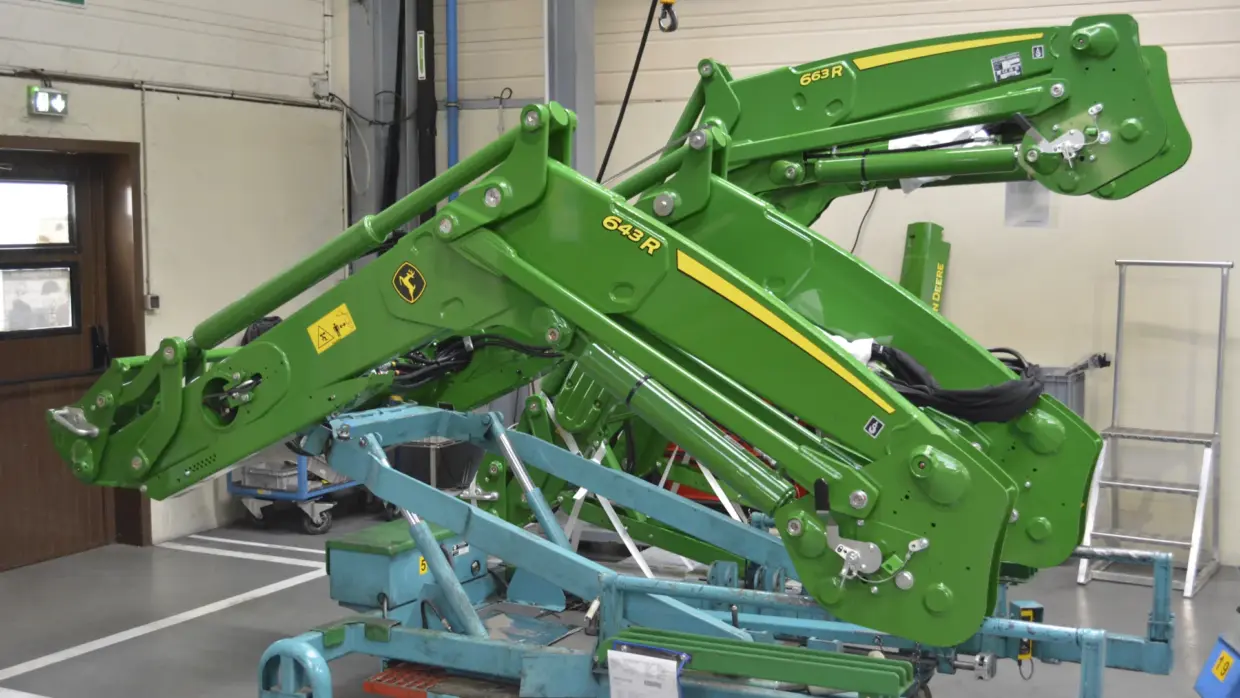
… as well as the full range of front loaders.
Many of your employees have first-hand farming experience. How does that shape the way the factory works?
It means we look at production through the customer’s eyes. Every decision must support the right quality at the right time. If an issue appears in production, it is addressed immediately via our Daily Escalation System. If it cannot be solved at once, it is discussed and escalated in a 9:45am meeting. We involve manufacturing, quality assurance, production engineering and customer support representatives. It may sound straightforward, but it is highly effective; a small issue on the factory floor can become a major problem in the field if it is ignored. Our job is to stop that from happening and to keep improving every single day.
0
permanent employees
0
square metres
of production space
At the same time, we must challenge ourselves constantly. Arc-Lès-Gray is a John Deere factory, but because we supply components to other Deere sites, we must perform like any outside supplier. On quality, cost and delivery, we must be competitive every day. There is no special advantage simply because we belong to the same company. That pressure is demanding, but it also keeps us sharp and pushes us to improve our processes continuously.
Where do those improvements come from, and how do you keep raising the bar?
Investment is one part of this – we continue to bring in state-of-the-art technology. Most recently, we installed a new laser-cutting machine for metal parts. It’s so fast and efficient that four machines can now do the work that once required eight, while reducing material waste. In front loader production, we have long relied on a fully automated line, where robots weld components to the same high standard time after time.
We have also developed a painting process that is unique within John Deere in Europe. Components are coated with electrostatically charged powder paint and then baked at 200 degrees. The result is a hard-wearing finish built to last, and the unmistakable John Deere green that customers recognise.
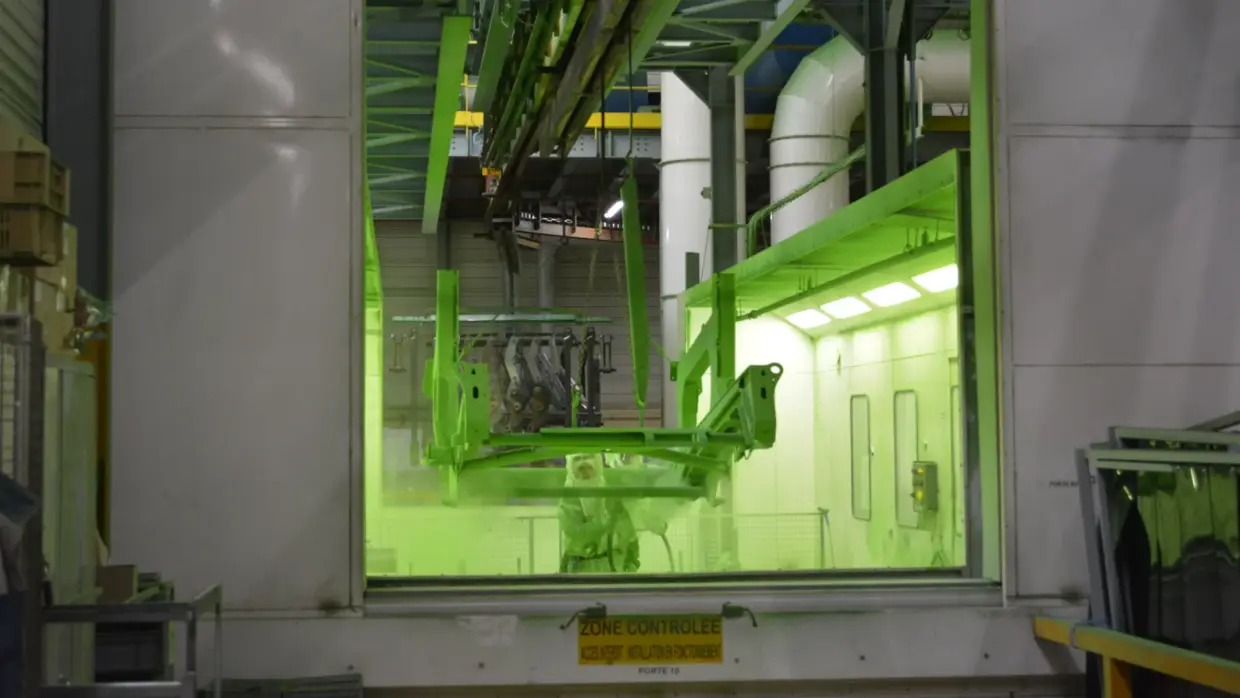
Components are coated with electrostatically charged powder paint and then baked at 200 degrees.
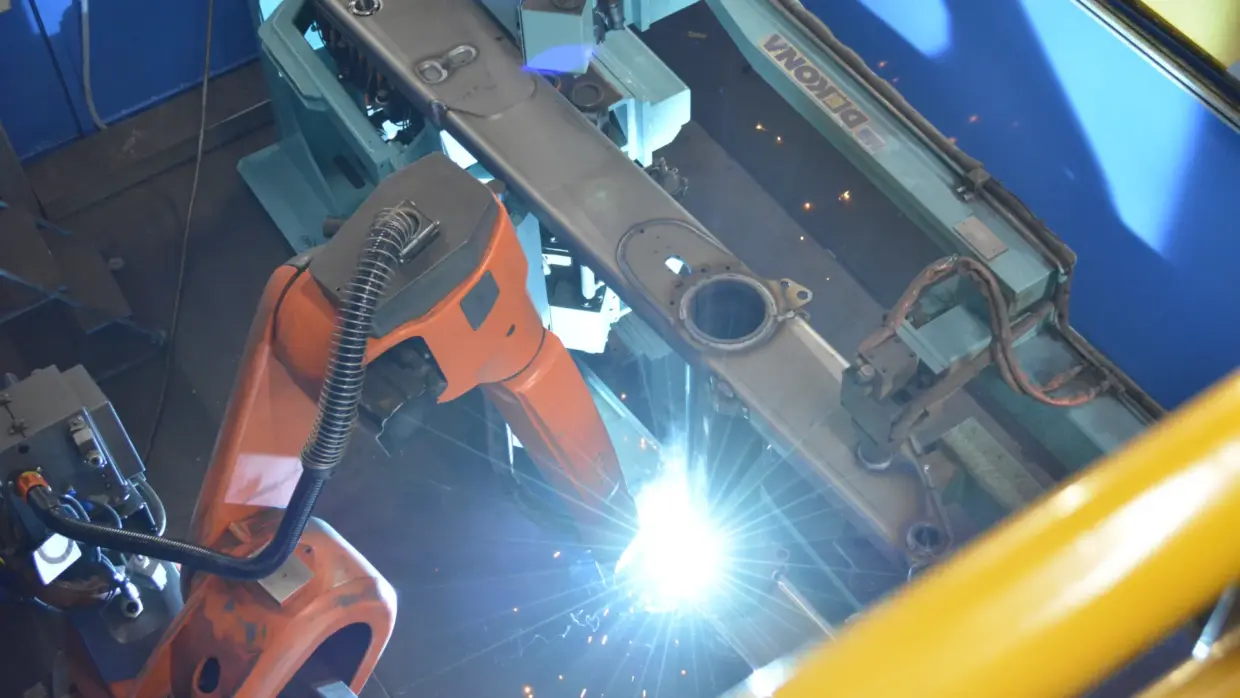
In front loader production, robots weld components to the same high standard time after time.
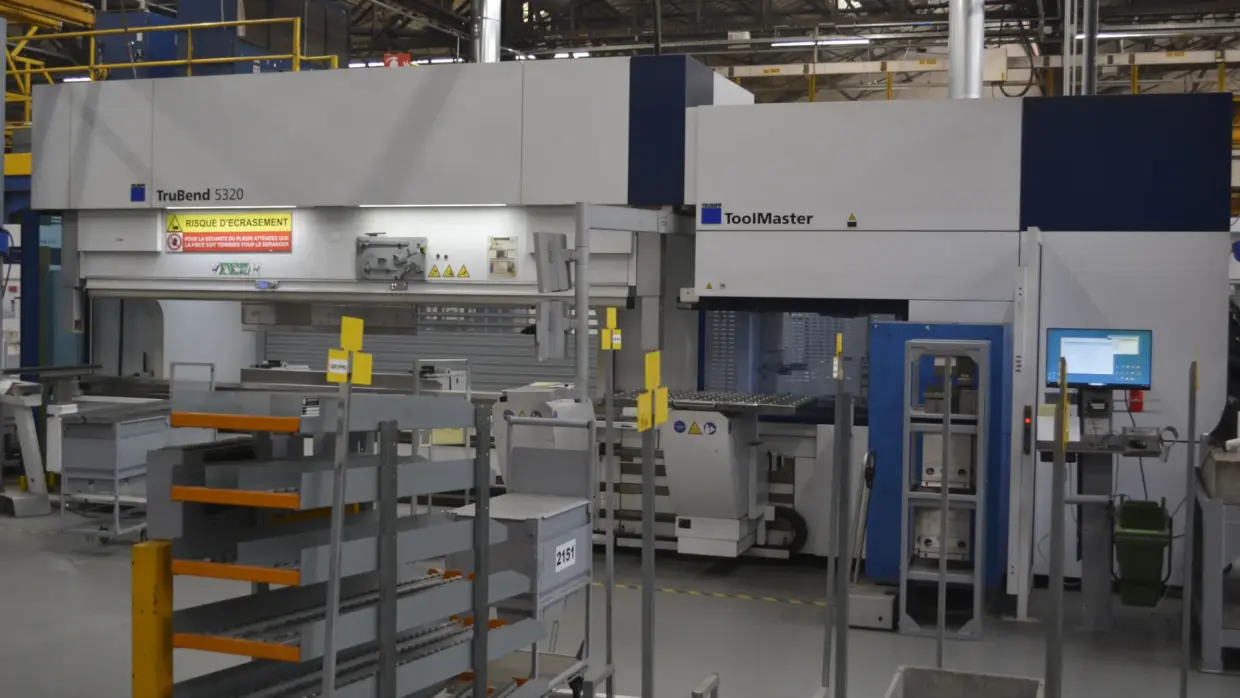
Automated laser cutting machines ensure precision and process repeatability …

… and guarantee maximum material efficiency through optimized cutting patterns.
Technology matters, of course. But what role do people play in the Arc-Lès-Gray factory?
A crucial one. Today, I can say with real pride that our internal survey ranked us as the best factory in Europe for employee engagement, safety and sustainability. But that did not happen overnight – it is the result of a long transformation that began around 15 years ago.
Fifteen years is a long time. What has changed the most?
In truth, almost everything has changed. At the beginning, we had two ambitions: Try to make the factory more productive and a better place for our employees. Modern machines, automation and new processes were part of that journey, of course, but the real turning point was cultural. The task was to bring people with us, to explain the change and to make colleagues want to be part of it.
For example, we redesigned the assembly line around the Visual Factory concept (an approach which improves communication and processes by using clear visual aids). Storage height is limited, so people can always see each other and speak easily across the line. Floors stay clear, every tool has a defined place, and no one needs to bend unnecessarily or waste time looking for equipment. The result is better communication, greater order, more safety and a stronger sense of shared responsibility. For me, that cultural shift has been the most important change of all. We see it every day – quality is strongest where people are truly engaged in what they do.
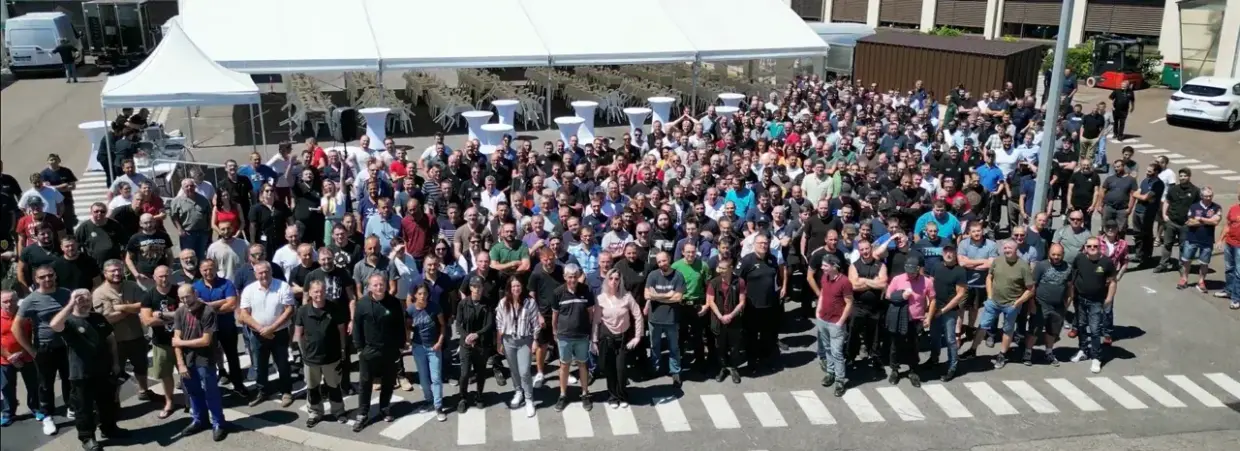
You are on the factory floor every day. In those moments, what gives you the greatest sense of pride?
What makes me proud is seeing everyone move in the same direction. Together, we build John Deere machines that customers depend on every day in the field. That trust is something we must earn, machine by machine – and that is exactly what our people do.