In the hilly fields around the small town of Saint-Symphorien-sur-Coise in the French department of Rhône, every minute counts during the harvest season, particularly for Florent. Within this short weather window, he must harvest all his customers’ grass and maize. “At the same time, we lose a lot of hours due to the travel distances between the many small, widely scattered plots,” he explains. To finish the harvest on time, he needed to increase his fleet of machines to include three forage harvesters and two combines.
But it was difficult to make the figures stack up. Florent already had one machine; a new John Deere 8300 forage harvester on finance, so a third new machine was not financially feasible. “The costs were simply too high, so I looked around for a used machine. The price was attractive, but this option didn’t offer security or a guarantee,” Florent says. And with no guarantee, the risk of a breakdown during those critical harvesting days would be fatal.

The security offered by the FCU program, combined with attractive pricing terms, convinced me.
Floren Peyronnet
A no-brainer
While searching for a solution, Florent came across John Deere’s Factory Certified Used (FCU) programme. The concept is that used machines are completely overhauled by experts at the factory and sold with a warranty.
It was a no-brainer for Florent. “This offer gave me much more confidence in the price compared to conventional used machines,” he says. FCU machines are available at 50-80% of the new price but offer the same attractive conditions as a new machine, thanks to their integration into John Deere Finance.
Normal used purchase
FCU programme

risk of self-repair

no warranty

unclear history

technical upgrades

factory warranty

new machine financing
Where machines get a second life
To understand why Florent has so much confidence in his new used machine, it helps to take a look inside the John Deere factory at Zweibrücken in Germany. It’s here that a team of experienced factory workers carry out the complete overhaul of the used machines.
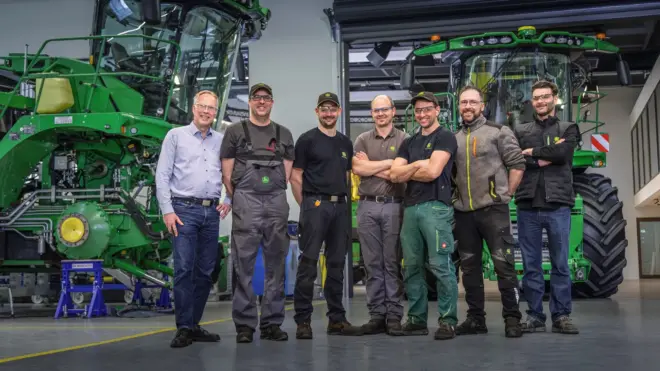
Under the leadership of Stefan Westphal, Administration and Planning, and Jonas Kuhlmann and Nicole Schieler, Logistics and Parts Management, machines that have often clocked up as many as 2,800 hours are completely stripped. “Every forage harvester is completely cleaned and fully dismantled before we put every single part through its paces,” says Philippe Steinmann, Go to Market Manager for Hay and Forage.
The transformation process
What happens in Zweibrücken is far more than a simple repair – it is a technical upgrade to the latest state-of-the-art technology.
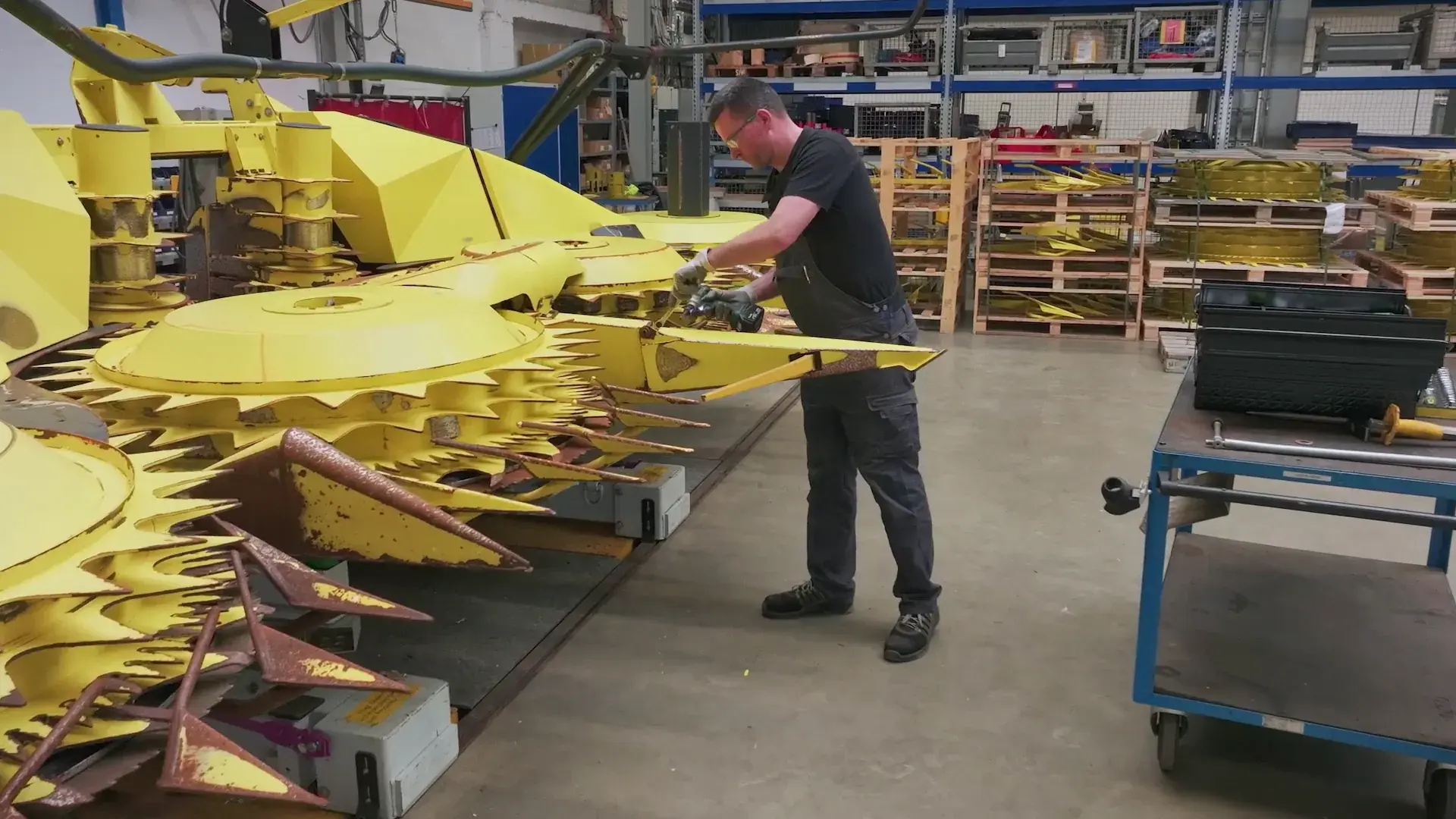
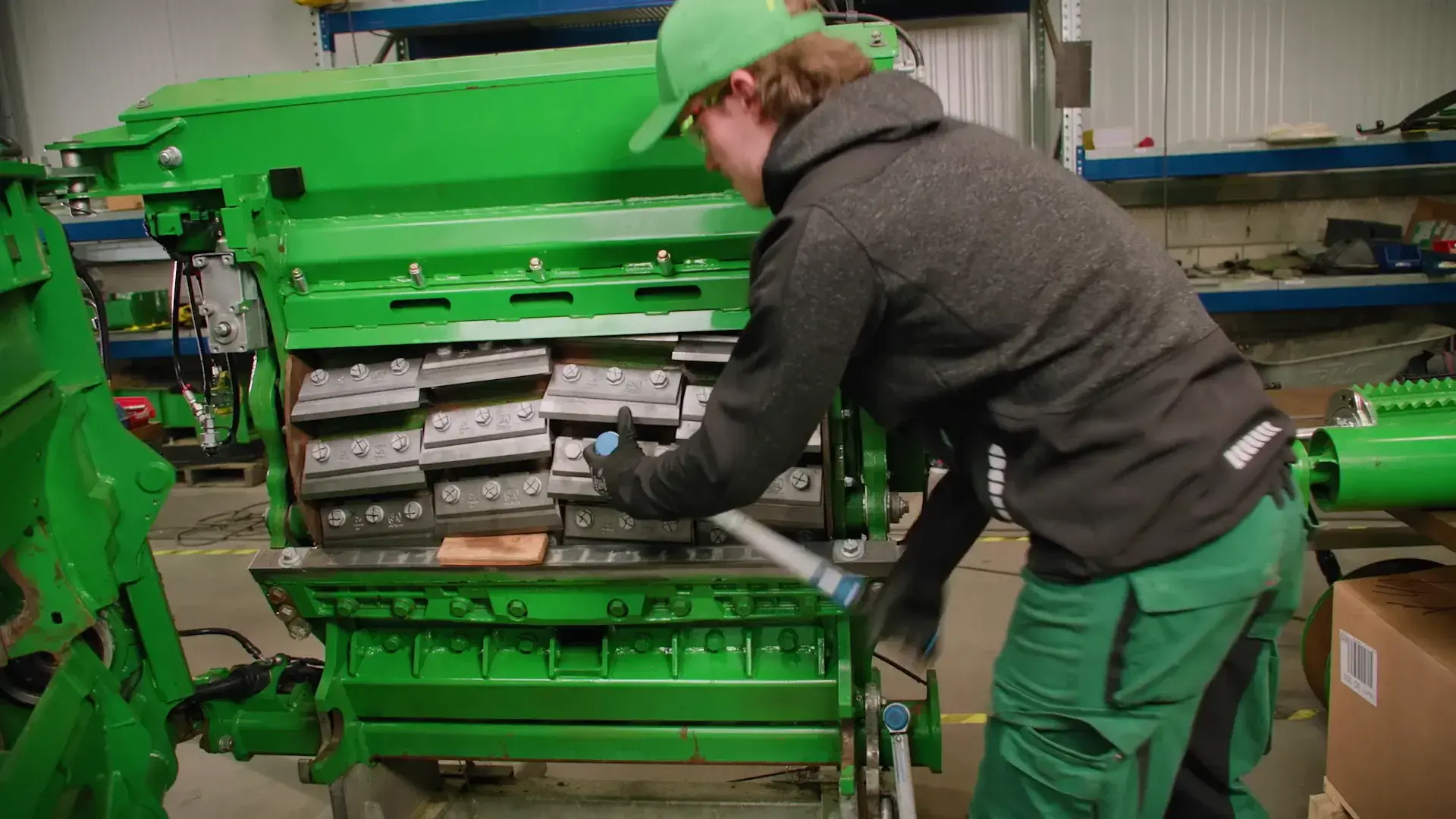
Parts replacement
Wearing parts like knives, wires, shear bars, drum bearings, drum bases, and other parts are replaced and renewed.
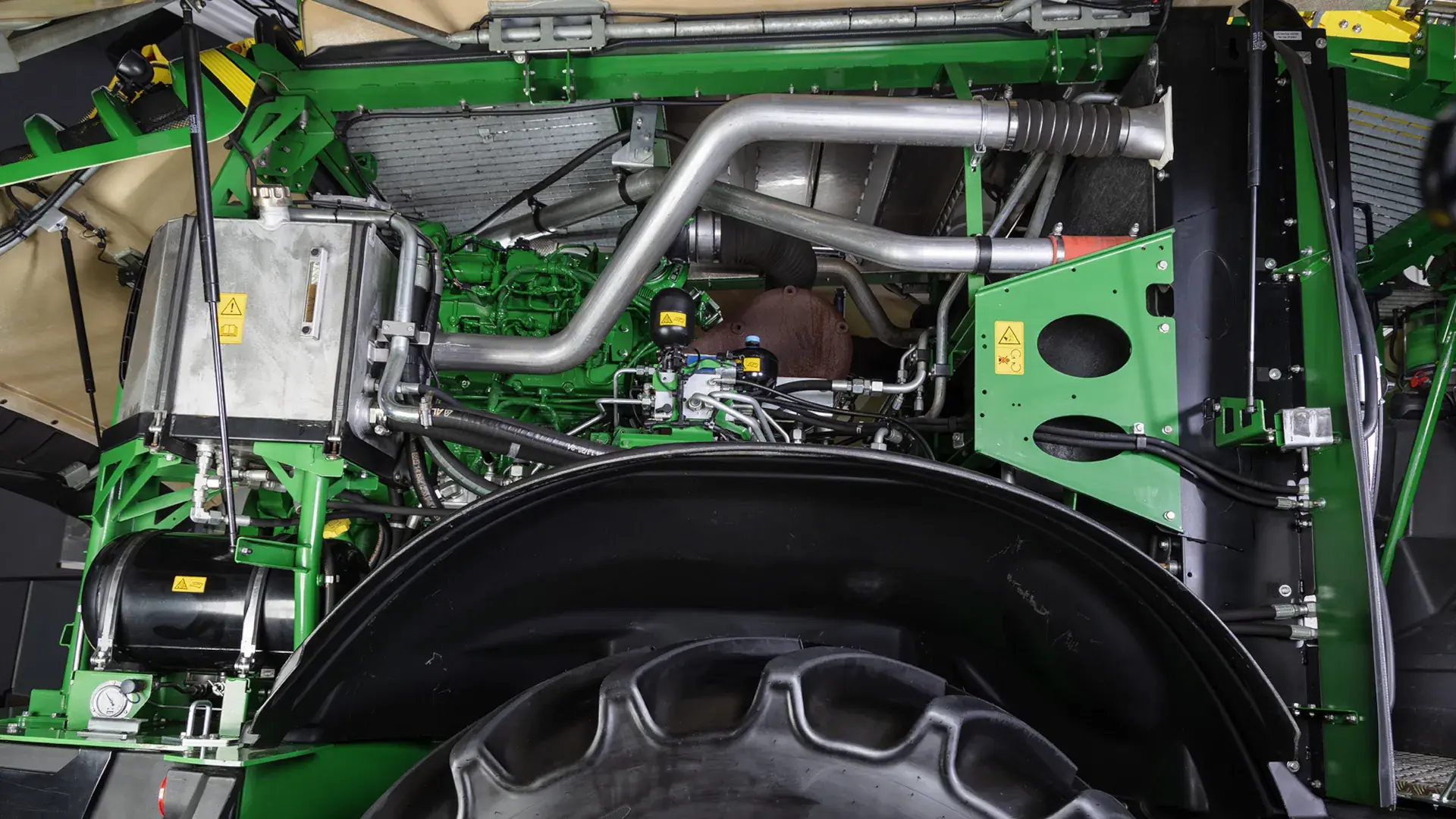
Technical upgrades
The machines are upgraded to 2025 model-year standards. These include the new feedroll intake damping system, heavy-duty sharpening devices, and state-of-the-art electrics.
Customisation
The team can customise the machine on request – whether that’s with additional LED lights, a StarFire GPS receiver, stone detection, or a different drum configuration with up to 64 knives.
Cab comfort
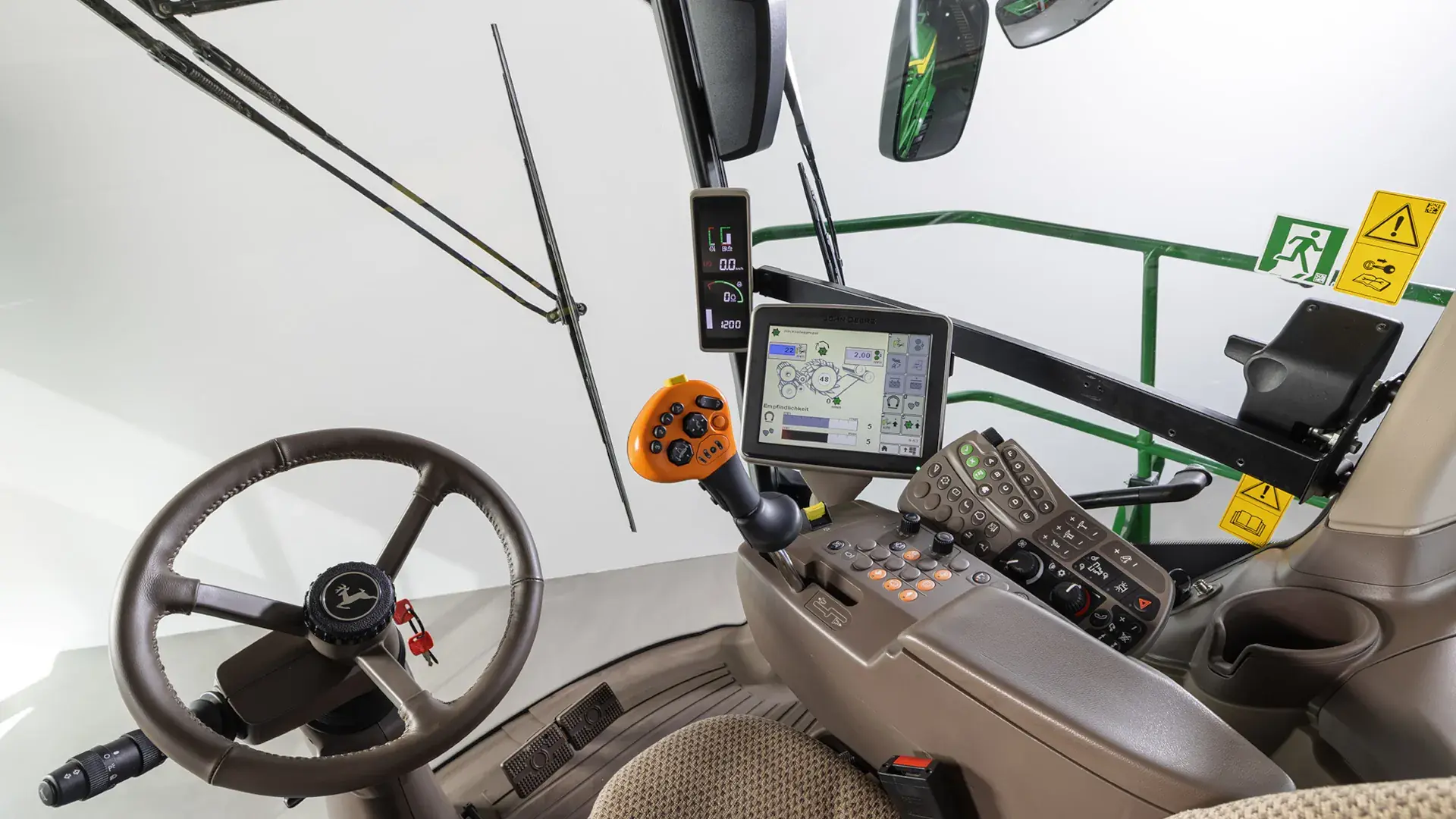
It also feels like a new machine for the operator – with a new seat, leather steering wheel, and the latest joystick.
The Finale: Tested Like a Brand-New Machine
Before Florent could take delivery of his FCU machine, the team had to prove that it was more than just cosmetically refurbished. Like every used machine, it underwent the same baptism of fire as a brand-new machine straight off the production line. The finale of this quality assurance is the dyno testing on the factory’s test bench. Here, the forage harvester is rigorously tested under full load – does the engine deliver the full rated power? Do the hydraulic systems work precisely? Are the newly installed software updates fully compatible with the mechanics?
However, the testing does not end in the workshop. Every machine must also prove itself on a special test track. Under real-world conditions, it ensures that the chassis, steering, and all controls – from the new joystick to the seating comfort – function perfectly.

At the heart of our quality assurance process is dyno testing on our in-house test stand.

Every machine must prove itself on a special test track.
Used Machinery with Confidence
For Florent it’s a win-win. “The offer convinced me because I got a certified used machine at an attractive price. When the harvester arrived at my farm, I was pleasantly surprised,” he says. “It looks great, the cab has been refurbished, and new parts have been installed where it matters.”
The contractor now has the capacity for those critical harvest weeks with the security of a one-year factory warranty and the certainty that his machine is ‘made by experts for professionals’.