Thomas Bourgeois has changed rotations on his farm, increasing the number of crop types from 10 to 15 options. Legumes are a crucial part of this. “They may not be the most profitable crops, but they are undoubtedly the most important,” says Thomas, who took over the farm in 2009 and initiated the shift to organic farming seven years ago. The main rotation follows a pattern of spring barley, followed by two crops oflucerne (undersown in spring barley), wheat, spring crops of barley, oats, einkorn wheat, etc, several species of food crops, like chia seeds, and then a return to a leguminous crop or a mixture of spelt and lentils.
Putting atmospheric nitrogen to work
Lucerne and clover are essential from a plant nutrition perspective, as Thomas does not keep any livestock on the farm. Prices for organic fertilisers rose by 20–30% in 2026, demonstrating the value of Thomas’ crop choices.
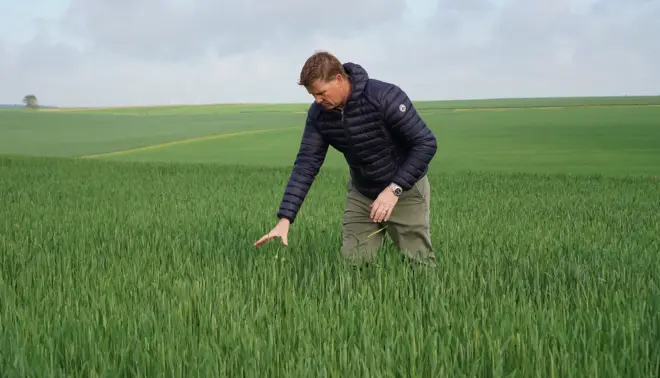
On a spring visit to his fields in Léglantiers, northern France, Thomas points to a winter wheat seed crop stretching across a hillside. “It hasn’t been given any fertiliser. The 160kg/ha of nitrogen fixed by two years of lucerne will be sufficient, given that the protein content in the wheat is less of a factor in seed production.” Furthermore, the gradual decomposition of residues will continue to release nitrogen well after harvest, benefiting the next grain crop.
When it comes to fertilisation, lucerne and clover offer Thomas another advantage. The pre-cuts carried out to ensure uniform flowering and to reduce weed pressure are exchanged with a neighbouring livestock farmer for manure, which is then spread on the farmland. In addition, Thomas also sources chicken manure compost, and very occasionally meat meal or feather meal pellets.

Reacting early to weed infestation
Since the switch to organic production, Thomas has gradually dropped several crops. In particular, soyabeans were abandoned due to erratic yields and pressure from fat-hen. Sunflowers, too, have disappeared from the rotation. Whilethey are fairly easy to grow organically, protectingthem from pigeons, crows and hares proved too time-consuming. As for flax seed production, it was deemed too complex for organic farming.
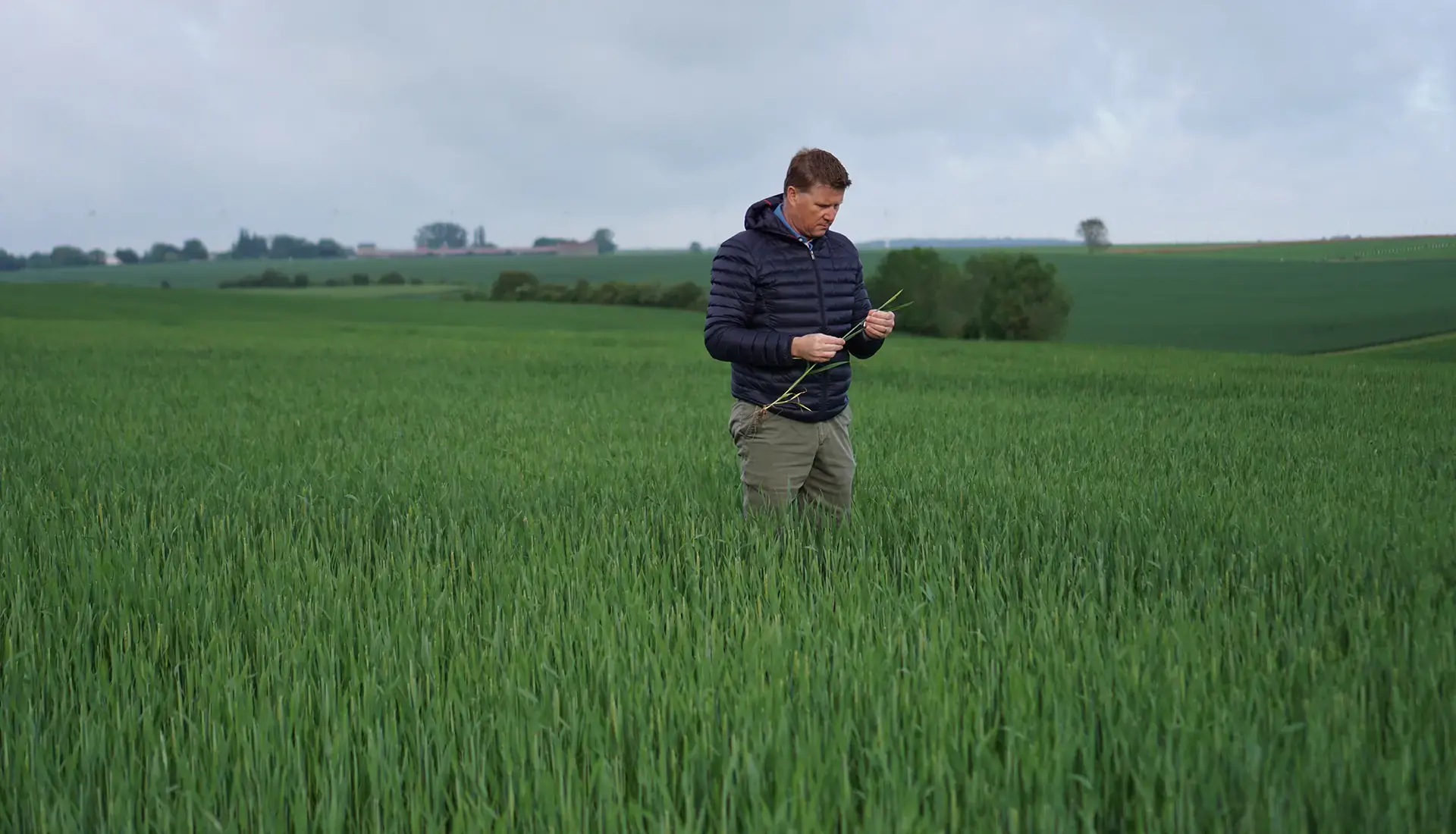
When it comes to tackling weeds, Thomas has found leguminous crops,and, more generally, the long crop rotation,are an indispensable tool. When grown for two to three years, lucerne, for example, effectively keeps thistles at bay, thanks to repeated mowing gradually depleting their reserves. “The field bean is robust and can withstand aggressive passes with a tine weeder, which will help to leave the fields clean for the next crops,” he adds.

I would rather lose the seeds I have sown and the little work I have done but keep the field clean.
Thomas Bourgeois
To control grass weeds, growing two spring crops in succession can help break their life cycle. In the meantime, as well as establishing a cover crop, Thomas can plough the field to bury the weed seeds. This is a strategy to be used with caution, as it means no tilling of the soil for two to three years to allow the seed bank to lose its germination capacity.
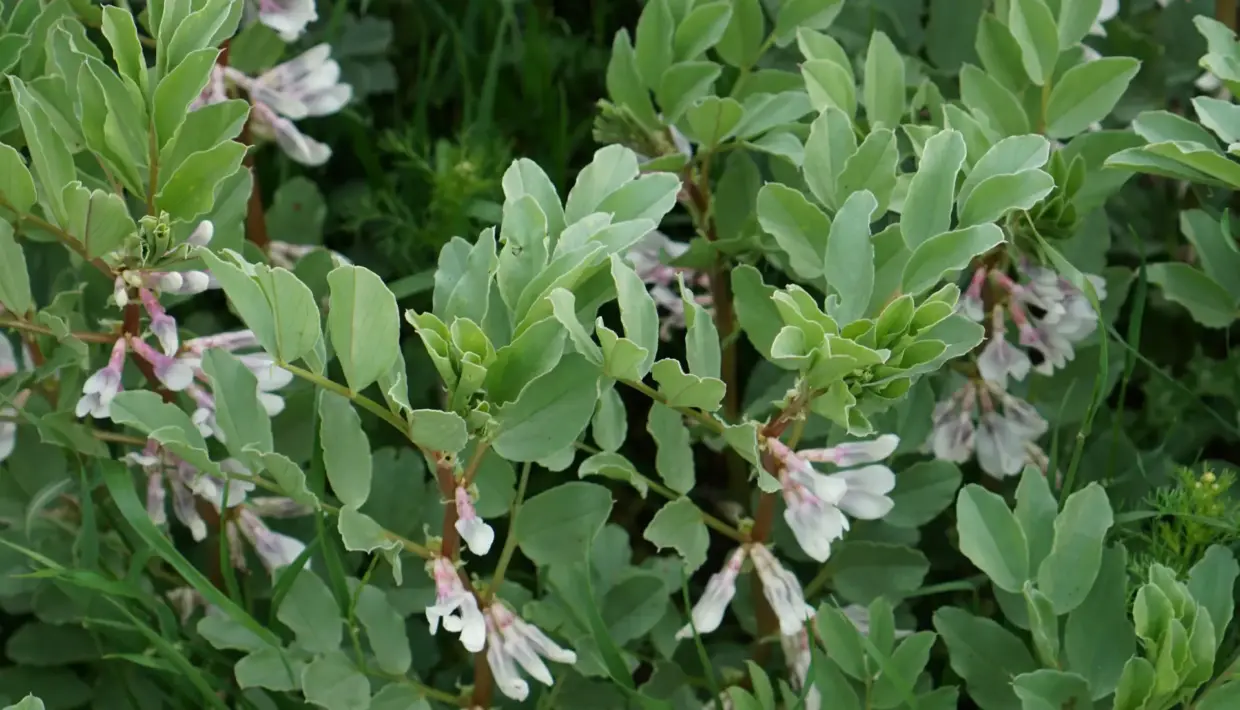
Field beans are an excellent preceding crop for wheat.
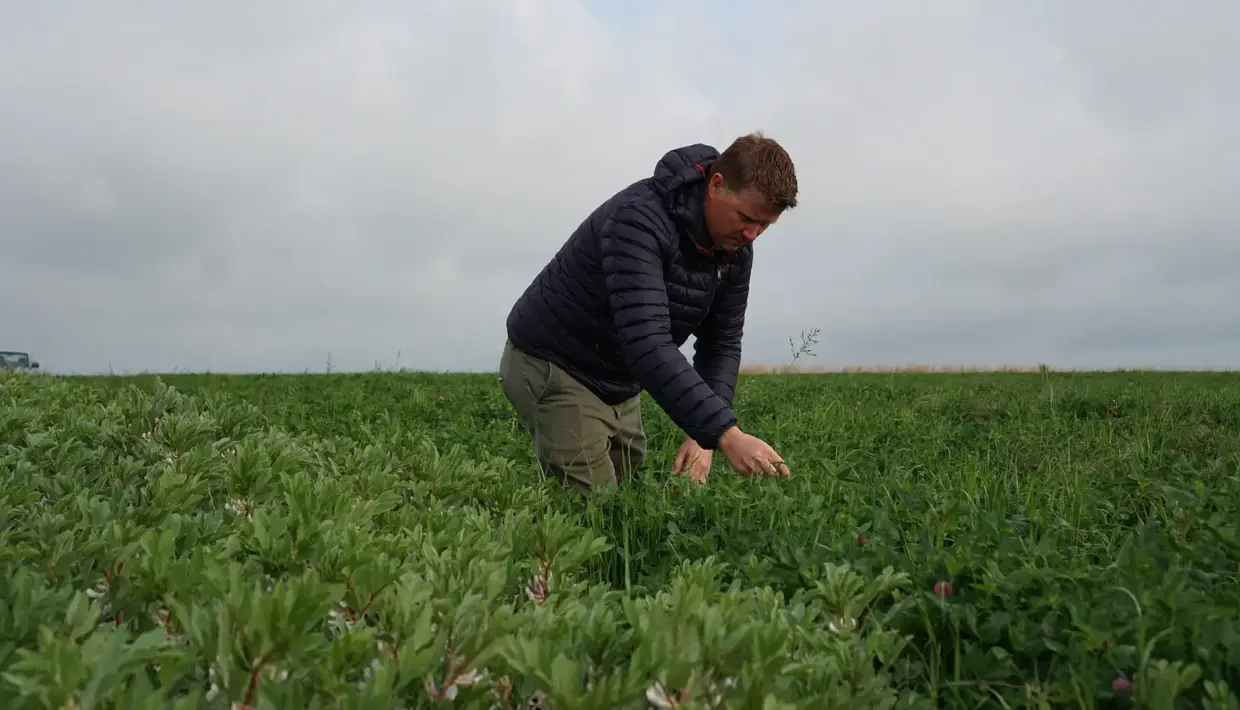
The farm manager has been president of the National Federation of Seed Growers since 2018.
Such a system requires the ability to react quickly in the event of excessive weed growth. “There’s no point hanging on to a crop once you can no longer keep it clean,” says Thomas. “After a few setbacks during the transition, I no longer hesitate to terminate a crop early and resow if the weed infestation is too heavy.” This also means having sufficient flexibility when choosing a replacement crop. In this case, the variety of market outlets that Thomas has managed to establish acts as a safety net.
Introducing chia
Thomas also works as an agricultural contracterthroughout the year so requires his crops to be managed without specialist equipment. This helps him ensure a return on investment. “The farm has a precision drill, a conventional drill and its own combine harvester,” he explains. “Implements used are standard toolson anarable farm, to which you add an inter-row hoe and a tine weeder for the organic aspect.”
Following the spring crops grown for seed production, more specialised food crops offer agronomic and economic benefits. Diversification could have involved vegetables, but the lack of access to irrigation led the farm to focus on other crops, notably chia seeds. According to Thomas, introducing the plant was the greatest challenge of the switch. As chia is native to South America, there were no established growing practices for it in northern France.

After an initial trial on a single strip, Thomas now cultivates around 10ha of the crop each year. Economically attractive, chia has its place in the rotation, provided that fat-hen can be kept under control, as it is difficult to remove during sorting and the food market requires a purity of 98-99%.
Mitigating economic risk
Thomas remains very cautious when choosing crops. “In the organic sector, we often deal with niche markets. Market prices can plummet quickly, and you can find yourself with stock at rock-bottom prices.Whether for seed production or the food industry, I won’t drill a crop unless I have a contract in place. I’ve got into the habit of planning which crops to grow well in advance; sometimes a year ahead, partly because organic inputs are harder to find.”
Seven years after organic conversion, the system has found its balance. From an economic management perspective, the advantage of a one-year or even two-year contract with a fixed payment is clear, making it easier to plan ahead. Growing a wide range of crops also helps spread the risk: “We have 8–10ha per crop; even if there is a minor disaster with one of them, it doesn’t put the farm at risk,” he says. The farm has plans to increase to 16 crops this season, with the introduction of 5ha of squash as a trial.
Preserving batch purity and seed integrity

In organic seed production, there is no question of compromising the purity of a batch. At Thomas Bourgeois’ farm, every change of species requires thorough cleaning of his John Deere S780i. “We pay particular attention to the grain tank, the elevator boots and the unloading auger,” he emphasises. After a blast with the blow gun, Thomas runs the fans at full speed then opens the elevator boot to remove the last few kernels. Another precaution, required by the rules governing seed breeding for small grains, is harvesting the field perimeter separately. The first passes along the edges of the field allow the threshing circuit to be fully flushed, with the resulting crop being separated from the seed lot.
The choice of an axial-rotor machine also meets the requirements of seed breeding. The gentler threshing action reduces the risk of mechanical damage to the seeds compared with a conventional drum-and-concave threshing system, helping to preserve their germination capacity. This is a major advantage for large-seeded protein crops, particularly peas and field beans, which are often susceptible to damage. “It really pampers the seeds,” says Thomas, who also appreciates the work rate of his S780i. This investment is recouped through his agricultural contracting business, which involves an additional 650ha of crops harvested each year.
But precision also plays an important role at an earlier stage. “The farm has four Starfire receivers, one of which features RTK correction, used in particular for sowing at 45cm spacing. These perfectly straight rows then make it easier for the Garford hoe to pass through, as its two cameras ensure precise tracking of the crop rows.