
 Loading...
It is a mid-October morning when I arrive in Mediglia, near Milan, and the first thing that strikes me at the farm is the sense of urgency that comes with the end of the season. Today the silage maize harvest will be completed, and some fields will be prepared for ryegrass seeding. The air smells of urgency and freshly turned earth.
Work at the Lovati Agricultural Company has been relentless for more than a month and today the weather is favourable. “We should take advantage of it,” says the owner, Umberto Lovati, who greets me with a smile in an almost deserted courtyard before taking me a few kilometres away to show me some tractors doing a range of jobs.
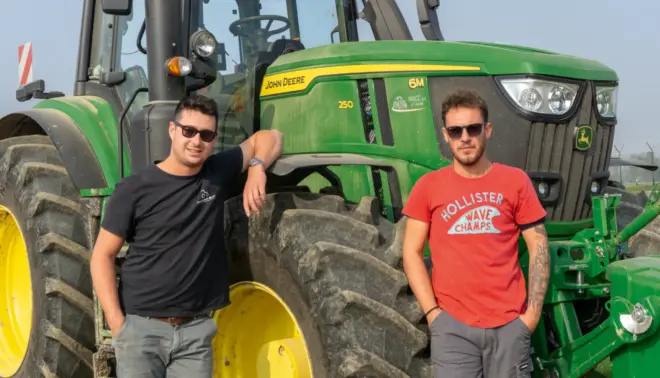
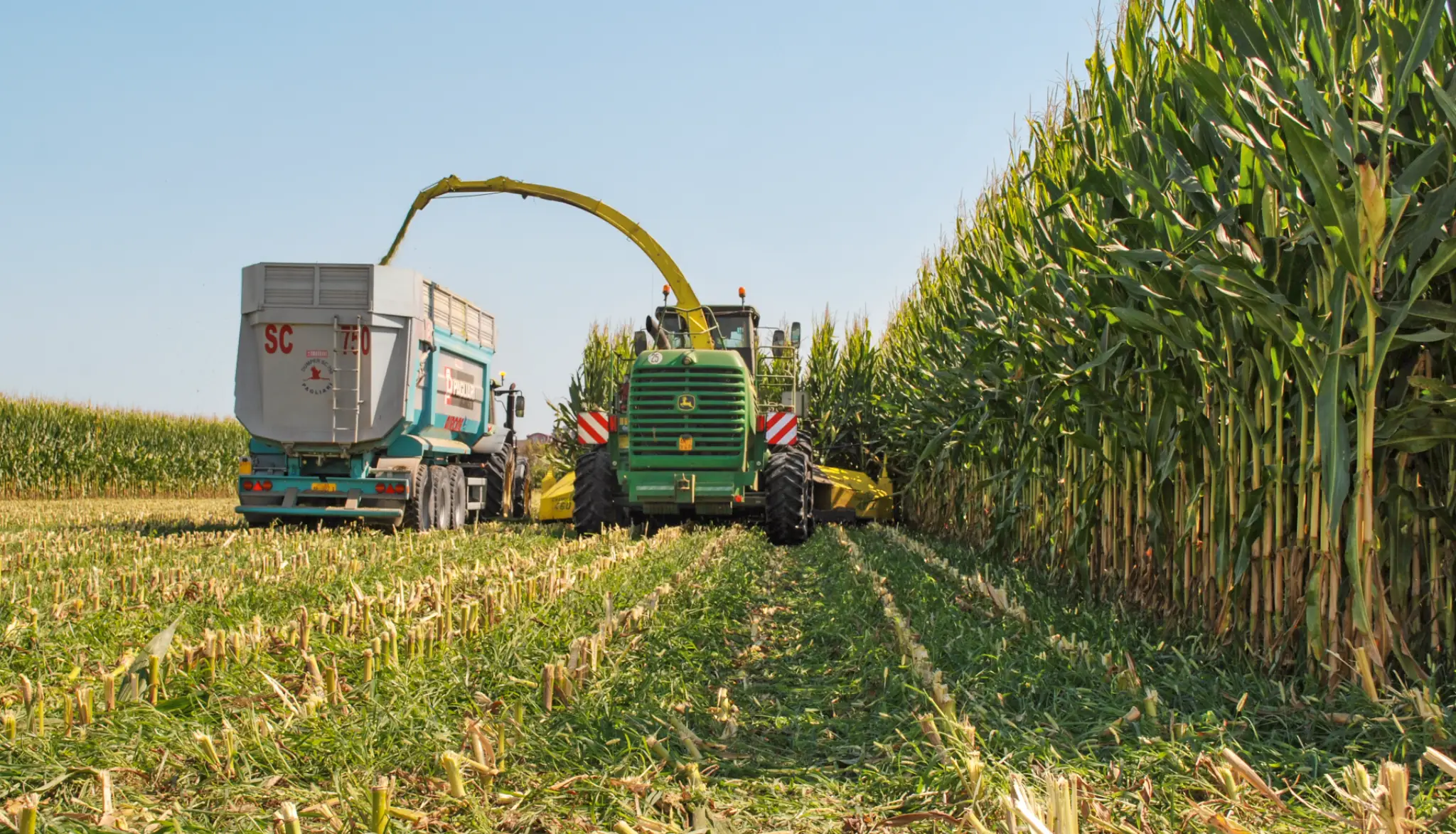
The company operates a fleet of 12 machines, all John Deere, including a self-propelled forage harvester regarded as essential for delivering outstanding productivity and ensuring continuous, reliable operations. When the harvest season begins, everything here seems to revolve around the fields, in a race against time that agriculture knows all too well; however, upon returning to the headquarters, the atmosphere becomes more relaxed.
Alongside its agricultural operations, the Lovati family has developed a major cattle breeding business over recent decades. The herd currently comprises 2,300 head of mainly Friesian dairy cows with a smaller amount of Belgian Blue beef cattle. Of the first group, 1,100 are in-milk. The contrast with the surrounding farmland is striking: Outside there is constant activity while inside the barns – despite their scale – the environment remains exceptionally quiet, broken only by the steady airflow of the fans and the rhythmic sound of the cattle at rest.
Umberto apologises and bids me farewell: He returns to work on the tractors to assist some of the 20 employees and his son Alessandro, who has been driving the development and management of the company for over six years. Before doing so, however, he places me in the care of his daughter.
Cow comfort is the guiding principle
Francesca is just 22, but she speaks with the maturity of someone who has earnt her place through hard work. “Our story is, first and foremost, a family story, which for three generations has spoken of passion for the land and our animals,” she says proudly. Management of the business is now shared with her brother, a qualified agricultural technician whom she describes as a key pillar, fully aware that together they embody the future of the farm.
“After a year studying Economics and spending time abroad, I started working in the family business, initially supporting administration alongside my mother, and focusing on calf management,” she reveals. Afterwards, there was the sick pen to manage, then the main housing, in a journey that increasingly involved her.
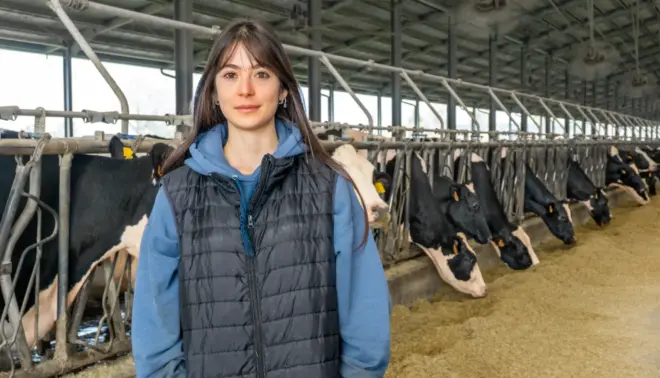
“I worked alongside an experienced breeder and attended several courses” she continues. “When I realised, I had developed a passion for the profession, my father – just as he did with my brother for managing the machinery side – granted me full autonomy in decision-making. With that came responsibility and the desire to improve.”
The light in Francesca’s eyes as she speaks words of appreciation for her father reflects an ideal passing of the baton, supported by a steady presence of experience that is constant yet never intrusive.
“He was a pioneer in the sector, and a great example for us,” she observes. “Still very young, following the passing of his father and uncle, he took on responsibility of the business and, over the years, by nurturing his curiosity, travelling abroad, and engaging with an open mind, he built an innovative and high-performing dairy farming model, especially in terms of animal comfort. He demonstrated the ability to think ahead, building a team of reliable operators who are continuously trained and regularly kept up to date. Today, the welfare of the cows remains our guiding principle.”
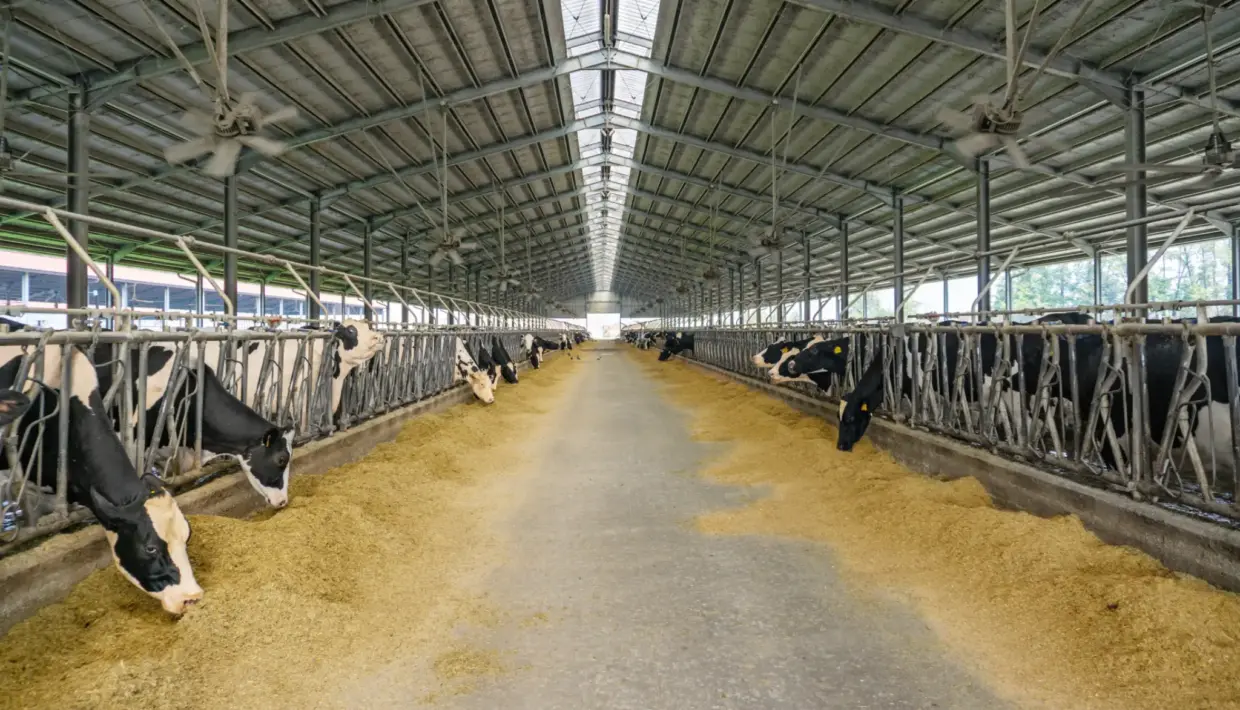
The barns are large but well organised structures, where everything is designed with animal comfort in mind.
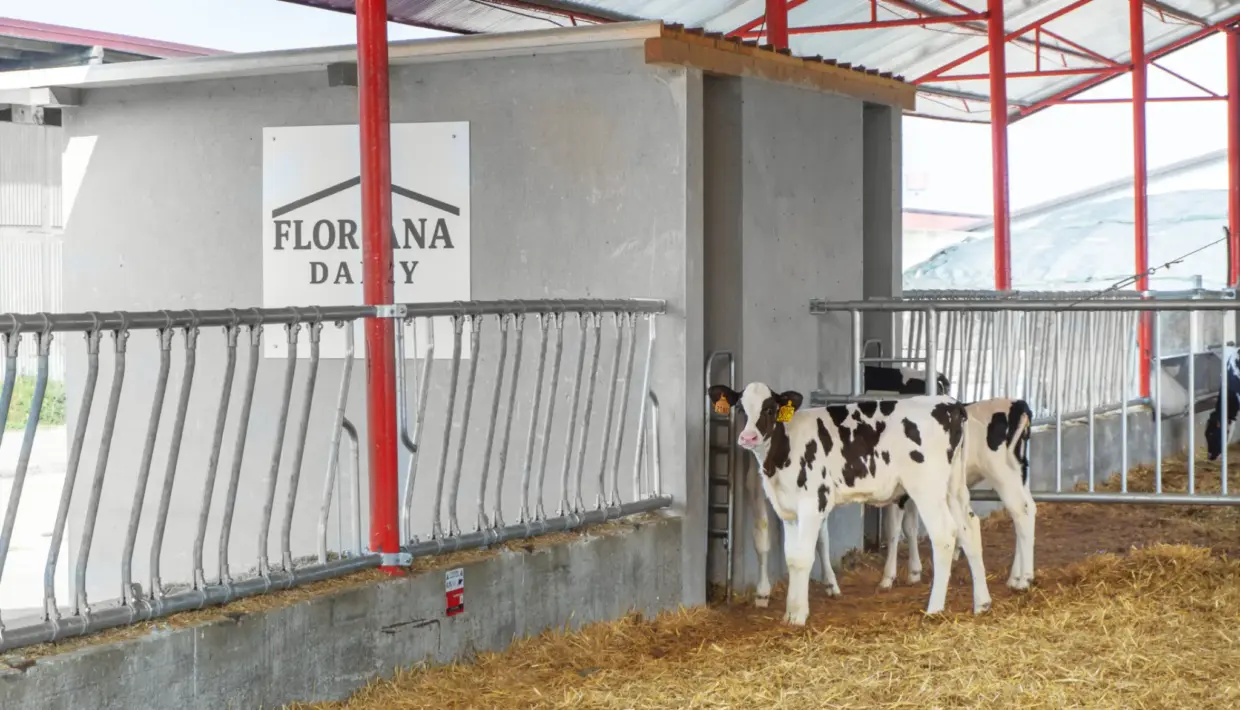
From 20 days old, the calves are fed using a Förster-Technik automated feeder.
This is not an abstract concept, but a daily working method, one that Francesca – currently enrolled in the Faculty of Animal Production Sciences, describes as we visit the facilities dedicated to housing and milking.
Turning complexity into order
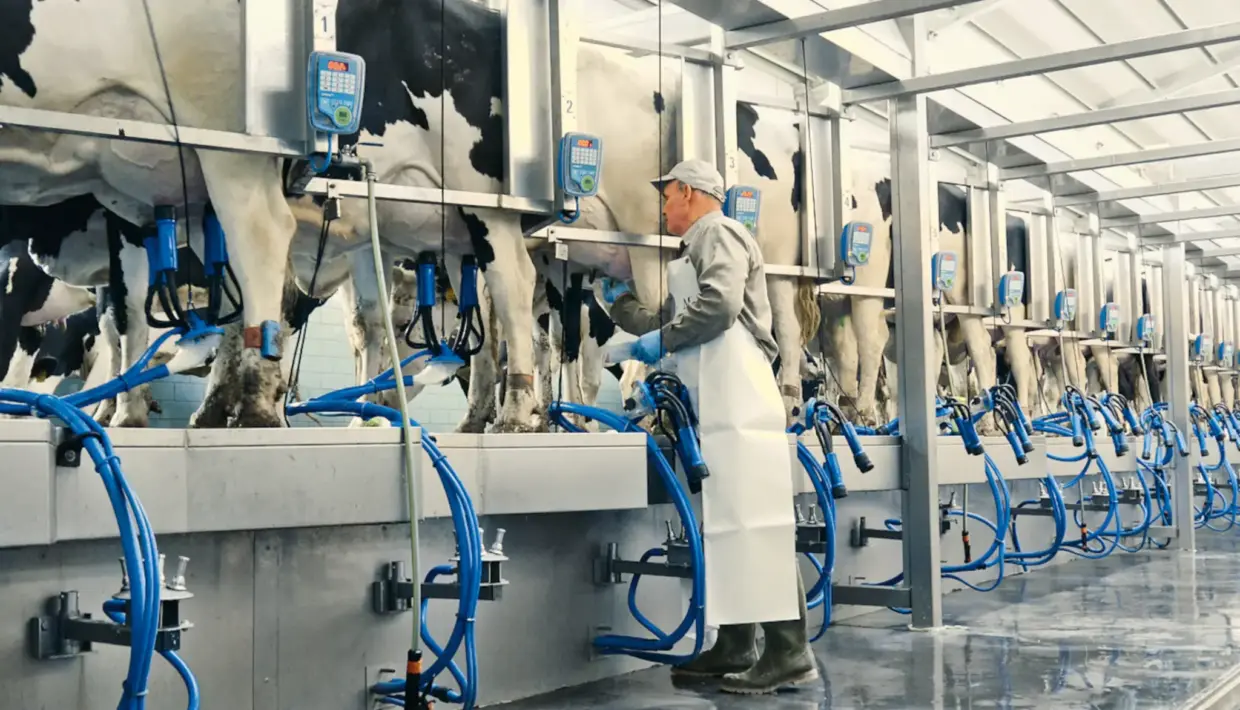
The lactating cows are divided into four groups across two buildings, separated from the dry cows and calves. Around 500 replacement heifers are located a few kilometers away, awaiting the construction of a new barn dedicated to them from spring onwards. The herringbone milking parlour (25+25); the operational heart of milk production, is centrally located between the two barns housing the lactating cows.
“We moved almost all the animals to this site seven years ago, building new sheds and a high-performance area for milk collection,” Francesca explains. “It was a challenging but decisive moment, marking a new beginning.”
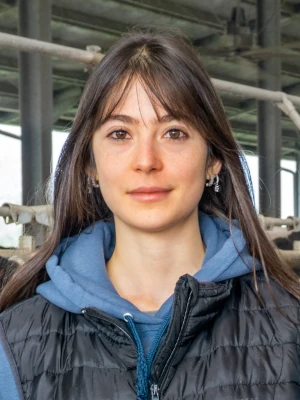
The key is to transform complexity into order.
Francesca Lovati
Day to day livestock operations are structured around simple protocols, clear roles, rigorous cleaning, and maximum organisation. “The key is to transform complexity into order,” she says.
Milking is carried out in two shifts – day and night – each lasting seven to eight hours, operated by three specialised staff members. In addition to milk, colostrum is collected from freshly-calved cows – essential for calf immune protection – then immediately pasteurised and frozen, making it available for newborn calves in approximately 30 minutes.
Each year around 1,000 calves are born. They are separated from their mothers immediately to prevent bacterial contamination. They are housed in individual pens for 20 days and then fed using a Förster-Technik automated feeder, which ensures personalised nutrition for each calf.
Each animal is digitally monitored throughout its entire life cycle. “We use the Afimilk herd management computer system from Total Dairy Management, which helps us detect any issues with the cows and, from 13 months onwards, manage the heat synchronisation plans to facilitate insemination,” Francesca explains. ”First-time calvers get sexed semen, selected to produce female offspring.”
This approach ensures a steady supply of ‘fresh’ Friesian replacements and supports improved genetic selection – while always bearing in mind that “you can use the best genetics in the world, but without the ability to manage them properly, in terms of operations, herd management, and animal welfare, the results simply won’t follow”.
Optimal physiology and home-produced forage
Here, the results are tangible: Since relocating to the new facility, average daily milk production has increased by six litres per cow, reaching a total of 40 litres per head/day. Milk quality is continuously monitored through sampling and is supplied to Galbani, a leading dairy processor that requires strict standards in terms of somatic cell count, fat and protein content, bacterial load, and casein levels.
Conception rates have also improved, alongside the general calmness in the herd and the reasons are clear. These include carefully planned barn layouts, well-thought-out weaning plans and customised feed rations, cubicles guaranteeing ample space, 110 fans installed over feeders and cubicles, automated showers and water jets for summer cooling, and spacious drinking troughs that ensure warm water in winter and cool water in summer.
Crop and dairy production need to work as one, fully connected and integrated: Two intercommunicating companies that support each other.
Francesca Lovati
The operation focuses on preventing stress – particularly during milking – through rigorous health protocols, weekly veterinary checks, and a diet based largely on self-produced forage, silage, and starch. The latter is made possible by the 700ha farmed within a 10km radius of the main site.
“We carry out a rotation based on maize, alfalfa, and, to a lesser extent, wheat,” Francesca adds. “We purchase the protein component like soyabeans to complete the ration.”
The farm uses a range of precision agriculture solutions, from satellite guidance on agricultural machinery to digital systems for crop monitoring and land management – while a 400kWp photovoltaic system covers the operation’s daily energy requirements.
Looking ahead, the business is planning an even more advanced rotary milking system, allowing for reduced milking times and the transition to three milking shifts, offering further benefits in terms of efficiency and animal comfort. “The well-being of our livestock and those working in the company will remain our focus.”
Learn more on Instagram: www.instagram.com/floriana_dairy