
 Loading...
Agricultural
employment in the EU in comparison
2015
2024
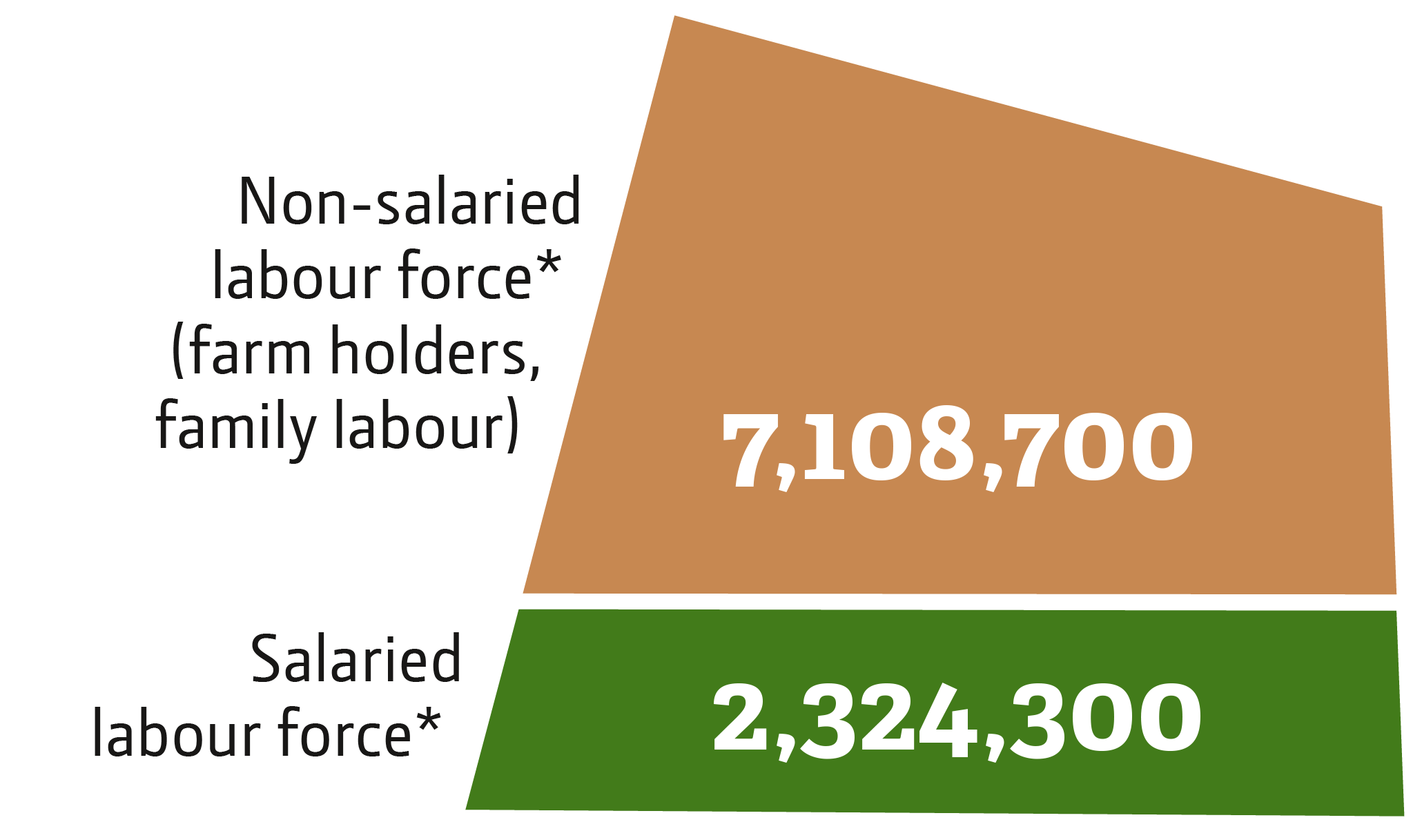
*In annual full-time equivalents (FTEs)
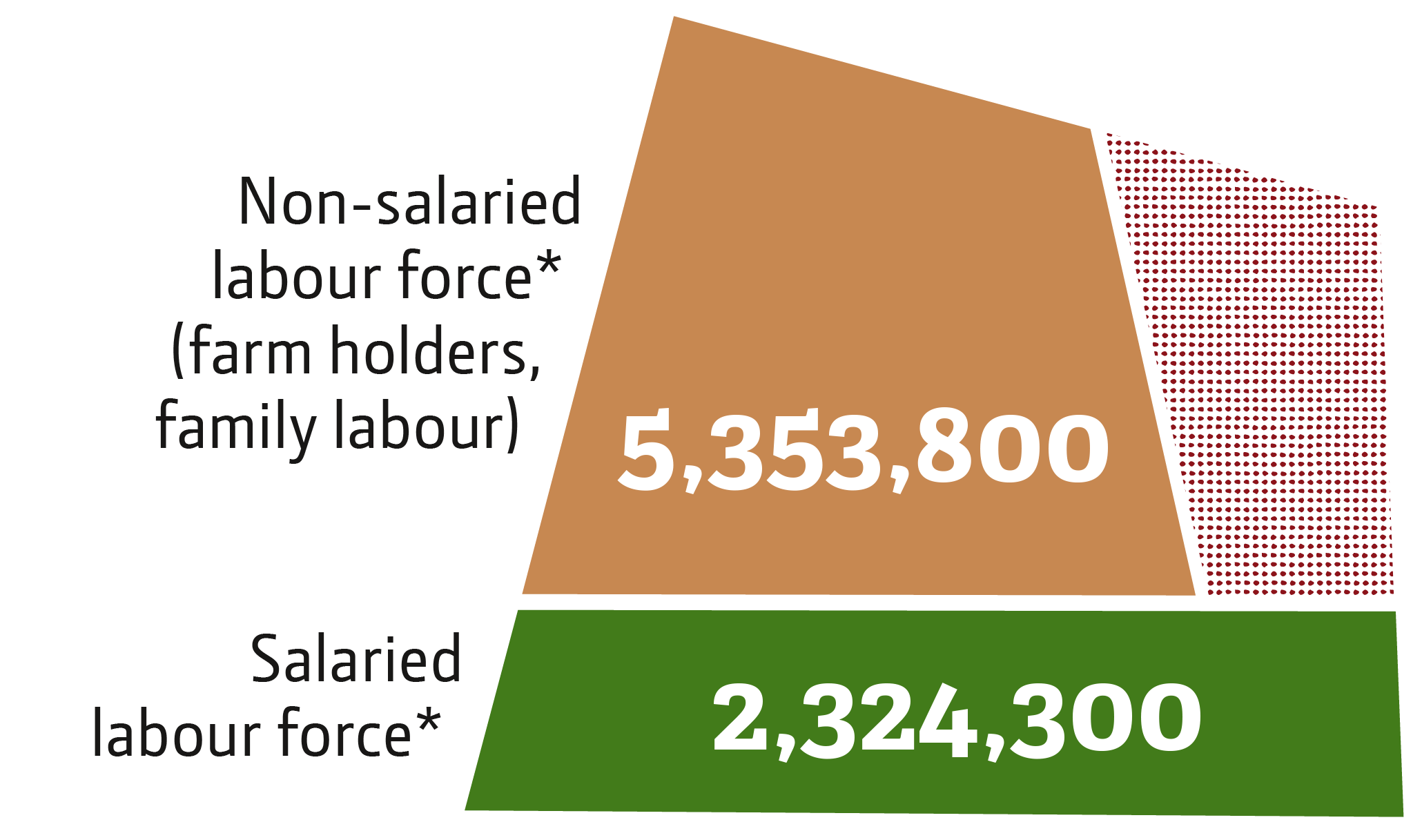
*In annual full-time equivalents (FTEs)
 While the utilised agricultural area (UAA) has remained broadly stable at about 157 million hectares.
Around
2,000,000
non-salaried workers less than in 2015.
Despite a shortage of skilled workers, the number of paid employees has remained stable. The bottleneck stems from a declining “hidden workforce”.
This leads to greater competition for skilled workers in the agricultural labour market.
Source: Eurostat
Decline in employment figures
The European Centre for the Development of Vocational Training forecasts a further decline in employment figures in the European ‘green sector’ by around
0%
Labour recruitement challenges in agriculture

52%
of planned hires in France are considered difficult by employers.
Source: France Travail, 2024

63%
of employers in the UK struggle to fill certain positions.
Source: University of Exeter, 2022

39.8%
of vacancies in arable farming, forestry, animal production and horticulture in Germany have no suitably qualified unemployed applicants.
Source: Thiedemann, 2024 (data from 2023)
A challenge in recruiting young talent
Lower earnings
In 2020, agricultural workers earned less than the average for all economic sectors.
minus 30% in France
minus 29% in the United Kingdom
minus 35% in Italy
Source: International Labour Organisation, Labour Force Survey – LFS 2020
Physical complaints
More than one in two people working in agriculture suffer from physical ailments. This is the highest figure among all occupational groups.

55% complain of pain in their arms
57% complain of back pain
46% have pain in their legs
Source: 6. European Survey on Working Conditions
Weekly working hours
In 2024, skilled workers in agriculture, forestry and fisheries had the highest average weekly working hours in the EU.
Agriculture, forestry and fisheries
42.1 hours
Managers
40.9 hours
Soldiers
39.9 hours
Source: Eurostat
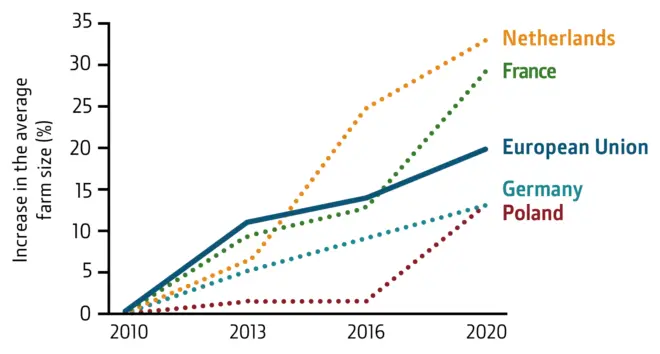
Structural change meets generational shift
Development of average UAA per farm (compared to 2010 in %)
Age of farm managers in the EU in 2020
Over 55 years
57.6%
Under 40 years
12%
Many farm managers will retire in the coming years. This accelerates farm consolidation and increases labour demand.
Fewer young people coming from farming families – and consequently greater competition with other sectors for young talent.
Partial compensation for labour shortages
Increased technical capacity
Tractor registration between 2018 and 2022
-24.4%
below 100 HP
+52.6%
150–199 HP
Source: France (Axema; CGDD)
Fewer crossings
Reduced tillage
2001
21%
2017
47%
Source: France Axema; CGDD
Agricultural Service Providers
Outsourcing of tasks
0%
of agricultural work in the EU is carried out by contractors. For certain harvesting operations, this figure rises to
90%
Source: CEETTAR – European Association of Agricultural Contractors
Ways to enhance the attractiveness of agriculture as a workplace

Political and institutional measures
- Funding schemes to support new recruits
- Tax incentives for employees in rural areas

Education and training
- Practice-orientated short courses, including training on new technologies
- Increased support for vocational training on farms

Working conditions and company culture
- Greater use of ergonomic and labour-saving technologies
- Leadership and management training for farm managers

Rural development and the profession’s image
- Bundling of local services like childcare, housing, mobility
- Initiatives to enhance the recognition of farming as a profession