At the beginning of October, there is a calm before the storm at Niels Kreuk’s company. Everything is being prepared for the new tulip season, which will burst into life later in the month. The company has two annual cycles that overlap: First, towards the end of October, tulip bulbs are planted for a new propagation cycle. This takes place about 70km from home, where a contractor plants the bulbs in the fertile clay soils of the Flevopolder. Two of Niels’ permanent staff help with this.
Shortly afterwards, the new season for forcing (mimicking winter by chilling bulbs for 14–19 weeks) the flowers begin at home. Tulips are grown in a largely automated, multi-layer cultivation system in the greenhouse. Prepared bulbs are placed in crates on one side of the greenhouse and, once they have developed into harvest-ready tulips, are automatically transported to the processing area, where they are picked and bundled.

I want everyone who works here to feel that they are valued as individuals.
Niels Kreuk
Between mid-December and mid-May, approximately 15m tulips leave the company, bound for supermarket chains across Europe. When the greenhouse flowering season comes to an end, attention turns to the harvest of new tulip bulbs, which begins in June, and the processing and preparation of planting material for the next season.
“That’s a very busy period for us, when we need all hands on deck,” explains Niels. “In late summer, the pressure eases off a bit. That’s when we do maintenance and make improvements, and then the whole process starts all over again.”
Thirty people, with new faces and farewells along the way
Niels runs the business with the assistance of four permanent employees, eight seasonal workers, and 18 secondary school students. The students during the summer, at harvest and again in the winter when the bulbs are planted.
“The general trend is that fewer and fewer children want to work in the agricultural sector and prefer to work in the hospitality industry,” he says. “Fortunately, we still have a group of enthusiastic young people coming here. Through brothers and sisters, and their friends, new recruits continue to arrive as the older ones move on to study or other work.”

Many Polish workers also often return to the company. Niels deliberately does not work with temporary employment agencies and has his casual workers on the payroll. “They are part of the team. I prefer to retain people, but there is also turnover here; people are in high demand everywhere. Sometimes 70 to 80% of the people come back and bring others with them. I think that’s great to see.”
The four permanent employees each have fixed responsibilities, with scope for variety. “Everyone has a piece of the maintenance, and a piece of the logistics; that has grown naturally.” Maintaining a good atmosphere among themselves is important to the team. The spacious canteen provides a place for breaks, and at the end of the season they organise a party for all employees.
“Everyone belongs here and everyone matters. For example, we have a polo shirt with a company logo for the students,” says Niels.”These are small things, but they show that we are in this together.”
Coaching supports staff
Attention to a good atmosphere and team spirit is important, but for Niels it doesn’t stop there. He wants attention for the individual. On several occasions, he has brought in a coach to conduct one-on-one sessions with his permanent staff. A few years ago, through the central payroll office, of which Niels is a member, he joined a government-supported coaching project. The coach involved; Marloes Sjerps, is an organisational consultant who helps people to be more aware of themselves and how they relate to others.
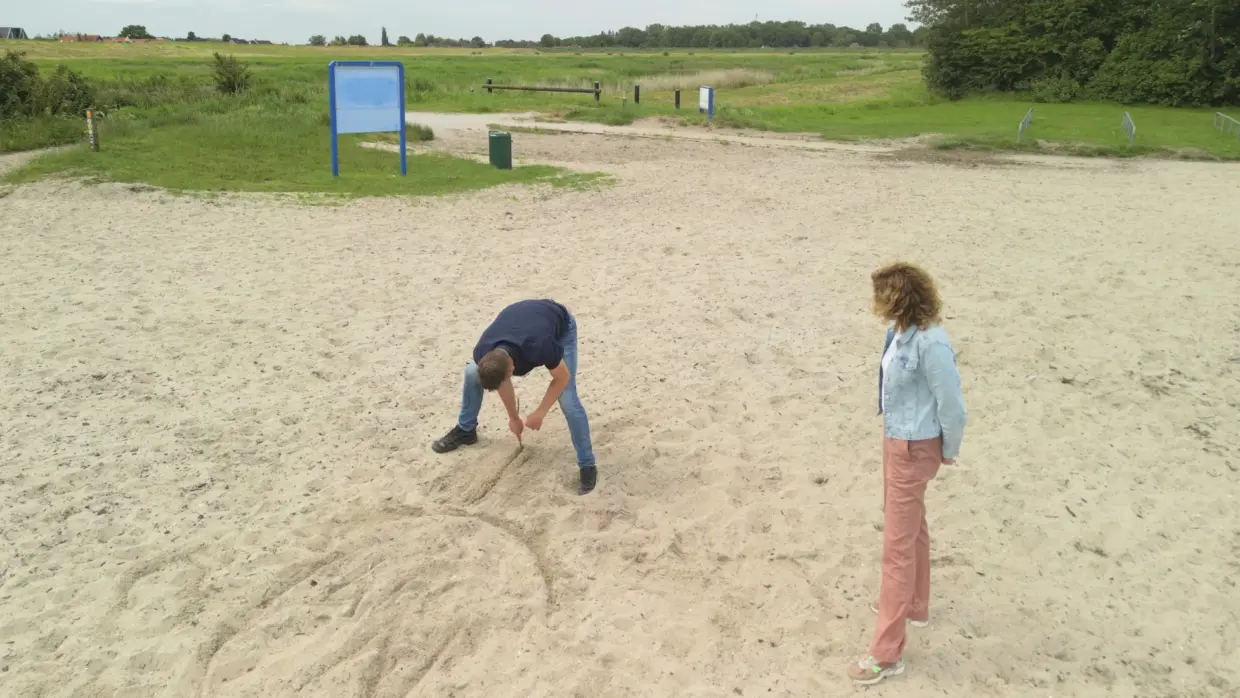
Coaching is also beneficial for workplace performance.
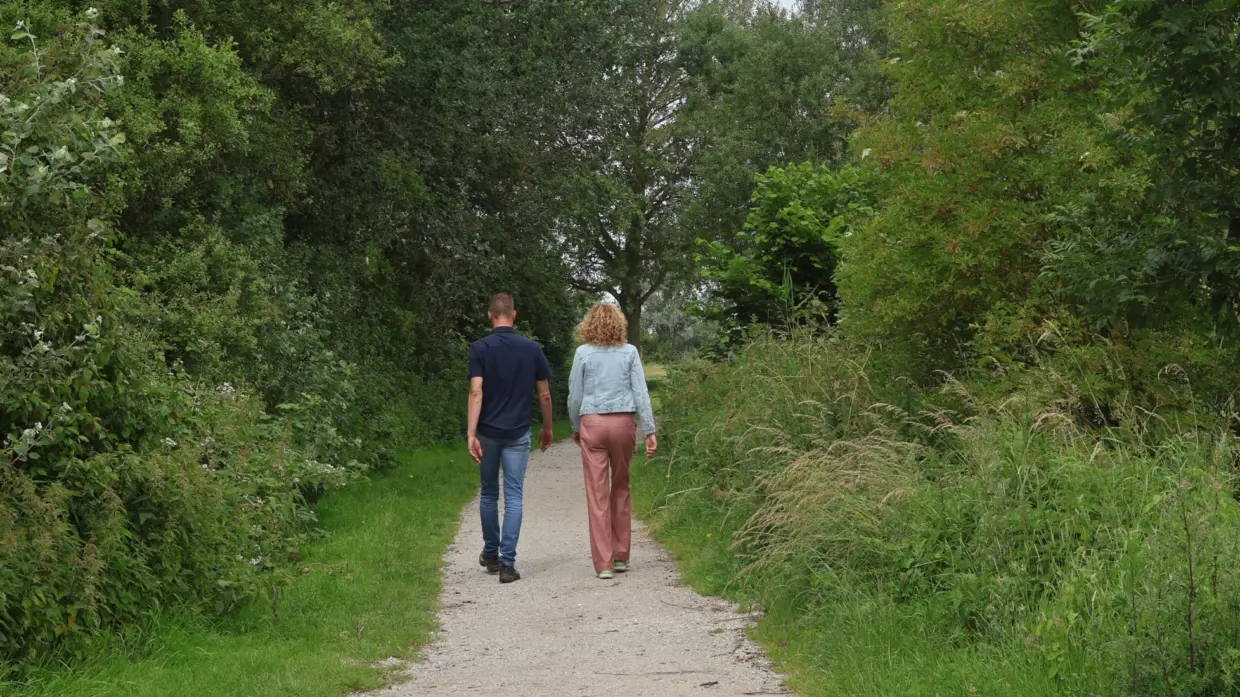
During a walk, the staff also talk openly about difficult topics. Photos: Marloes Sjerps
“I was immediately enthusiastic about it,” says Niels. “Everyone knows how important it is to feel comfortable in your skin. It’s so easy to say you are doing fine. But what is really going on in your head? How are things at home? But also: What are you struggling with at work? Do you have any unspoken ambitions or are certain things hard on you? You can talk freely to a coach. That’s important. First and foremost, for the person themselves, but also for a company. Because if you’re not feeling well, you can’t do your job properly either.”
Everyone takes responsibility
Niels has noticed that the individual walks with the coach, and the conversations that result from them, have strengthened communication within the team. “You get to know each other better,” he explains. ”The bond between us all has grown stronger and we know what’s on everyone’s mind. That makes it easier to talk. You don’t shy away from certain topics. In any case, I hope that we dare to say everything to each other.” The process has helped Niels gain a clearer understanding of his own role. Over the years, he has delegated more and more tasks, and responsibilities within the team have evolved.

“In the past, when I had just taken over the company, I used to arrange everything myself. That’s no longer possible, nor would I want it to be. Everyone takes responsibility and makes sure everything keeps running smoothly,” he says. “Sometimes things are solved differently than you would do yourself. That’s not a bad thing; it’s actually a good thing.”
“There are things I haven’t even looked into. For example, for a few years now, we’ve had a selection robot that automatically detects diseased plants in the field. Sil (one of the permanent employees) takes care of that and also does the maintenance. I wouldn’t be able to handle it. I don’t know the machine well enough.”
The team is discussing: What went well, and what needs to be changed?
For Nies, it is important that the company continues to run like a well-oiled machine, so that he can go away for things like meeting customers or committee work. “I can leave with peace of mind. That is worth a lot,” he says. Just before the start of the new tulip season, he has an extensive consultation with his team and they discuss how the processes are running and, above all, what they are going to do differently.

“Every year is different, regulations change, and every year you learn something new. My employees have ideas, I have ideas. We evaluate these together: How do we respond to future challenges? It’s important to sit down and discuss this properly. Once the season is under way, you also have regular contact, but that’s more between jobs. Then everyone does their own thing.”
For Niels, continuous optimisation and looking ahead in this way is more important than a strategy focused on growth. “In this day and age, I think it’s especially important for companies to be able to respond to changes, whether due to climate change or the disappearance of crop protection products. You have to be creative and flexible and keep learning together.”
Looking ahead together
Alongside business processes, there is also attention to personal development. Niels is keen to create opportunities for his staff. “Taking a course or doing a training programme; everything is possible. In our experience, external training programs don’t always fit well. That’s why we also do our own internal coaching. You can learn a lot from each other.”

Niels does not yet know how the business succession will go, but ideas are on the table. “One of the permanent employees has expressed the ambition to grow into the business. I think that’s great and I support that. It’s not yet clear what the ambitions of my own children will be, but I’m glad we can talk about it openly. I also want to make sure that I let go in time. I think as an entrepreneur you can only be truly enthusiastic and innovative for 10 to 15 years. After that, you can still optimise for a while, but then it’s time for new blood.”