
 Loading...
In France, the Agridemain hardly needs any introduction. Whether it’s the association’s logo on its ambassadors’ T-shirts on TV or YouTube, its large stand at the Salon de l’agriculture or its presence at harvest festivals, Agridemain has taken over and expanded its communications remit.
“We realised that agricultural communication was mainly done by sector,” points out Gilles Maréchal, director of Agridemain. What was missing was a cross-cutting narrative on agriculture and how it is changing.
Training in public speaking
Based on the principle that producers are best placed to talk about their profession, the idea was born to cover the whole country with a network of 300 farmer-communicators, who are responsible for explaining the reality of their work to the general public. “An ambassador is first and foremost someone who wants to share, while respecting a set of values,” explains Gilles.
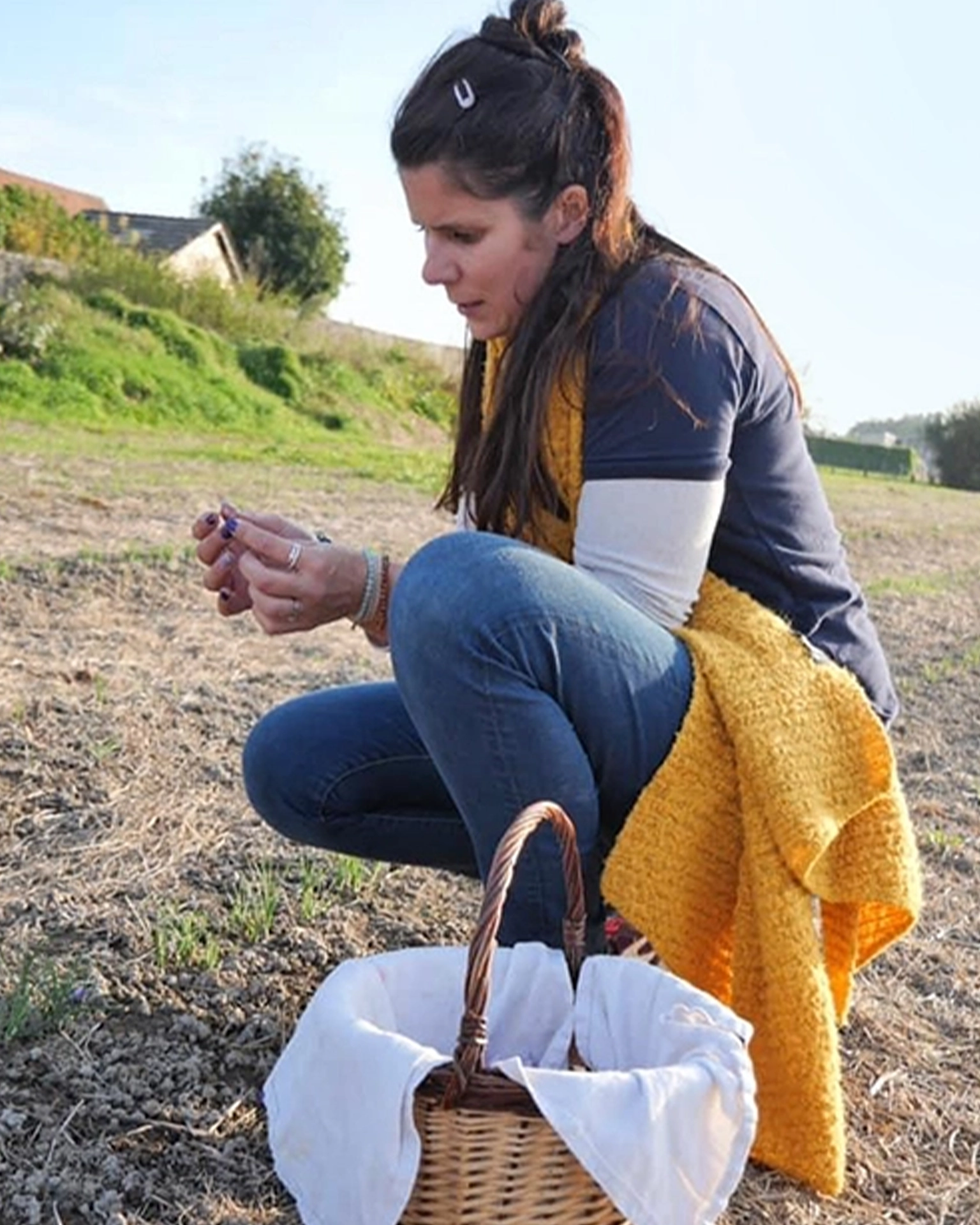
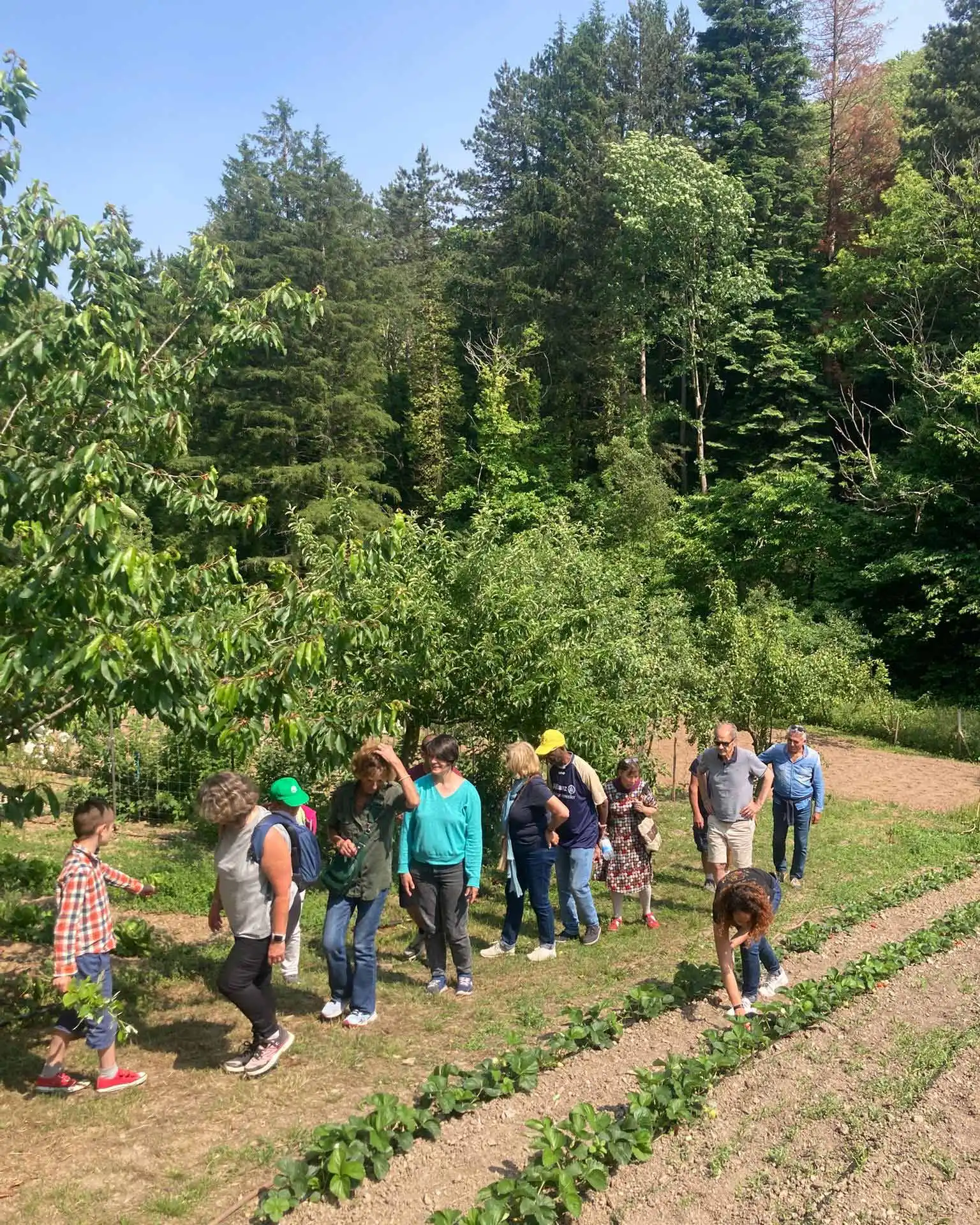
These farmers also receive media training and training on social media, public speaking and more. Aurore Paillard, who has farmed 130ha of crops in Gergy since 2016, discovered the group through the young farmers association, where she was already involved in promoting farming. She has been an ambassador since 2022. Agridemain has enabled her to continue developing her public speaking skills.
“An opera singer taught us how to project our voices, which is very useful for engaging with people,” she says. The sessions also cover posture, vocabulary and stress management. “When talking to a non-specialist audience, we avoid jargon and acronyms. And we try not to gesticulate! Someone who moves around too much is harder to follow,” she points out. These training courses, initiated with the young farmers association, have primarily helped her “to find speaking in front of a large audience less daunting”.
Short supply chains to encourage exchanges
However, the purpose of this programme is not to create speakers or PR specialists who will do the rounds on the radio and TV news, but who will primarily be visible across the country, in touch with the public. “The image of farming does not create itself,” insists Gilles. “It involves a lot of hard work.”
Aurore shares this view, to the point of having diversified her production to establish a direct connection with consumers. “’When I only delivered to the co-operative, I missed the contact with the public,” she recalls. This is what led her to plant 30,000 saffron bulbs in 2020.
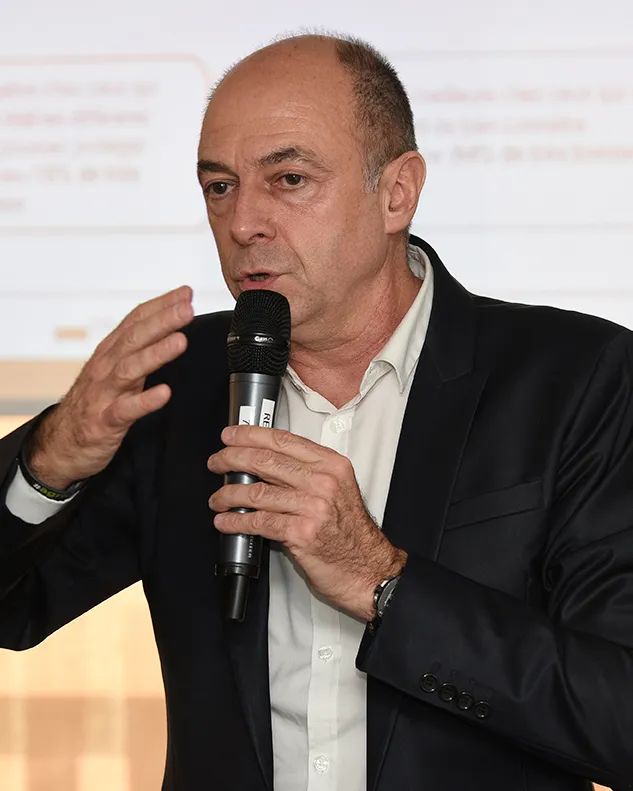
The image of farming does not create itself. It involves a lot of hard work.
Gilles Maréchal
“It’s a different world: One day I’m on the tractor working with a 24m boom, the next day I’m harvesting saffron by hand.” This farm product, processed on site and sold to restaurants and markets, gives her the opportunity to engage in discussion. “We start by explaining how to cook it, then we move on to how it’s grown, and often to my other products and how I work.”
Conversation around the plate
Aurore is convinced that the topic of food is undoubtedly one of the best starting points for discussion. This is an approach that Agridemain is also implementing through actions like the AgridemainTour, which travels around the regions to spread the word at grass-roots level. “A bit like a circus, we unpack a recording studio set up in a food truck and invite along local residents and elected officials,” says Gilles.
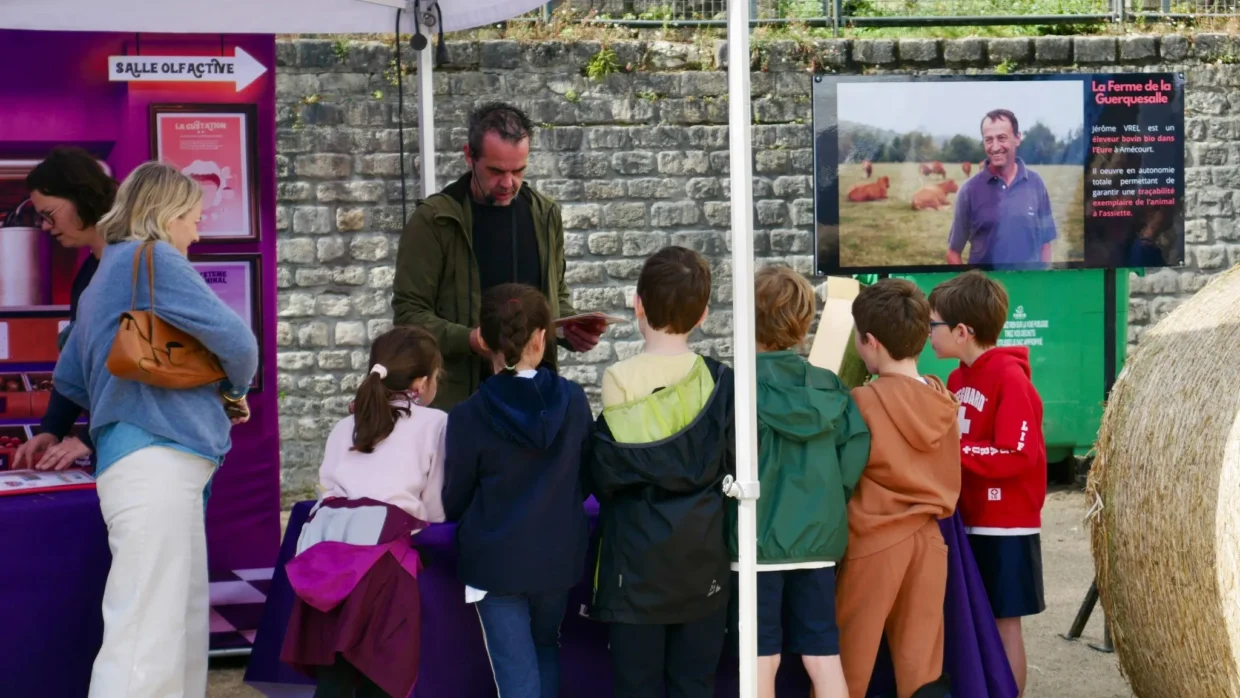
The concept has been a hit, hence the idea of reproducing it at the Salon de l’agriculture, with the ‘table d’hôte’. Over an area of 100m², around 15 visitors have lunch with farmers, while a chef cooks their produce. “A three-way dialogue is established between farmers, the chef and the visitors,” he adds. “The general public leaves with the idea that behind every plate there is not only a chef, but also a producer.”
Agriculture in the spotlight in France
In 2020, at a time when the focus was very much on food sovereignty, Agridemain sent an open letter to the French President, proposing the creation of a National Agriculture Day. The fifth edition, last June, brought together more than 220,000 visitors at nearly 2,000 events. “The aim is to show that there is no single solution, but that the diversity and richness of agriculture and the agri-food industry are extraordinary assets for our country,” Gilles points out.
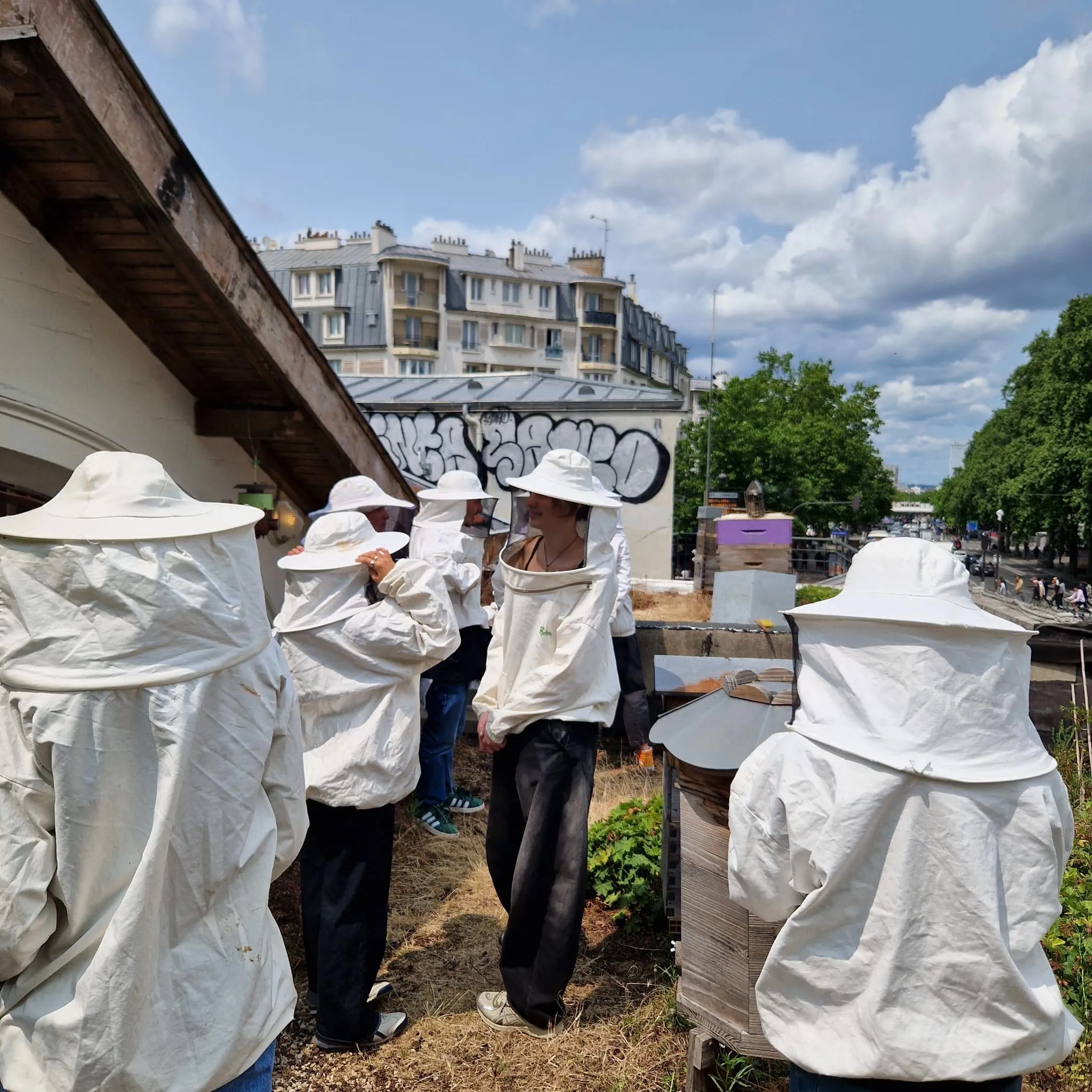
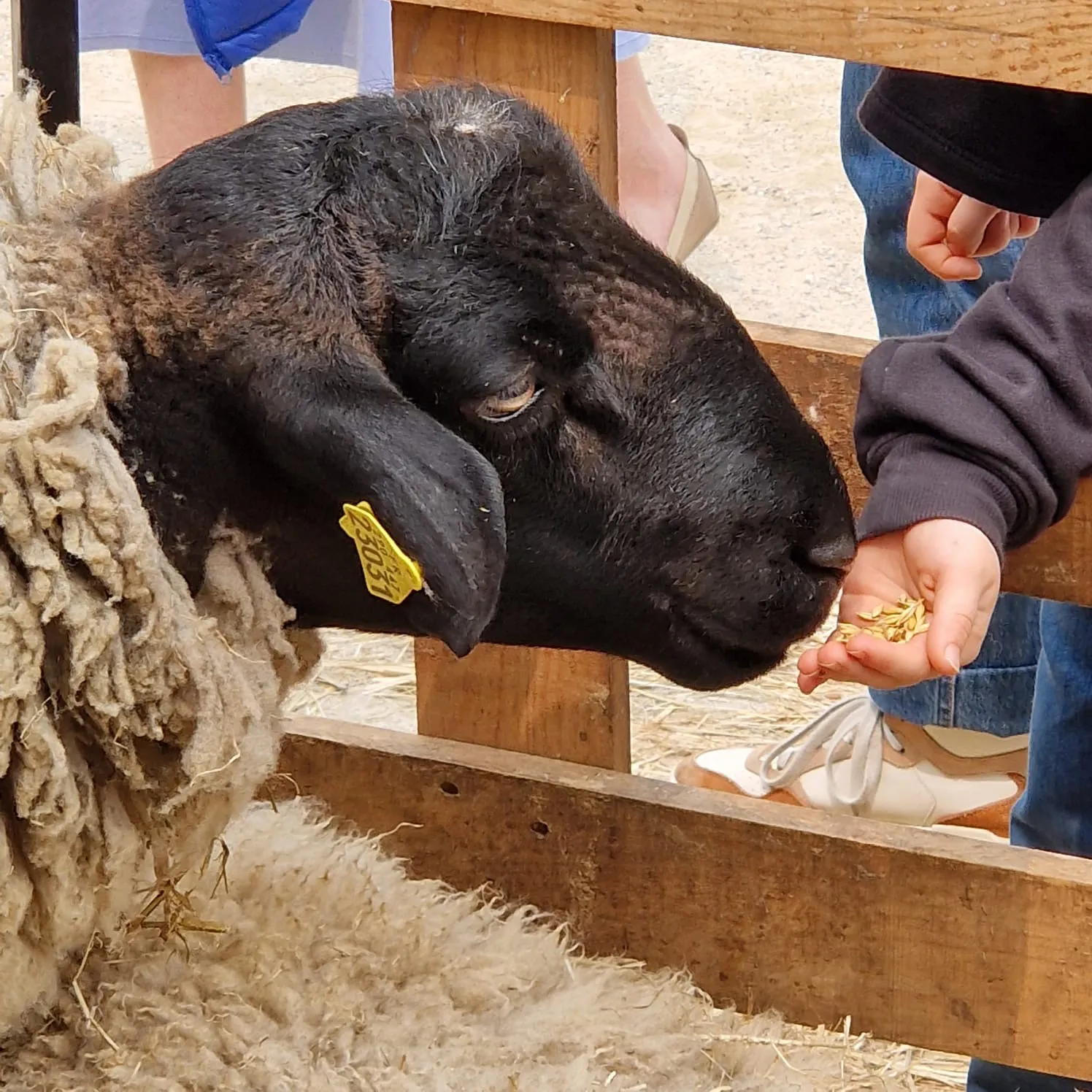
Journées Nationales de l’Agriculture in Paris: introduction to beekeeping (left); hands-on experience of sheep farming at the Young Farmers’ stand (right).
Aurore took part this year in Paris, where industry representatives – from seeds to supermarkets – met the public. The agenda featured cookery workshops, lectures on food and more. She takes a positive view of the discussions. “The way the public views farming has changed. The public is showing increasing interest in farming, especially since the pandemic and our major gatherings. They’ve come to understand our regional presence.”
Even so, many people still don’t have a clear opinion on farming, a situation which, she believes, leaves room for further discussion. “If we don’t communicate, others will do it for us — and not necessarily to show us in the best light,” she warns. Unsurprisingly, the topic of plant protection regularly comes up in discussions. “Some people think that we spray products on our crops just for the fun of it. I like to break down these clichés, explaining that we think through what we do… and that no, we don’t use glyphosate on wheat that’s been growing for five months!”
If we don’t communicate, others will do it for us — and not necessarily to show us in the best light.
Aurore Paillard
Educating young consumers
The theme of this year’s National Agriculture Day was ‘understanding agriculture for better consumption.’ “We launched a consultation last year,” explains Gilles. The question of how we can we teach children to eat better often came up. Some 800 proposals were put forward, including taking school classes to visit farmers through the national education system, and having producers visit schools to recreate the link at source.
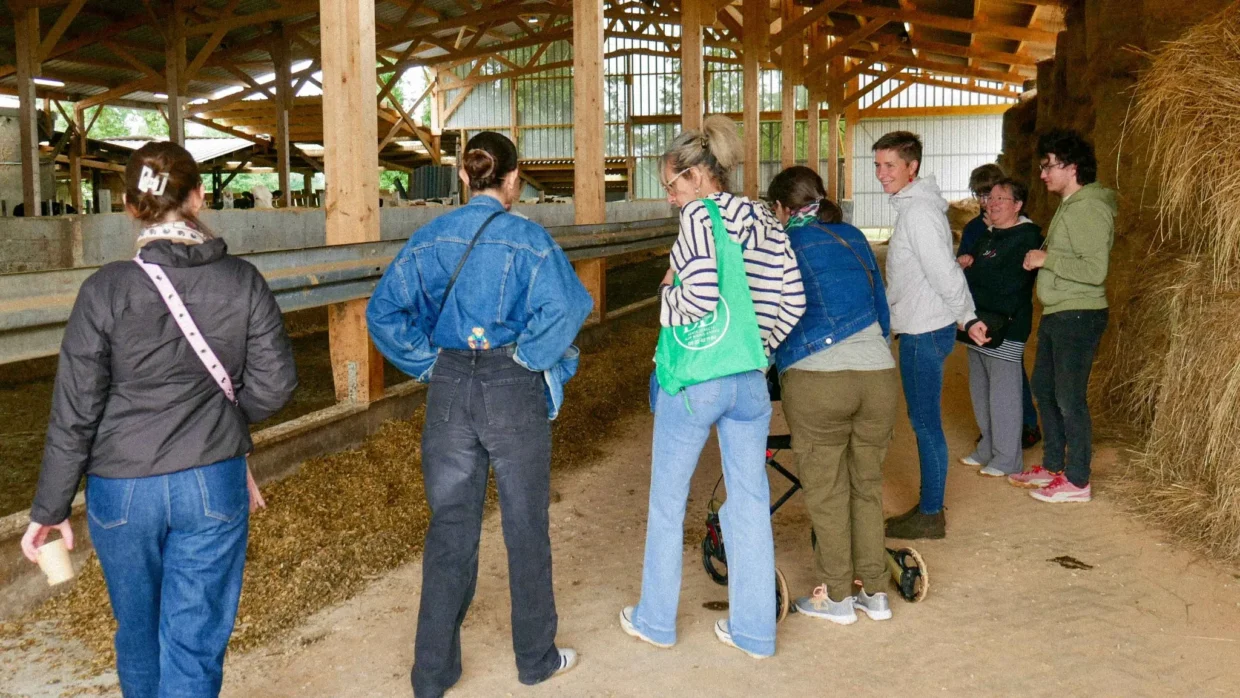
Aurore has already welcomed two school classes to her farm through the departmental women’s committee. She also works in schools with the ‘Tomorrow I will be a farmer’ association. “Talking to children is one of the aspects I enjoy the most.” She had the same experience on National Agriculture Day in Paris: “They automatically have a positive image of farming. And they are very curious about where what they eat comes from. It also opens up discussions with their parents, who sometimes known as little as they do.”
Agridemain in brief
Created in 2016, the Agridemain platform is a public-interest association with the mission of consolidating communication with the general public and making it professional. It serves as an umbrella brand for the professional organisations it brings together (FNSEA, Jeunes Agriculteurs, Chambers of Agriculture, Crédit Agricole, Mutualia, APAD, Phyteis, AXEMA, ADIVALOR, AGPB, SEMAE, Terra Vitis, among others).
Agridemain operates through several key channels: National Agriculture Days, the AgridemainTour (French farming tour), harvest festivals, conferences, the ‘Derrière mon assiette’ programme, and the ‘RDV en ferme inconnue’ video series
- President: Guillaume Lefort
- Phone: 01 46 22 09 20
- Email: contact@agridemain.fr