
 Loading...
As a child, Matthias Stadlhuber rode along with a contractor friend on a John Deere 5020; an experience that stayed with him forever. Today, the entrepreneur from Aschau am Inn in Germany not only manages the family farm and a contracting business but is also active in other business sectors. Despite running the latest large tractors in his fields, he has nurtured a long-standing dream to have a historic John Deere of his own.
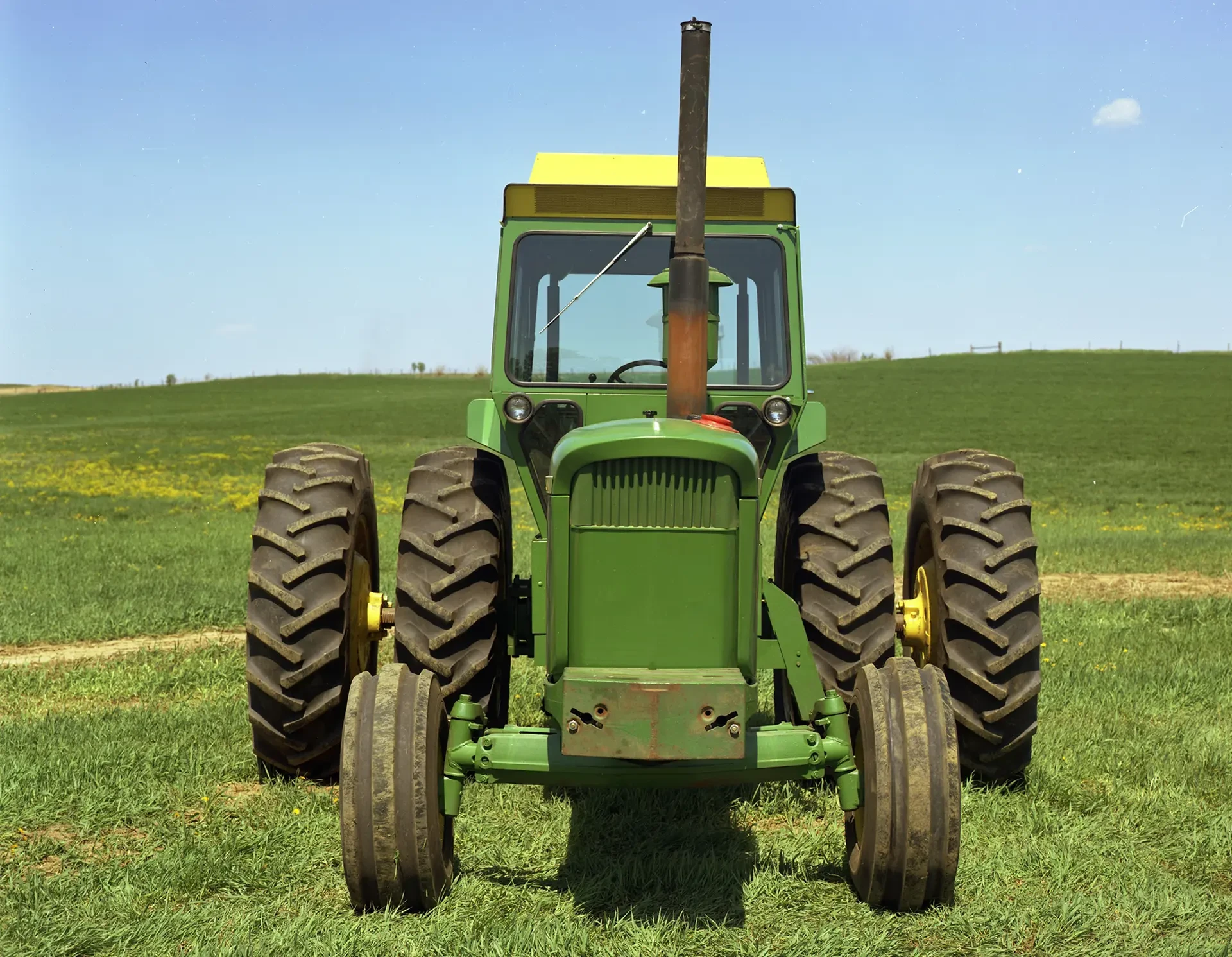
The 6030 was developed as a row-crop version with narrow twin tyres …

… and was offered as a Wheatland edition with wide rear tyres.
The decision to buy the 6030
Originally, Matthias wanted to purchase a 5020. But then he discovered the even rarer 6030, the ‘pumped-up’ successor to the 5020. With over 175hp (up to 225hp turbocharged), the 6030 was the most powerful production tractor in the world between 1972 and 1977.
Only 4,048 units were built, and it was virtually unknown in Europe. When the opportunity arose to purchase a heavily worn 6030 in the Wheatland configuration from the Netherlands, Matthias seized the opportunity. Year of manufacture: 1976. Condition: Almost scrap.


The tractor was delivered to John Deere dealer Schoma Völk in Soyen, Bavaria in autumn 2019. What followed was a project that would last almost five years. The biggest challenge proved to be sourcing spare parts. Many original parts had to be sourced from auctions and specialised dealers around the world.
To achieve this Matthias spent many nights at the computer, supported by collectors from the Netherlands and Lower Bavaria. “At times I wanted to give up – the costs and the effort required were enormous,” he recalls.
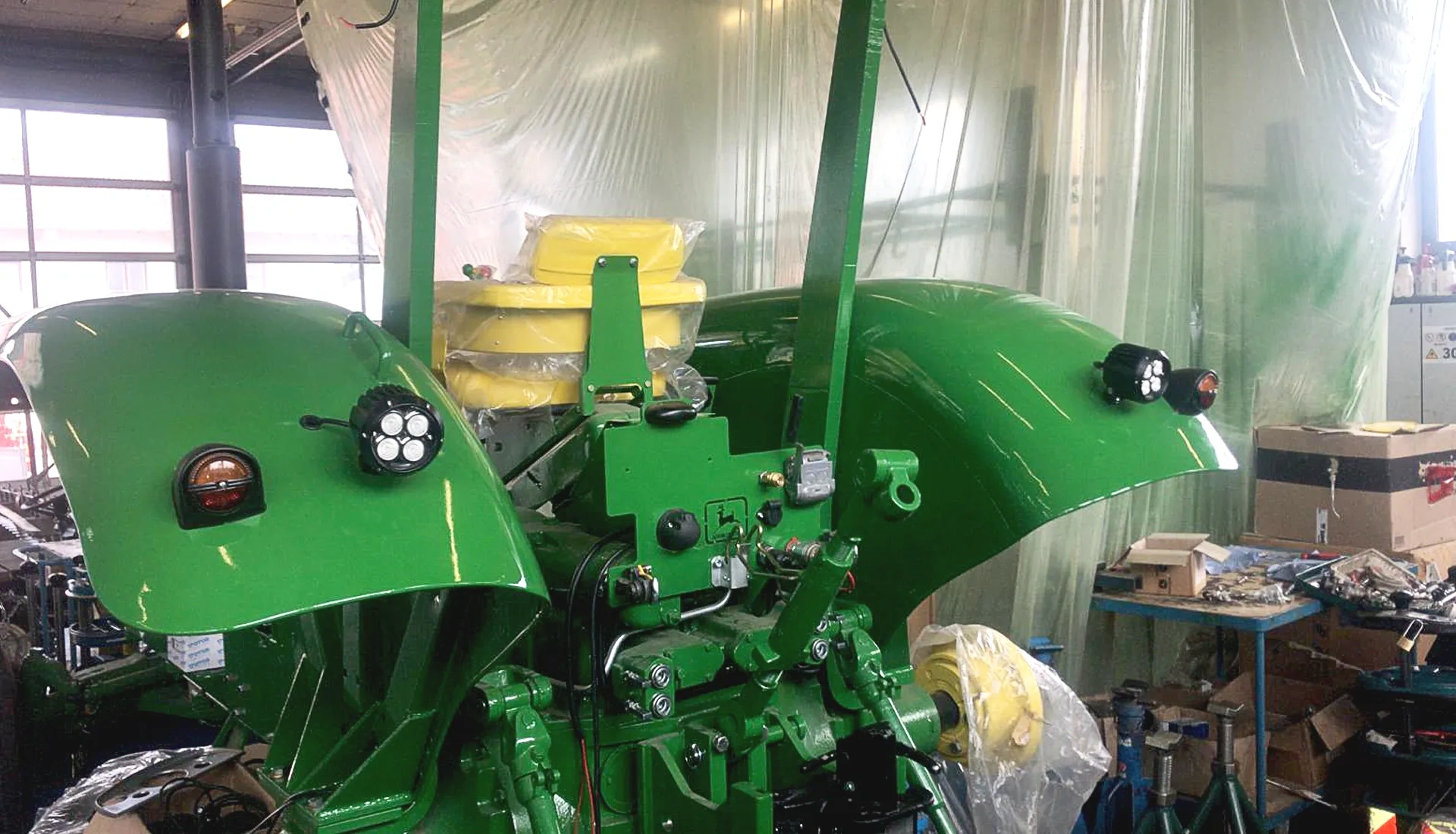

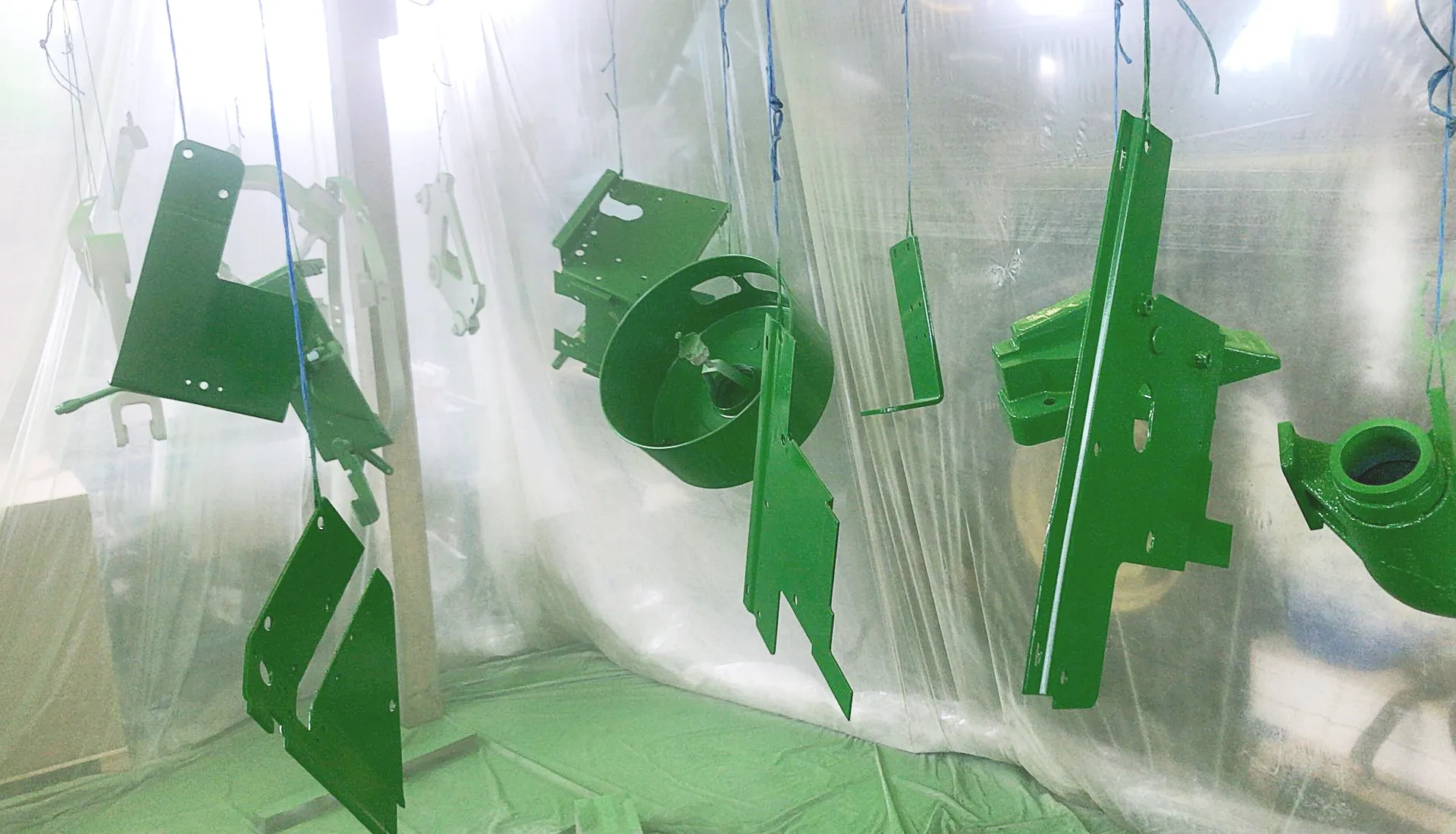
As the tractor originally had a cab, many parts, like the mudguards, either had to be bought on the global spare parts market or reproduced.
Only the block remained from the original engine; all other parts were replaced or completely overhauled.
A temporary booth was specially set up in the workshop to paint the parts.
Today the 6030 looks like new again and has even passed the inspection.
The technical work was carried out by the workshop run by Michael Niedersüss. Many of the purchased parts were defective and non-returnable, and some even had to be reproduced.
The front axle was rebuilt using cast electrodes, while the radiator was manufactured by a classic car specialist. Of the original engine, only the block remained; everything else was replaced. The injection pump and gearbox were completely overhauled, and the clutch was procured as a new part. Following the restoration, the tractor now delivers an impressive 245hp at the PTO.
The paintwork was also completed by hand, with apprentices sanding down components and painting them in a temporary booth. “It was a project where we could work with hammers and pliers again,” says Michael.

It was a project where we could work with hammers and pliers again
Michael Niedersüß, Werkstattleiter
The TÜV inspection (Germany’s equivalent of the UK MOT) proved to be an adventure. With no paperwork available, the year of manufacture had to be determined from the serial number and injectors. In the end, full approval was granted – including a top speed of 40km/h (25mph).
The great handover and the vintage tractor’s new life
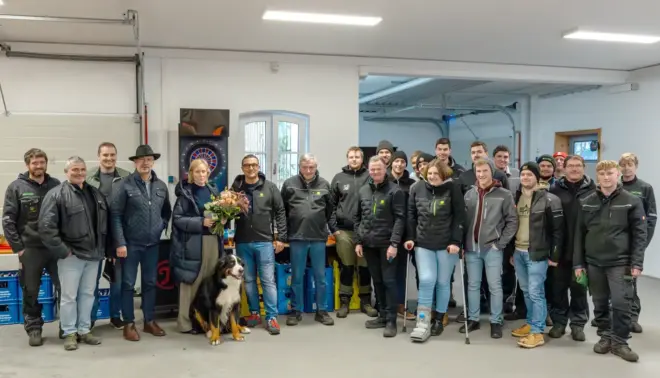
In autumn 2024, the 6030 was gleaming like new. The handover was spectacular, featuring a John Deere lorry and a surprise party at Matthias’ farm. Today, the tractor is a star attraction at historical events and celebrations. And sometimes it even gets to work again, for example, transporting grain during harvest.
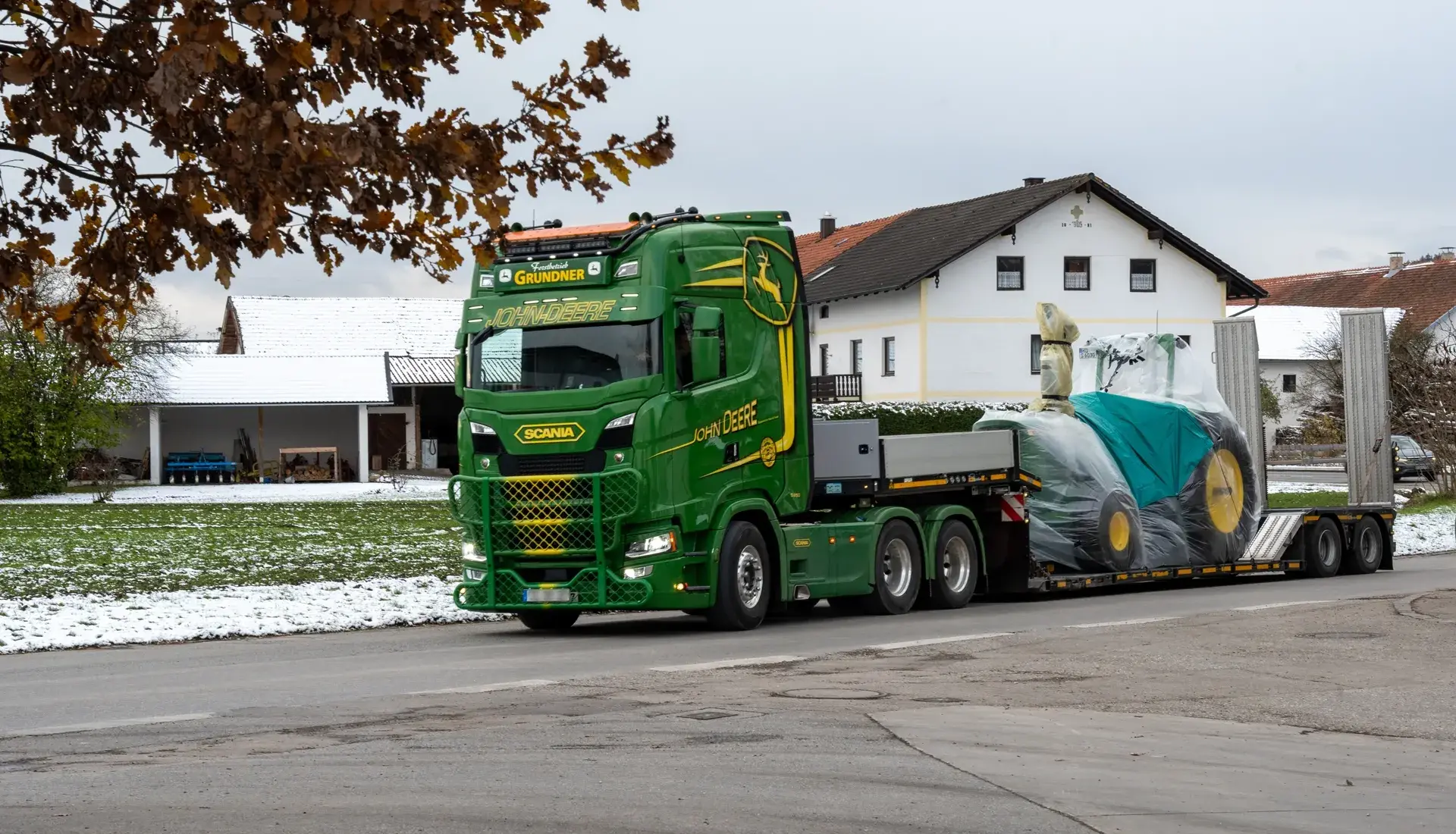
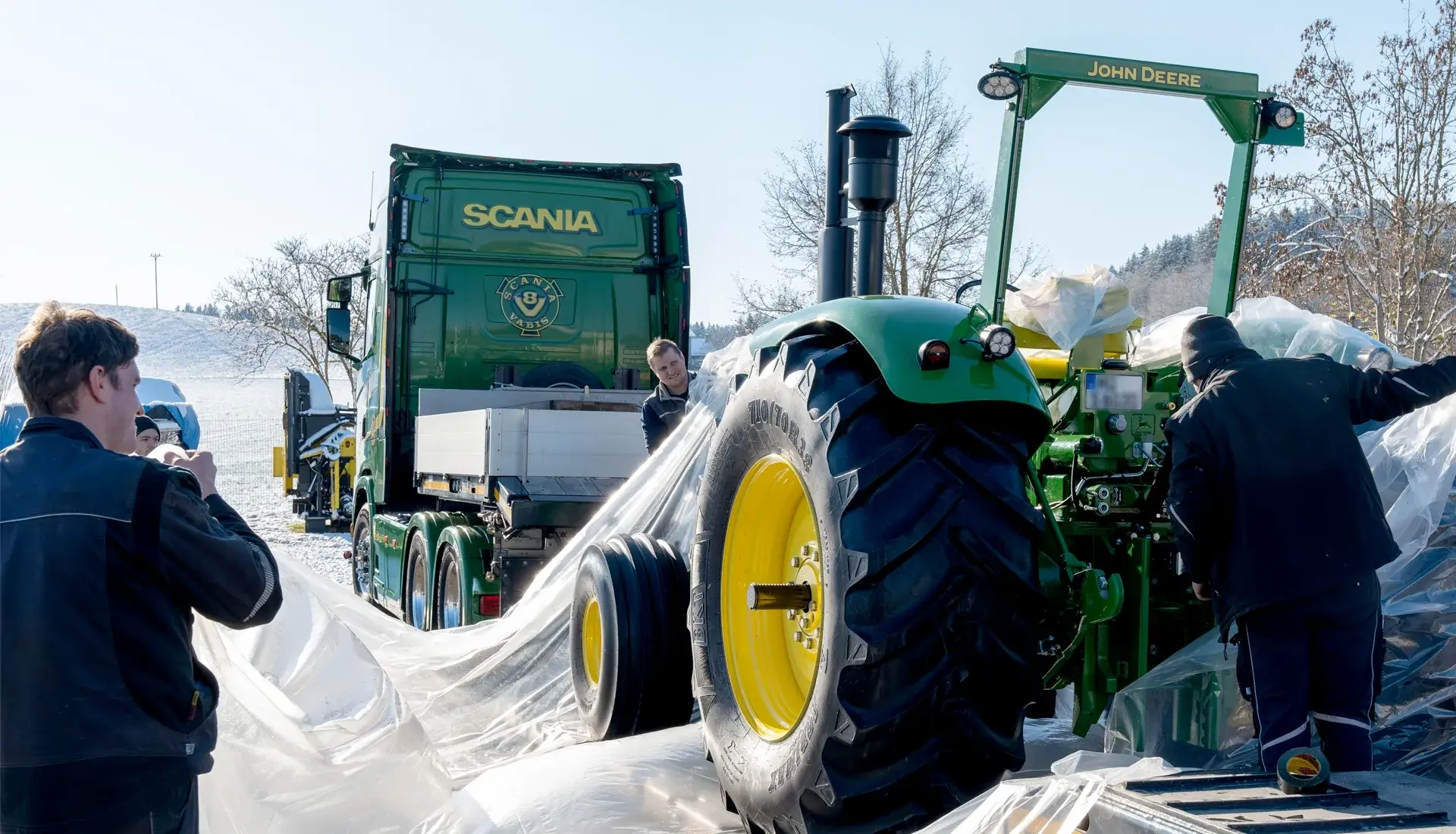
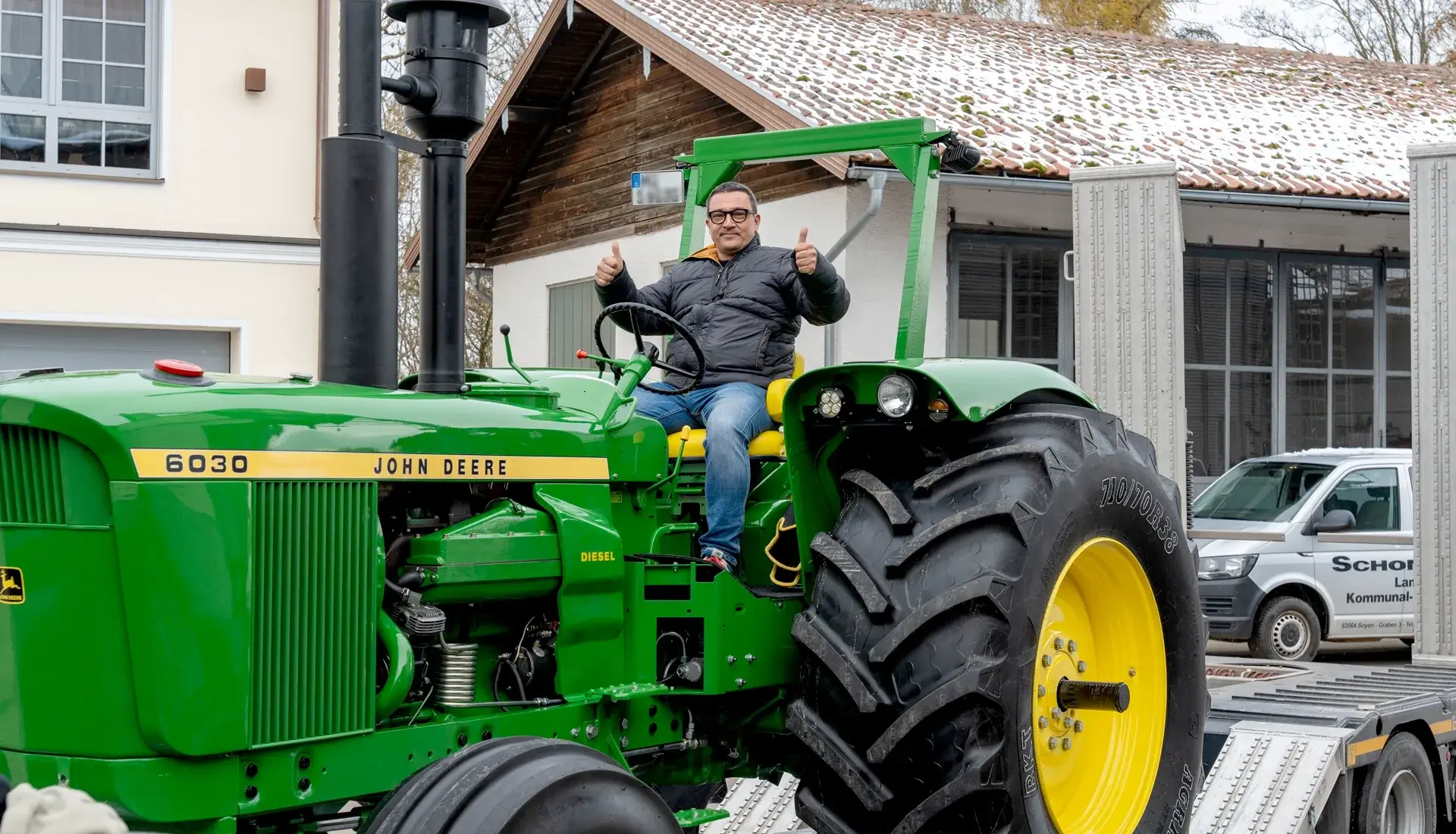
Auslieferung des frisch restaurierten 6030 durch den John Deere Vertriebspartner Schoma Völk im Spätjahr 2024.
Der 6030 wird ausgepackt.
„For me, the 6030 is more than just a tractor. It is a piece of history and a symbol of endurance and passion,” says Matthias. Anyone who sees it immediately understands why this vintage tractor is one of the most sought-after collector’s items in the world.
Technical data – John Deere 6030
- Years of manufacture: 1972–1977
- Production location: Waterloo, Iowa (USA)
- Number of units produced: Approx. 4,048
- Engine: 6-cylinder, 8.7-litre engine displacement
- Power: 175hp (standard), up to 225hp turbocharged
- Gearbox: Synchronised, mechanical
- Versions: Wheatland (wide tires) and Row-Crop (quick-release axle with twin tires)
- Optional cab: Available from the mid-1970s
- Special feature: Most powerful production tractor of its time
- Original price (1977): Approx. USD 29,000 (GBP £21,154)