
 Loading...
When the first rays of sunshine fall through the leaves of the large trees in the morning, it is still quiet on the Ritzleben organic farm. Laura Kulow sits on the terrace behind the brick house and drinks her first coffee of the day.” At 6am, everything is still quiet and I enjoy the peace,” she says. She knows that’s about to change, as it’s the beginning of September. It’s supposed to stay dry and the potato harvest is really picking up speed.
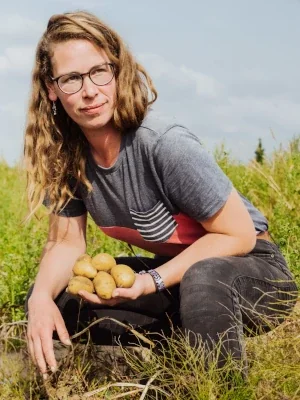
I never wanted to give up my freedom and closeness to nature.
Laura Kulow, Farmer
Laura has been running the 450ha farm for almost three years. She grows 10 different types of potato on 70ha, and wheat, rye, spelt, oats, field beans, lupins, and barley on the remaining 380ha. The family business has been practicing organic farming since 1991. Between 2013 and 2023, Laura and her parents organised the transfer of the farm between the generations by establishing a simple partnership (GbR). The 35-year-old has been managing the arable farm alone since 2023.
The Perfect Potato
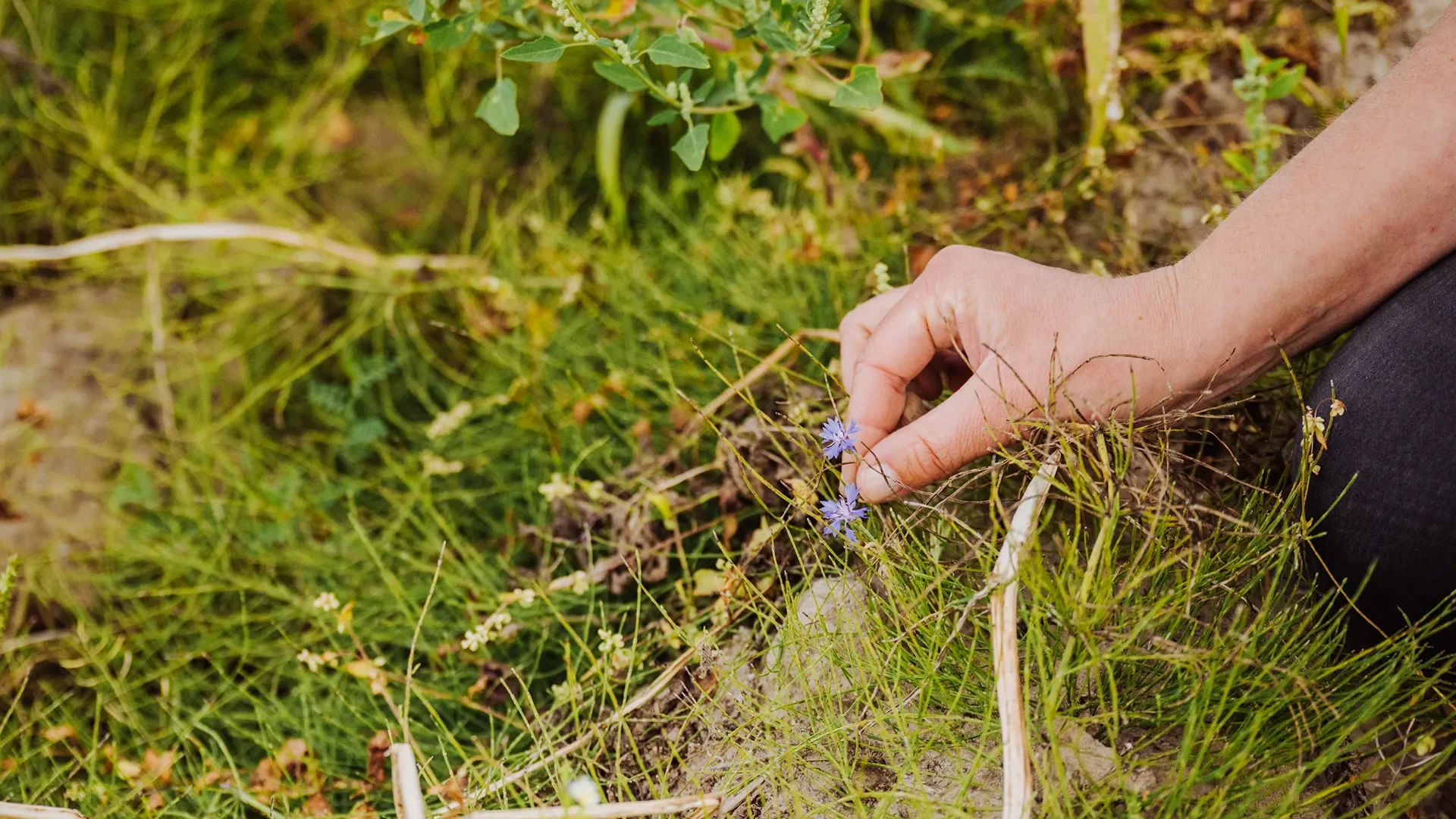
Every April, Laura and her team of three staff plant the potatoes, which grow until September. Each set, with around 15 tubers, remains buried beneath the soil, while a wide variety of weeds take over the field – including white goosefoot, cornflowers, and gallant soldier. Diversity keeps the soil healthy and climate-resilient.
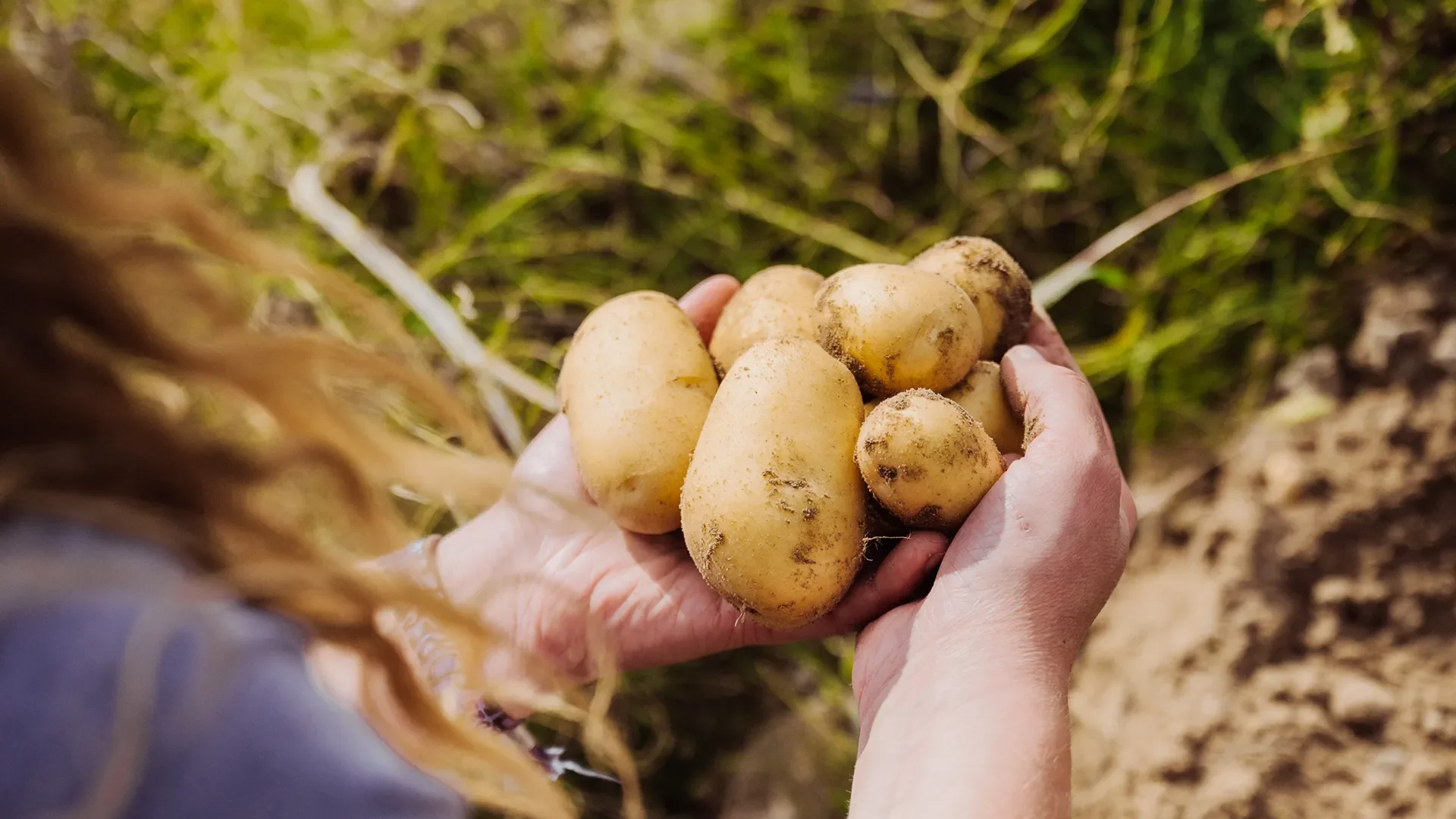
These Otolia potatoes were just lying together in their nest underground.
When the potato plant ‘dies off’ and the tubers are waiting in the soil to be harvested, the other plants in the field gain the upper hand.
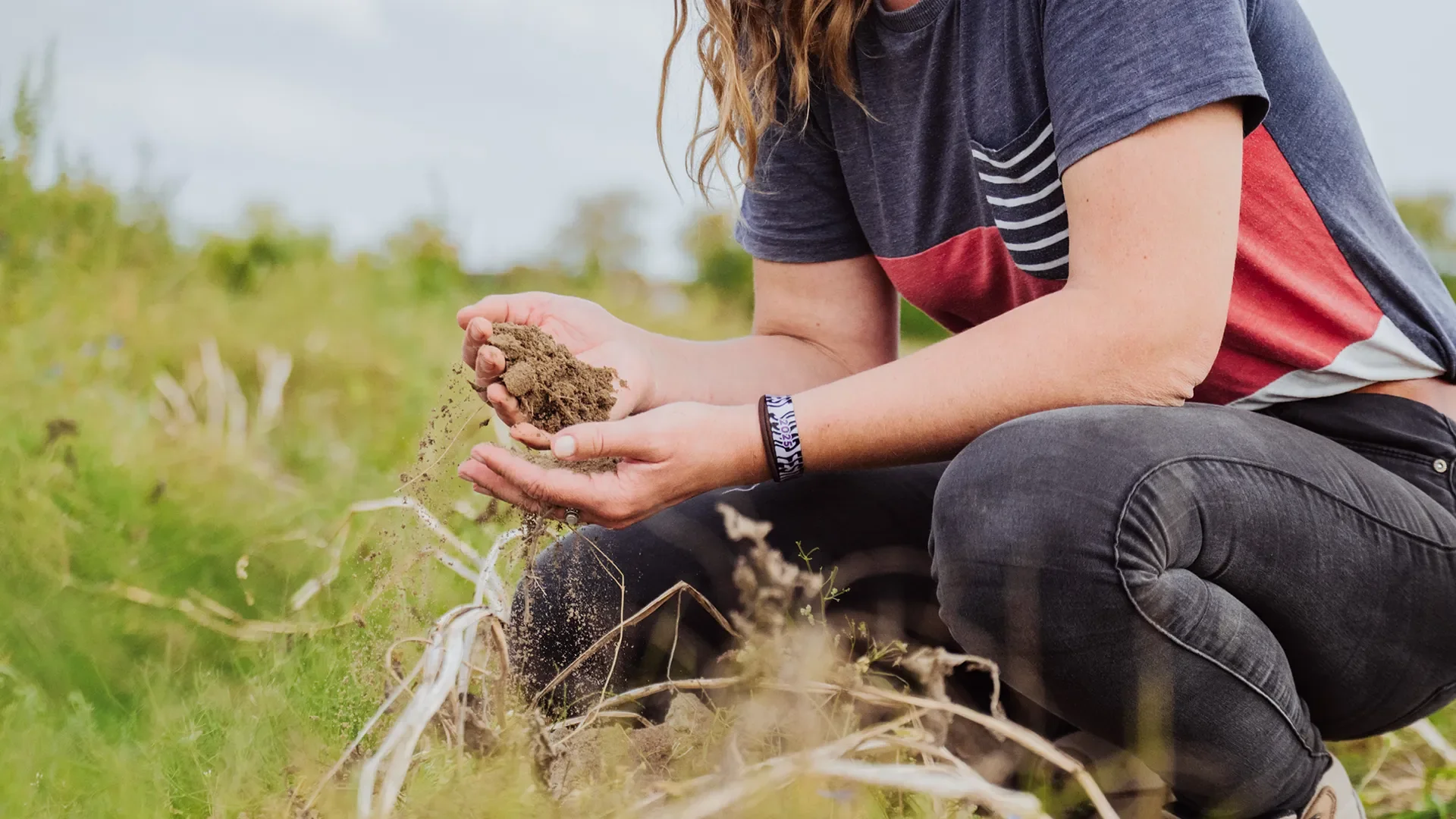
These other plants are ideal for insects and soil quality.
“Because we don’t spray, whatever wants to grow, grows. We allow this in the late stages because it is good for the insects and the soil,” says Laura. “However, couch grass is no fun. It’s a really troublesome plant!” This is because the couch grass root simply drills a hole into the potato in search of water. As a result, the quality of the harvest suffers.
“The perfect potato is slightly oval, medium-sized, and has a thin, flawless skin – as if peeled out of an egg,” explains Laura. “But not all potatoes look like this. I can get all of the agronomic management right, but potatoes are products of nature. This is often not a problem, for example, in the case of slight scabs or deformities, which do not harm potatoes or people.”
The harvest is very good this year
Today, Laura and her team are harvesting the Otolia variety on a 15ha field section. Otolia is a predominantly waxy, yellowish, and aromatic table potato. Laura expects a yield of 30-50t/ha today, which is particularly good harvest.
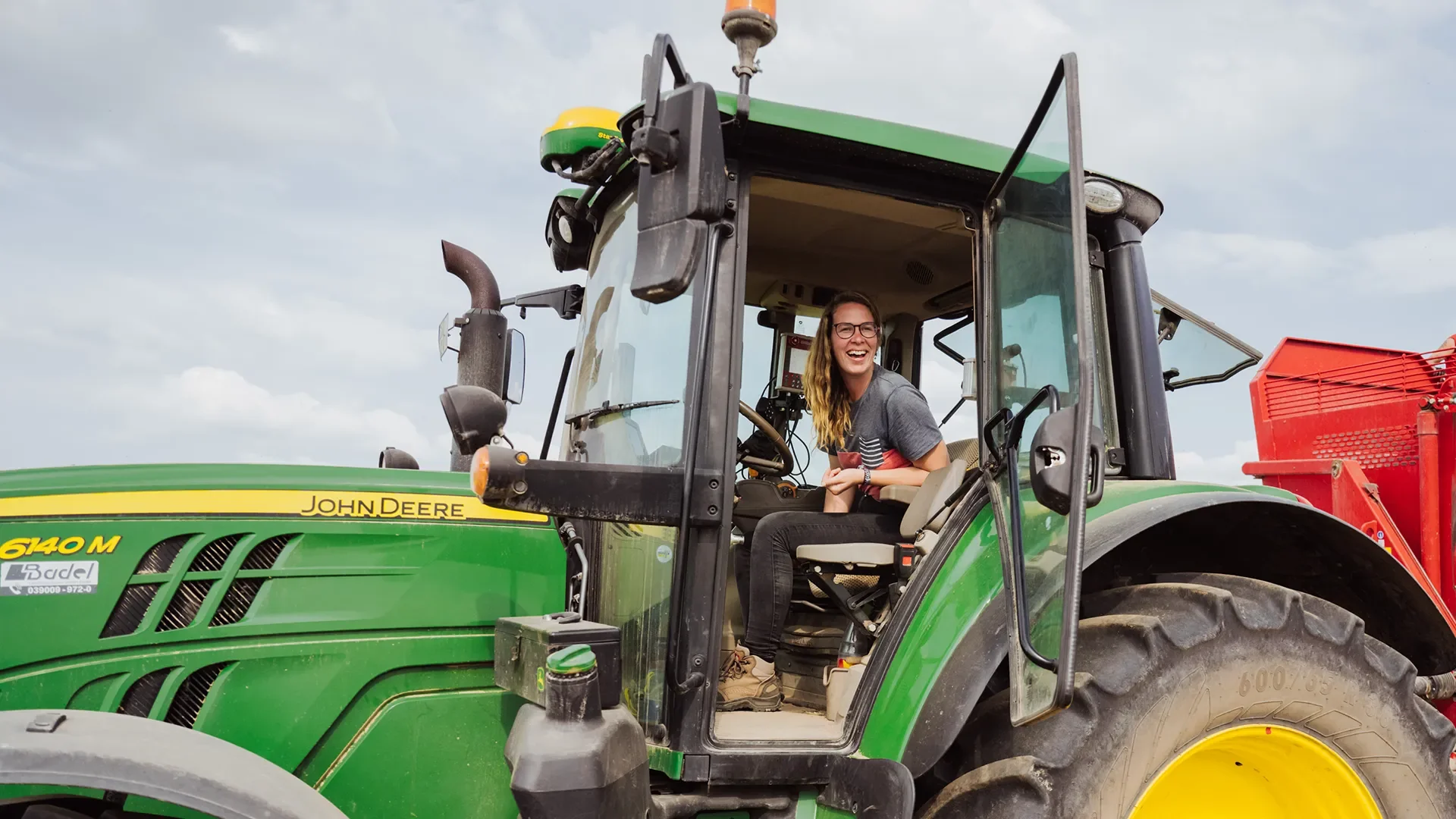
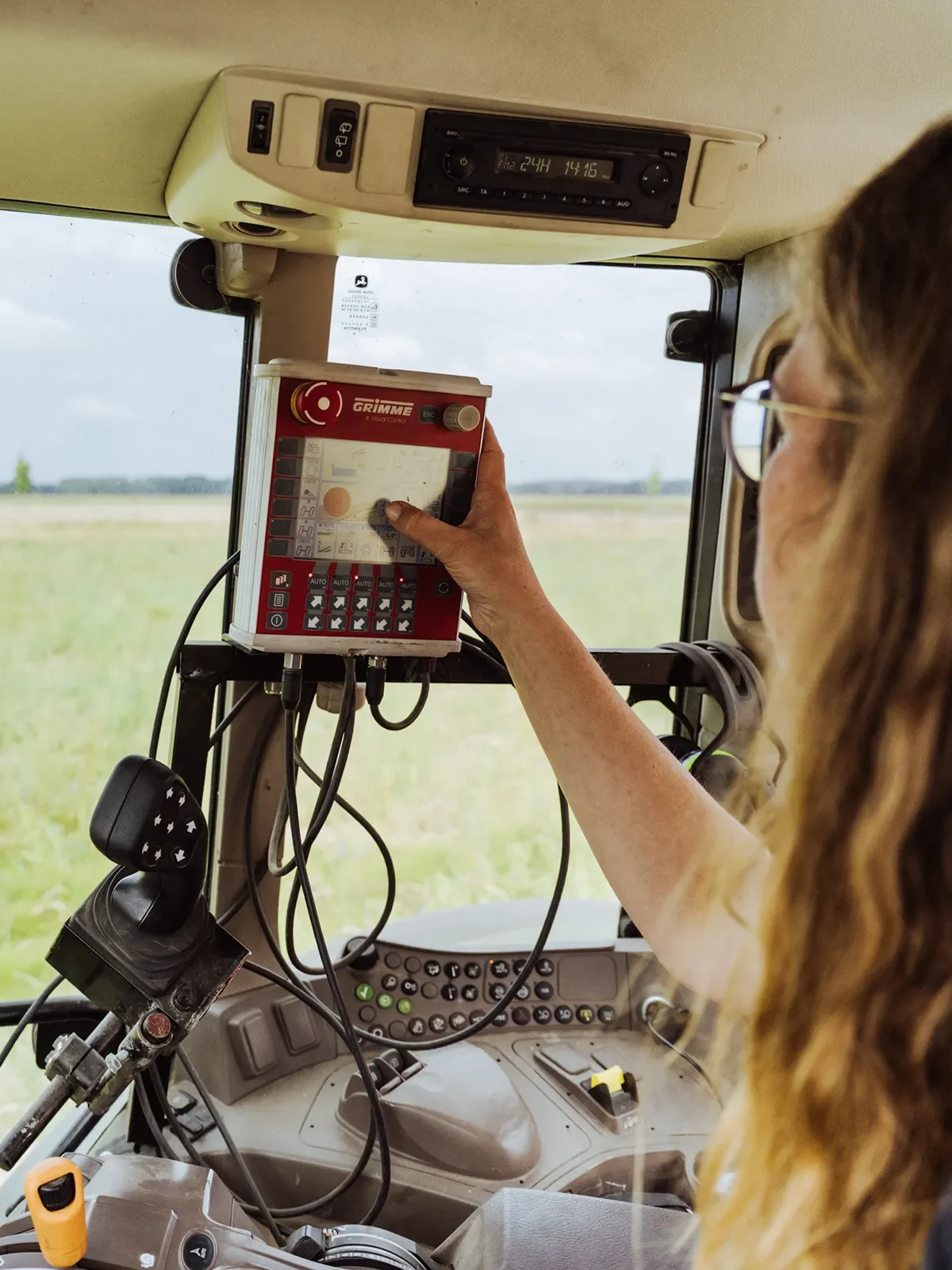
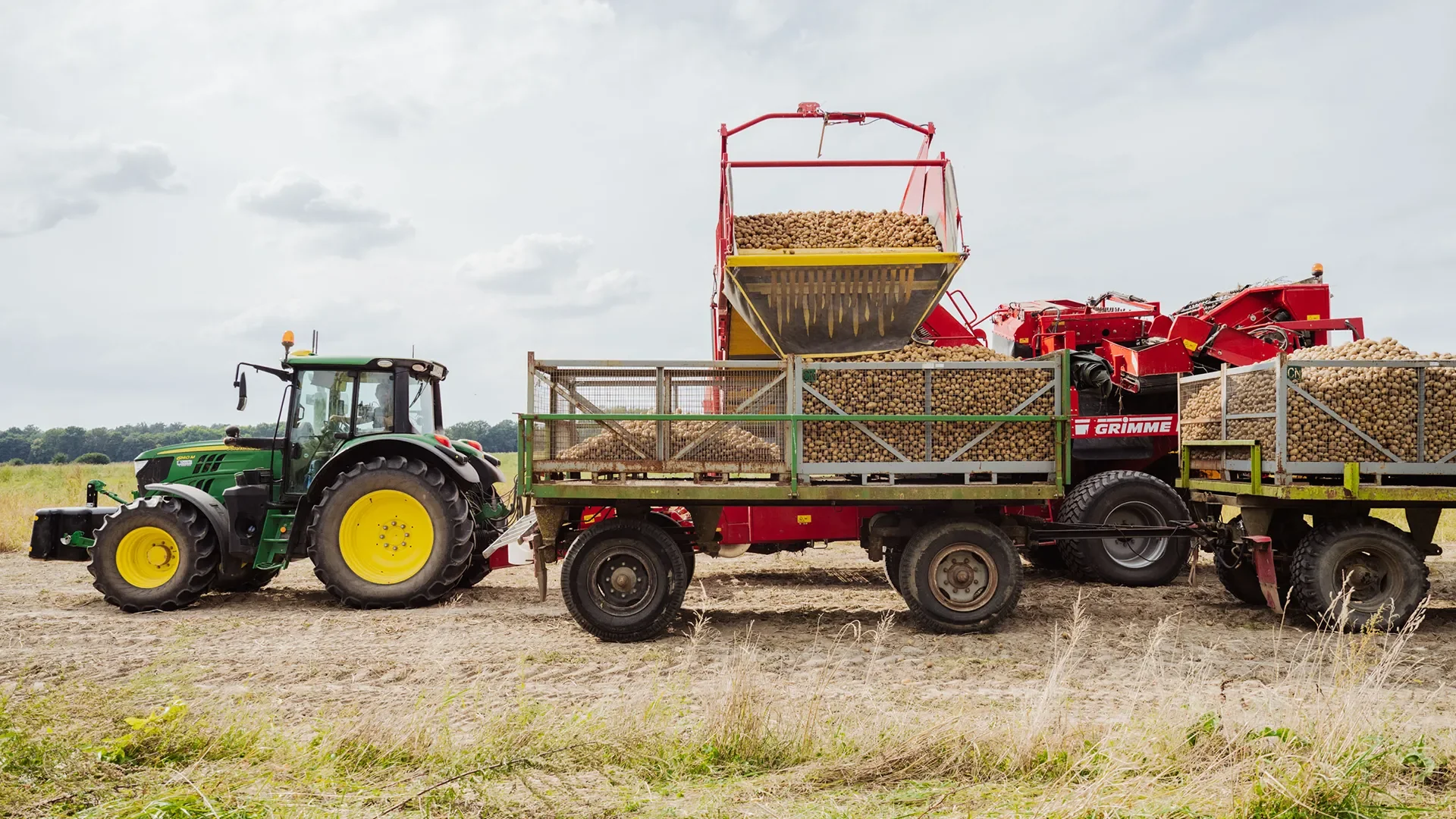
The family purchased the JD 6140M in 2022 to strengthen the harvesting fleet. Laura is glad that she chose this tractor: “This is my first tractor with GPS capability. When harvesting, the tractor now stays on its preset track, and we no longer have to steer manually so can concentrate on the speed and communication with the helpers on the harvester.” After all, they have their hands full there, sorting out everything that isn’t a potato at breakneck speed.
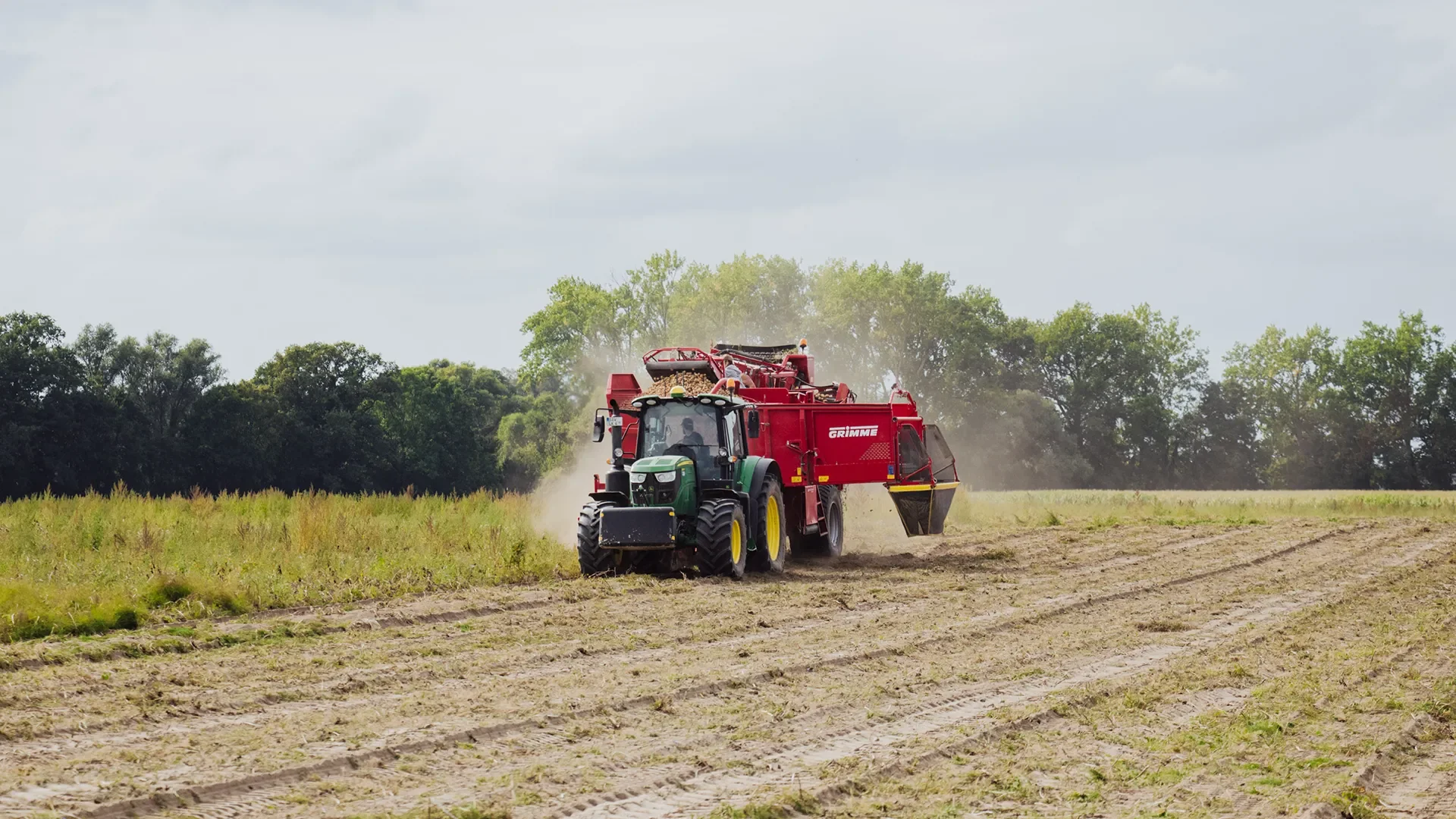
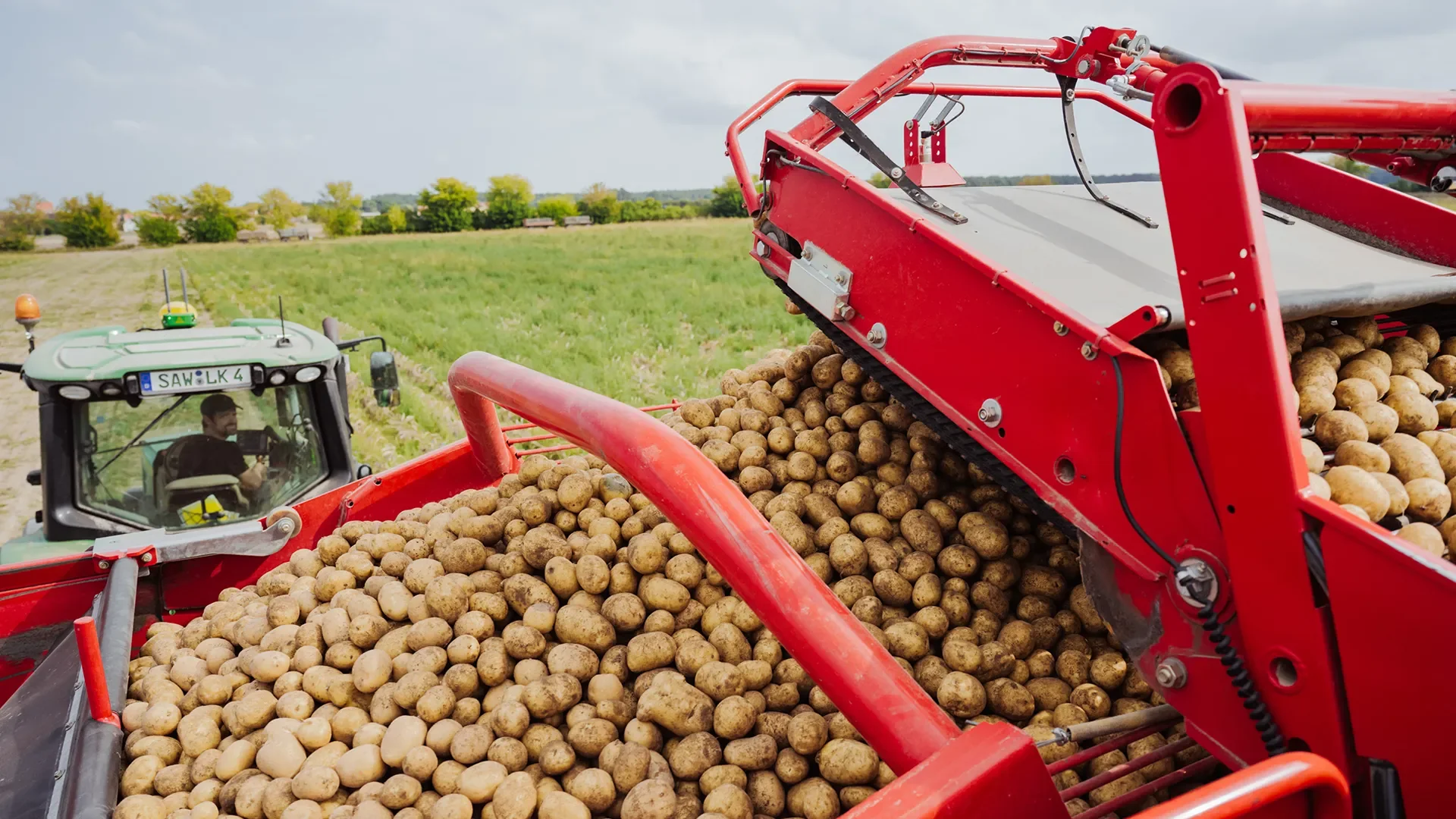
The harvesting team has been out in the fields since early morning. The weather is stable today, so they are making the most of it.
The driver in the JD 6M often looks back to adjust the speed if necessary.
Working on the harvester
On the harvester, the team separates stones, mice, and toads from the potatoes. Stones are collected in the so-called ‘stone bunker’ and unloaded by the harvester at a designated spot in the field.
Most of the time, Johannes Osterlänger drives the tractor during harvesting. He had never driven a John Deere before and even had a few preconceptions. But he now has grown fond of the 6M. “The JD has some great features: The travel speed can be flexibly adjusted thanks to the continuously variable transmission, which is practical,” he says. “Operation is simple and intuitive. I didn’t need anybody to explain to me how to use it. In the simple menu on the screen in the cab and with the three buttons and the rotary knob, I was able to set everything myself.”
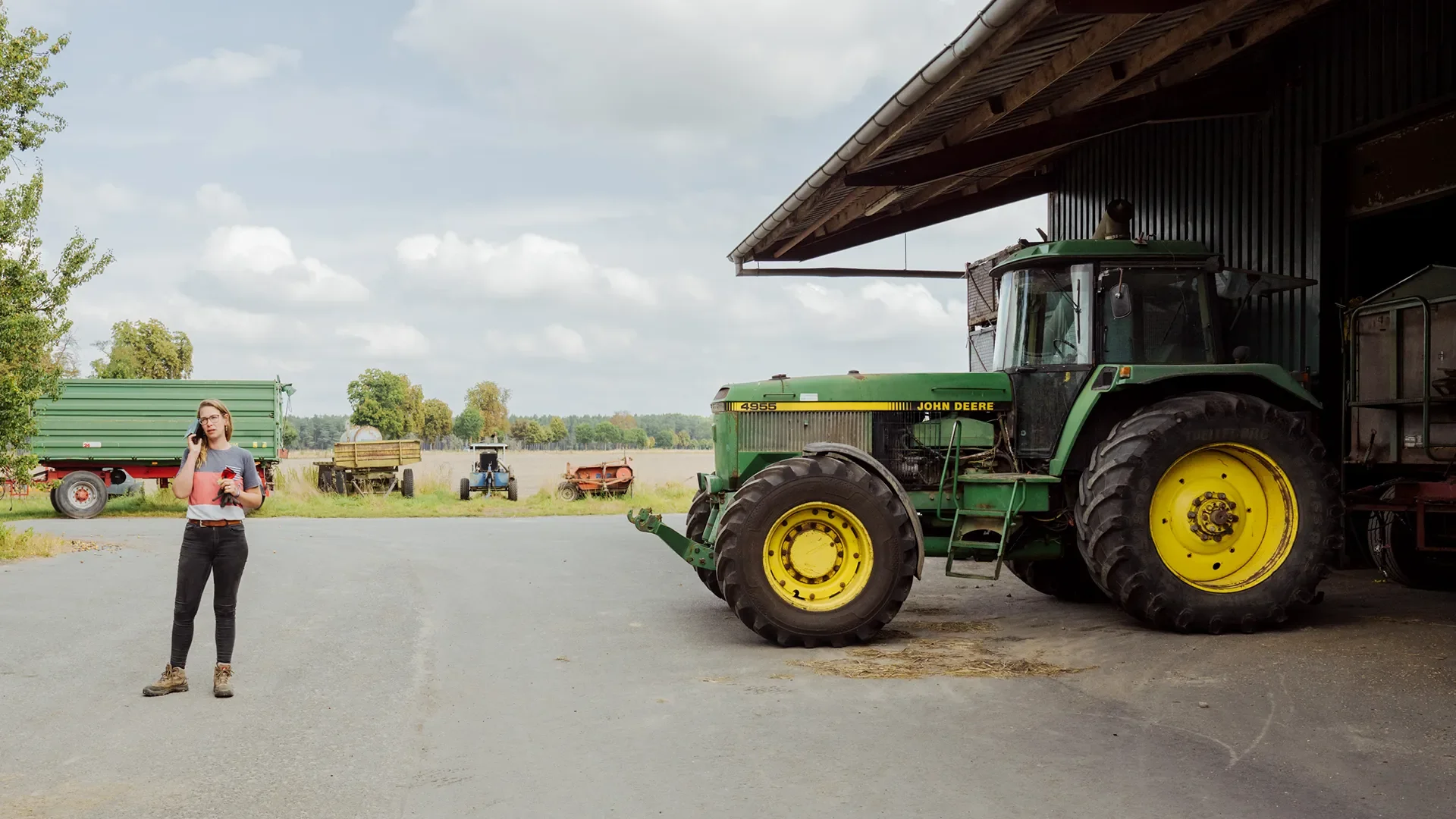
In addition to the 6M, which is used for weed control, harrowing, and ridging, there is also a powerful 8R and an old 4955 re-imported from Ukraine on the farm. The 8R is strong at ploughing and cultivating the 450ha, while Laura uses the 4955, her favourite tractor, for tillage and transport.
The JD 6M has some great features that convinced me. Operation is simple and intuitive. I didn’t need anybody to teach me how to use it.
Johannes Osterlänger
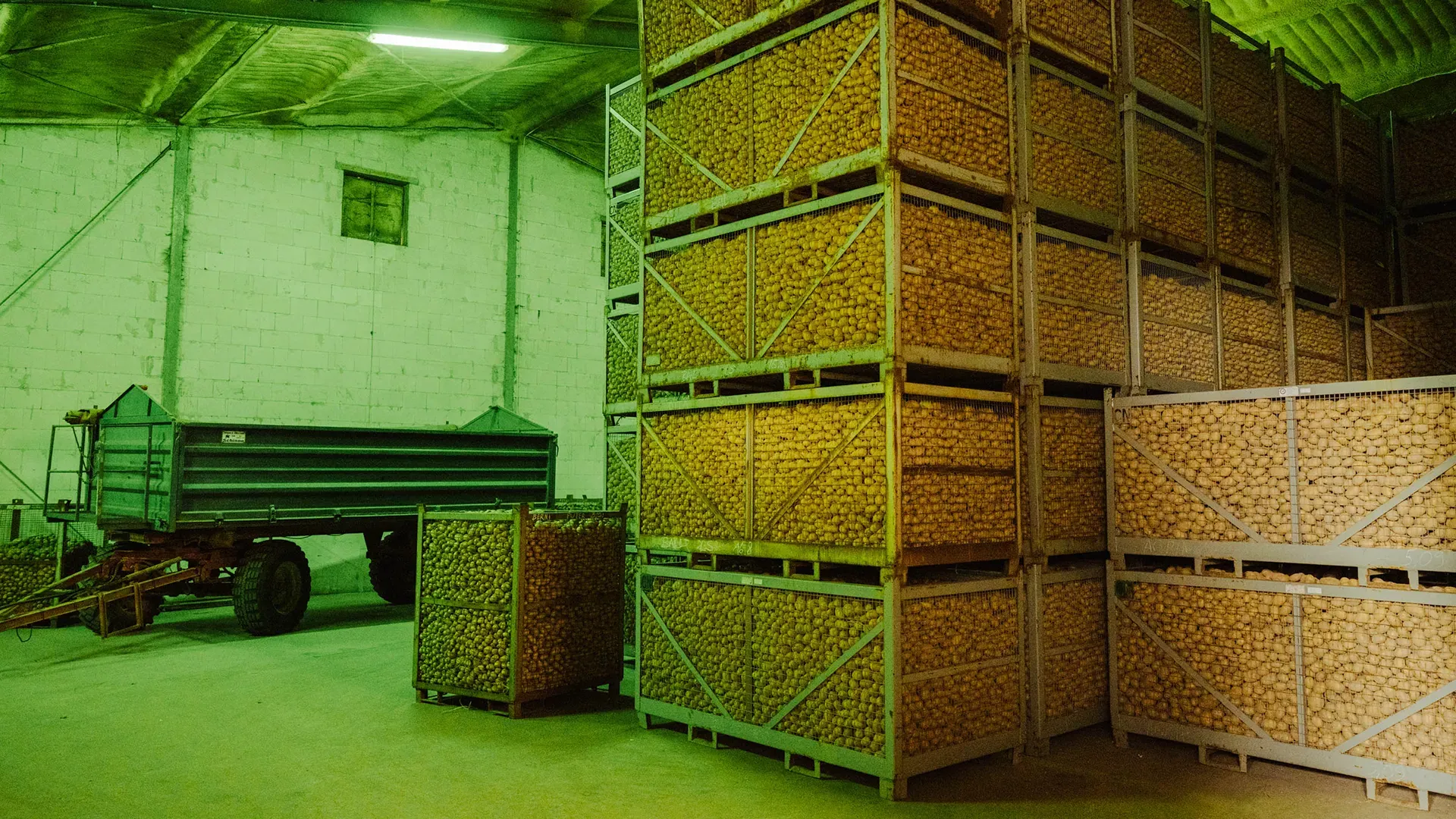
After harvest, the potatoes end up in a 1.5t lattice box to ‘air out’ for two nights. They can then be stored at 4.5⁰C for up to 10 months. Potatoes like it dark, cool, and dry. The electricity for cooling comes from the farm’s own photovoltaic system.
If the organic farm receives an enquiry from a retailer, it is always linked to a specific cooking characteristic and size: Medium-sized tubers of the Bernina variety, for example. Then the old sorting machine, built in 1999, is put to use. It sorts by size and can meet every request, from small triplets to oversized items. At the same time, produce that is not of perfect quality is manually sorted out. The potatoes that couch grass has bored into now find their way into a separate box labelled ‘feed’.
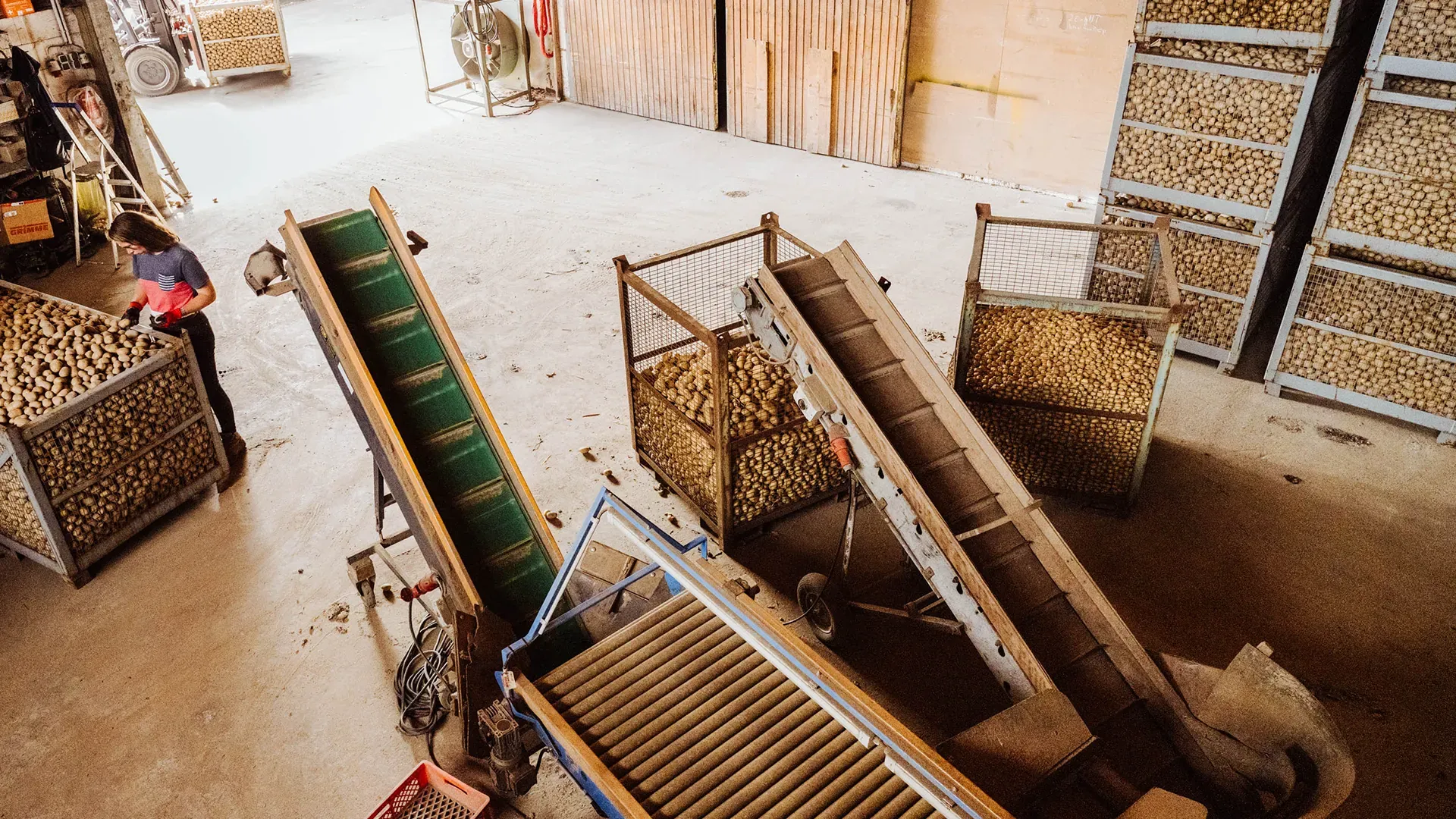
In between, the harvest is unloaded to be transported and processed further in the mesh boxes.
The old sorting machine has been helping to put together the right sizes for orders since 1999.
This is one of two warehouses which can hold 500t of potatoes. The green light is only switched on when work is being carried out in the room to prevent the potatoes from discolouring.
Delivery of an order
The order for the Bernina variety is collected in big bags (contains 1.1t) and delivered to the packing plant by a lorry. There, a photo-optical sorter removes an average of 20% of the potatoes before loading them into small organic-branded bags for the supermarket.
Appreciation for the Sorted-Out Potato
Just a few years ago, discarded potatoes were used as animal feed. Nowadays, Laura makes more out of B-grade produce. It’s worth it, because the prices differ significantly:
Table potatoes:
400-700€/t
Organic flake and starch:
150-250€/t
Animal feed:
20-30€/t
Together with her father Carsten Niemann and four other partners, Laura runs the Biokartoffel Nord growers’ association and converts some of the crop into organic potato flakes, for mashed potatoes or organic potato starch. “Our Biokartoffel Nord association is important because it allows us to utilise the discarded potatoes and thus appreciate them all,” explains Laura. Another 40 regional businesses also provide their discarded B-grade produce to the growers’ association for further processing and thus benefit from this concept.

Something is always up
Numerous starlings gather in a tall oak tree on the farm, chattering excitedly about their upcoming journey south. “Unfortunately, holidays and weekends are difficult to plan in the farming profession,” says Laura somewhat wistfully. Nevertheless, she managed to spend a week in Sweden with her children this year. “However, I don’t just have to consider the costs of the holiday, but also what it can cost if things don’t go as planned on the farm in the meantime.”
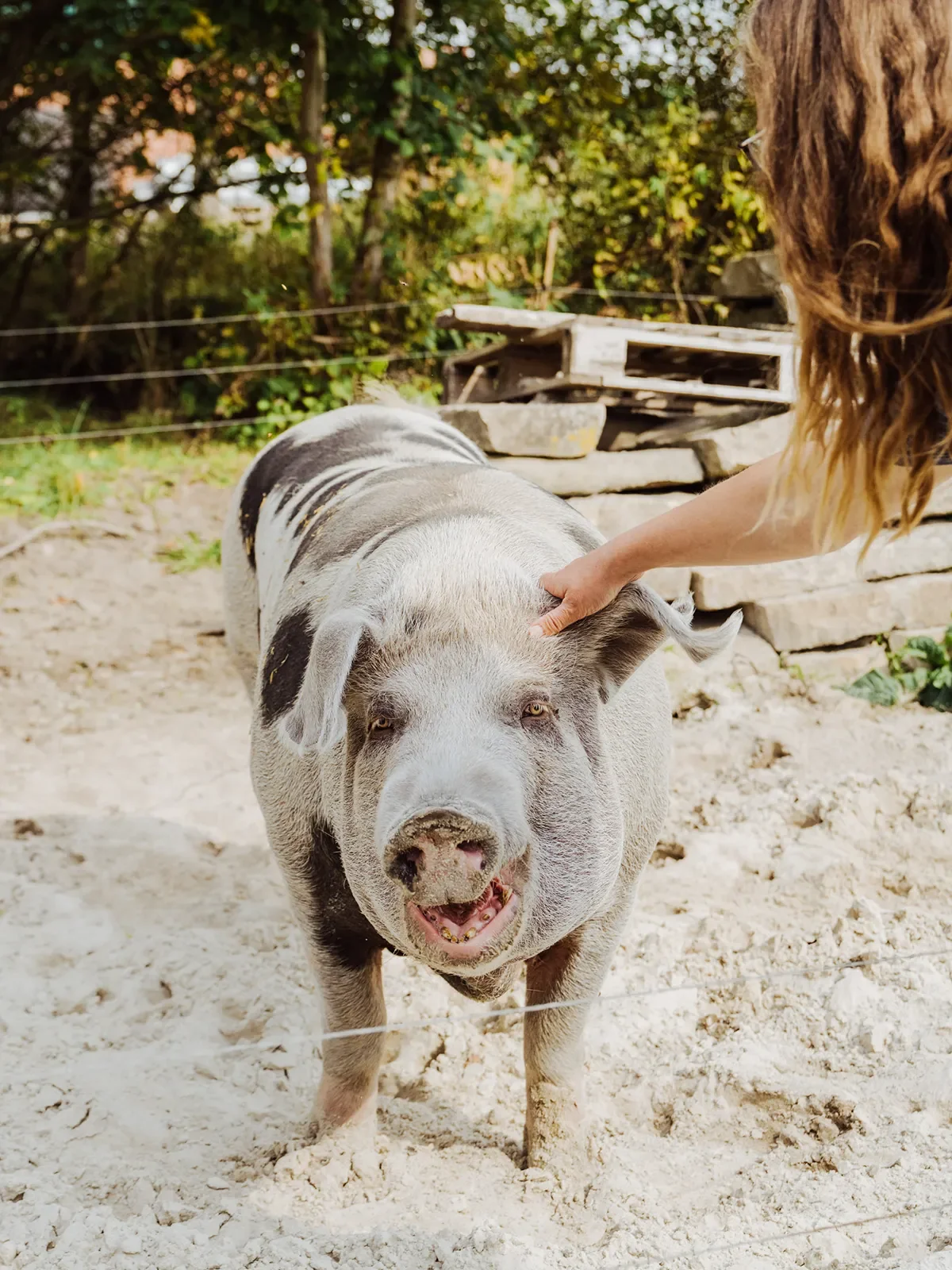
It’s a good thing that 18-year-old Laura was able to spend a year in Australia after finishing school: “I travelled, let time pass and occasionally thought about what I would do with my life afterwards.” She came to the conclusion that she needed enough space to start a family and keep animals. Therefore, it made sense to live in the countryside. So after Australia, she pursued agricultural studies, first in Berlin and then with a focus on ecology in Witzenhausen. It was there that her passion for organic farming was sparked. She became a mother for the first time during her studies: “I took my son with me a lot. It worked out well; he was a very easy child.”
Today, Laura is a mother of four, managing family life and responsibility for the farm. “You’re on call 24/7, 365 days a year. There’s no time for maternity leave.” She believes that the expression “something is always up” best describes her everyday life. And that’s also what she likes: The challenges – and when things start moving, the work is rewarding and successful.
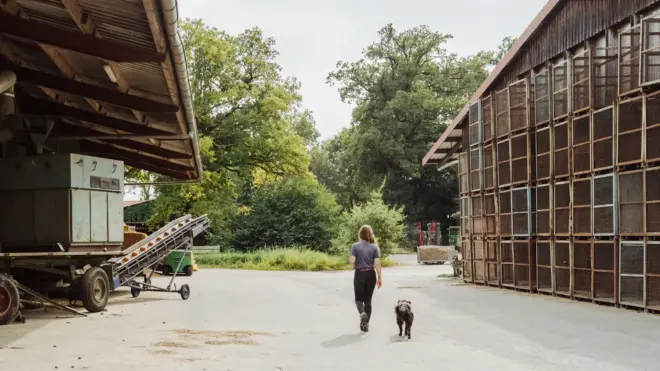
Betriebsinfos zum Biohof Ritzleben
- 480ha, of which 70ha potatoes, 40ha wheat, 40ha rye, 70ha spelt, 100ha oats, 50ha field beans and lupins, 20% barley, 10ha fallow land, and 80ha grassland
- There is an agroforestry project on the farm, consisting of 70 apple trees
- Organic farming since 1991
- 2013–2023: Gradual transfer of the farm from parents to daughter Laura Kulow
- Laura has been managing the farm independently since 2023