Slug control remains one of the biggest crop protection challenges facing UK growers, particularly following the withdrawal of metaldehyde. Crops including wheat, potatoes and oilseed rape continue to face significant pressure from slugs, with growers now relying heavily on ferric phosphate pellets for control.
For bio-control technology developer Bionema, this has created an opportunity to develop a biological alternative using naturally occurring fungal endophytes. These are organisms that live within a plant for at least part of their life cycle without causing damage.
Dr Minshad Ansari, founder and chief executive of the company, says slugs continue to cost UK agriculture around £100m annually. “There has effectively been just one main product left on the market since metaldehyde was banned in 2022. It is less toxic than metaldehyde, but growers are still looking for something more effective.”

Bionema’s research focuses on fungal endophytes naturally found within grasses, which produce compounds capable of helping defend plants against pests. “The whole concept comes from a natural system already happening in nature,” explains Minshad. “The fungi inside the grass produce compounds which can deter pests and improve plant resilience.”
From laboratory to field
Early testing has shown the pellets stop slugs feeding soon after consumption, which could offer a key advantage for growers. “The important thing for farmers is not necessarily how quickly the slug dies, but that feeding stops immediately,” he adds.
The company is also assessing how resilient the pellets remain in wet conditions; an important consideration during prolonged rainfall, when maintaining slug control becomes more difficult.
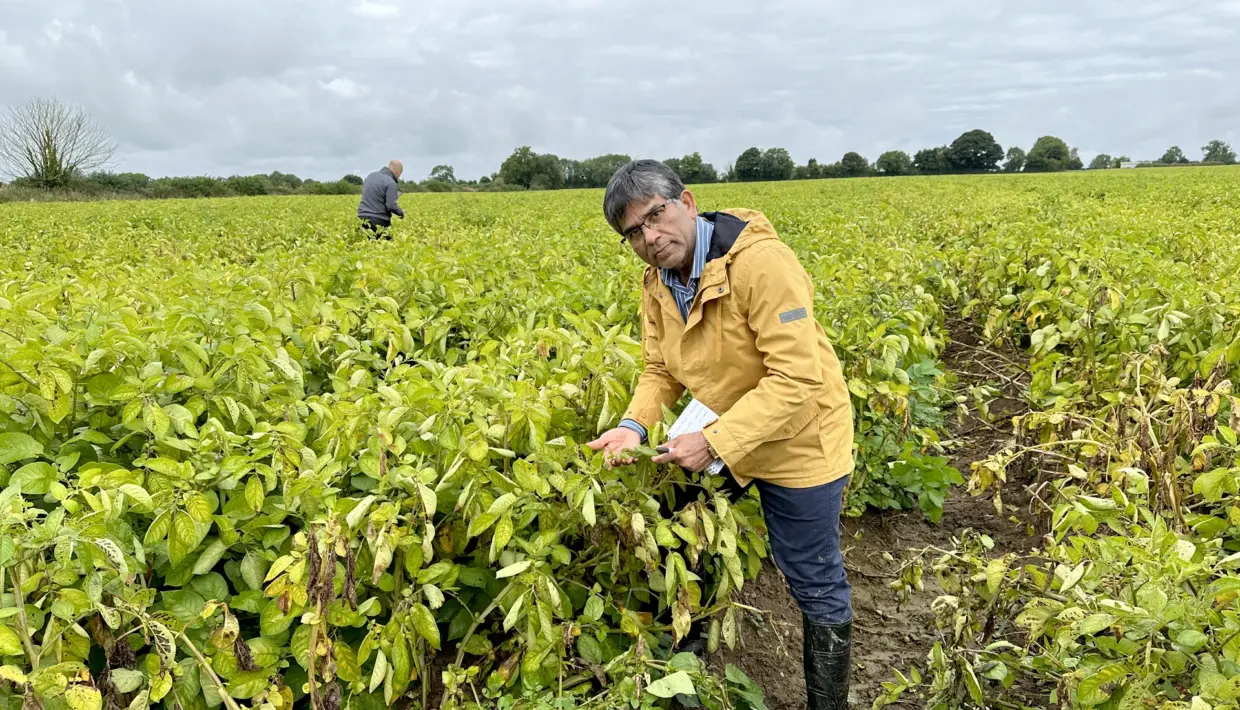
Minshad believes biological products could play an increasingly important role in helping agriculture reduce its reliance on conventional chemistry. “Biological products are not only providing alternatives, they are also adding value throughout the food production chain,” he notes. “We need more products in the market because reducing synthetic inputs and lowering environmental impact are becoming more important.
“Regulation is holding things back at the moment. Otherwise, we would bring the product to market next year.”
Biological products are not only providing alternatives, they are also adding value throughout the food production chain.
Dr Minshad Ansari

Biological fungicides
At Rothamsted Research, scientists have been investigating whether volatile compounds released by fungi could also offer future alternatives to conventional fungicides.
Dr Jozsef Vuts, senior research scientist in chemical ecology, was involved in a study examining compounds produced by Trichoderma, a fungus already known for its ability to suppress plant pathogens.
The research, carried out in collaboration with the University of Exeter, focused on Sclerotinia, a major soil-borne disease affecting crops including oilseed rape, potatoes, carrots and sunflower.
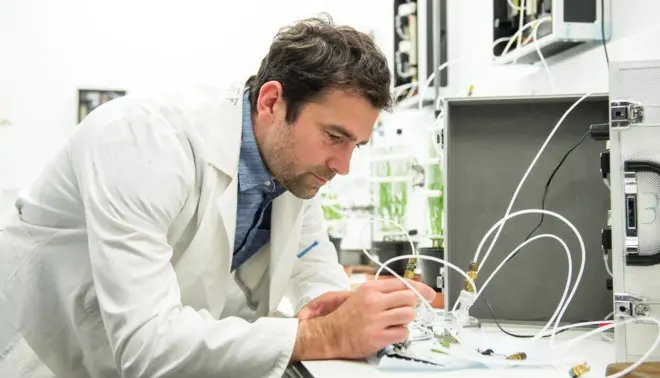
Researchers grew Trichoderma cultures under laboratory conditions before collecting and analysing the volatile organic compounds released by the fungi. When Trichoderma was exposed to Sclerotinia, the researchers found the fungal interaction altered the volatile profile, with some compounds released in greater quantities and others appearing only during the interaction.
“The key finding was identifying a naturally produced compound with strong inhibitory effects,” explains Jozsef. One compound in particular, known as 1-octen-3-ol, proved highly effective at suppressing fungal growth during laboratory testing.
“It was active not only against Sclerotinia, but also against take-all in wheat, light leaf spot and grey mould. This was laboratory scale research, so the next stages would involve small field testing and eventually field scale trials,” he adds.
“These compounds originate from natural biological systems rather than synthetic chemistry. If they can be formulated safely and effectively, they could become valuable additional tools for disease management.”
Part of a wider shift
Although biological products are unlikely to replace conventional chemistry entirely in the short term, both researchers believe they are going to play a larger role within integrated crop protection strategies.
With regulatory pressure growing and farmers seeking more sustainable ways to manage pests and diseases, biological solutions are moving from niche research areas towards practical on-farm application.