
 Loading...
The average age of a Danish farmer is close to 60, and the number of farms where the owner is over 70 is on the rise. Agricultural colleges are teeming with young blood keen to take over, but it requires money. So much, in fact, that you almost need a wealthy uncle to help.
For 22-year-old Victor Batsberg Jokumsen, this is not an option. With no farm in the family, taking over a family business is not possible either. Nevertheless, by the time he reaches 30 he plans to own an entire 635-ha potato farm, Sønderheden Landbrug, in north-east Jutland – and he knows how to get there.
Eyes set on sole ownership
Denmark has seen a 30% increase in agricultural land prices in recent years. Statistics Denmark puts this down to several factors including consolidation towards fewer but larger farms, external investors’ appetite for agricultural land, and politicians’ decision to convert 15% of agricultural land into nature reserves.
Despite the challenges, Victor remains optimistic when thinking about the future. Unusually for a new entrant, and despite the growing trend towards corporate ownership of farms through capital funds and wealthy investors, Victor is doing things differently. “It would certainly be a much easier solution for me to go down that route; financially speaking too,” he says. “But it is not just about money.”
It is about self-determination, making one’s own decisions, and replacing uncertainty with certainty.
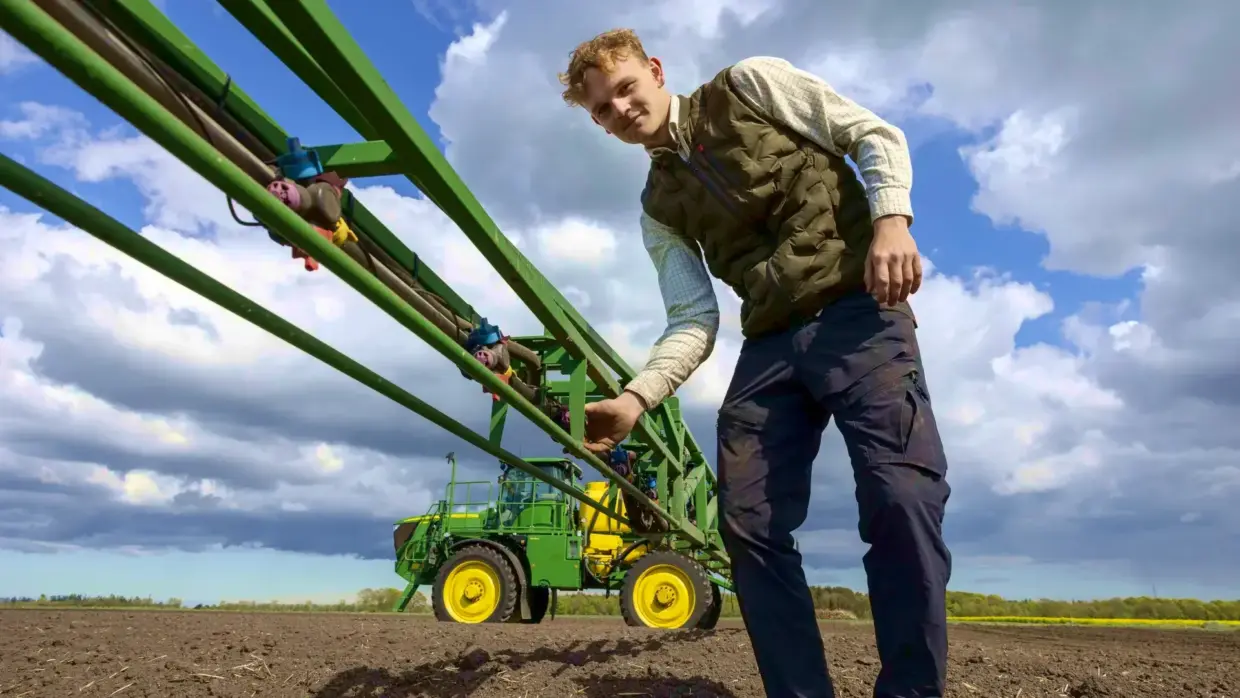
Victor wants to be master of his own destiny, not subject to the whims of a majority-owning shareholder. “Otherwise, there will always be a lingering fear about whether things will carry on,” he points out. “If the fund believes it can make more money elsewhere or wants to switch to a new line of business then you are out on your ear.”
Of course, Victor is well aware that the responsibility for finances will rest solely on him – and that his expertise does not cover all the areas required in modern agriculture today. “There are many hats to wear,” he acknowledges. “But I do not have to do it all on my own. A farm must operate in collaboration with people who have the education and motivation to help manage the individual functions in the right way.”
Mentoring mindset
As a young lad, Victor spent a lot of time helping the family’s neighbour, Morten Petersen, with his potato farm. In 2017, Morten bought a large property and hired Victor, who was 13 at the time, to mow the lawn and lend a hand. Their partnership grew, and when Victor gave up on his dream of becoming a footballer, Morten offered him an apprenticeship. A couple of years later, the operations manager left and, as the sole employee, Victor was given increasing responsibility. He bought fertiliser and pesticides, obtained a spraying certificate, and has been in charge of all field operations since 2022.
“I use Morten as a sounding board, but the responsibility is mine, and I make the decisions,” he says. “I am grateful that Morten has shown trust in me and had the courage to give me responsibility. It has certainly cost him something along the way, but I have learned from it, and it has given me the confidence to be self-employed.”
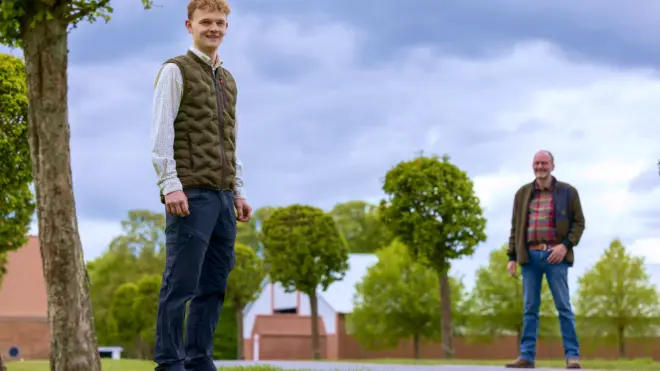
Eighteen months ago, Morten bought another property in the area. He is 60 years old; his children have no interest in agriculture, so he looked Victor straight in the eye. Was he interested? They consulted the bank, which probably thought Victor was rather young, and gave them some good advice along the way. This included the need for a good education and a plan for the takeover. “Even though we didn’t get a loan, it was great of the bank to advise us,” says Victor, who went home and sketched out an eight-year takeover plan.
Victor’s investment in learning, means he is already well on his way to preparing himself for the future. As an EUX farmer – a combination of a vocational qualification in farming and an upper secondary school leaving certificate – in 2027 he will also qualify as an agricultural economist.
Bit by bit
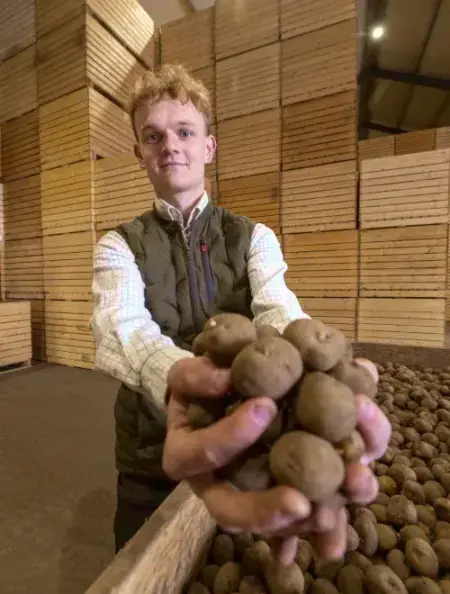
Sønderheden Agriculture comprises three properties covering 635ha, of which 150ha are used for seed potatoes. But Rome wasn’t built in a day, so Morten and Victor have built a handover plan, on a hectare-by-hectare basis.
In the first year, Victor rented 10ha, the following year a further 20ha – and so on for five years. During the last three years of the planning period, capital must be built up to take over the entire farm. At Victor’s own expense and risk, he now grows starch potatoes on the leased land. While this has eaten into his childhood savings and equity, the profit is his alone. Last year, he also established his own company, VBJ Agro, with a view to receiving a share of the start-up grant for young farmers.
“I am learning a lot by standing on my own two feet, including financially,” he says. “Even though it is still on a small scale, it has simply confirmed that I must be independent. I am also pleased that I can continue Morten’s life’s work in this way, so he does not have to see it scattered to the four winds.”
Despite taking control of the farm, Victor has no plans to change his choice of crops. He is ‘in love’ with potatoes, and in the long term plans to transition to seed potatoes, as he believes he will enjoy supplying a high-quality product on which other farmers can build their production.
Headwinds
However, the love of potato production is not without its problems. Denmark is in the process of phasing out 23 pesticides; the last one will disappear in 2027, which will hit conventional growers hard financially. Despite this, Victor remains positive, pointing out that the EU has approved the use of new genomic techniques (NGT) for plant breeding. This means that, for example, it will be possible to breed potatoes that are immune to various diseases. The legislation will be phased in over two years, and he thinks it’s a shame it can’t come in sooner, as with NGT-treated material, the need for spraying can likely be reduced by 80%.
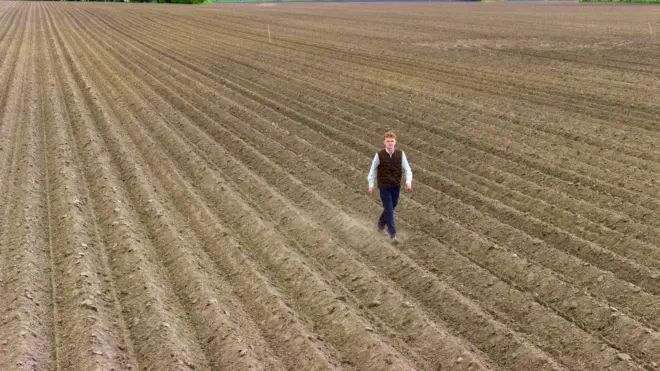
Nor does he allow himself to be knocked off course by harsh public criticism of agriculture, which recently led to a major political switch away from food production to environmental measures. “At the moment, it is a bit of a scattergun approach, so a lot of the policy misses the mark,” notes Victor. “The Danes have never gone without food, while at the same time we as a nation have developed a commodity. This is a task that we, as the agricultural sector, have – and will continue to – gladly take on. Because we can, and because we enjoy the work. I think the hurdles will be overcome.”
So what advice does he have for those hoping to be part of Danish farming’s future? “Show young people trust and give them responsibility,” he urges existing farmers. “It makes you grow in self-belief too, so that you dare to pursue the dream of a life where family life and agriculture go hand-in-hand.’
About Sønderheden Landbrug
- 635-ha arable farm
- 150ha used for seed potatoes
- The remainder is in land-swap arrangements with neighbours to ensure potato-free years
- Annual production: 5,500 tonnes of seed potatoes