The winter crops have already been drilled. Only a few hectares of sugar beet remain to be harvested, then harvest is complete. Yet for the 15 permanent employees, three trainees, and their farm manager Egbert Wissling, the end of October is not the time for winter rest. Even after harvesting the 450ha of arable land on the farm in Beckum, Münsterland, the workload remains high with over 1,000 sows, 12,000 finishing places, two biogas plants, and wind energy facilities.
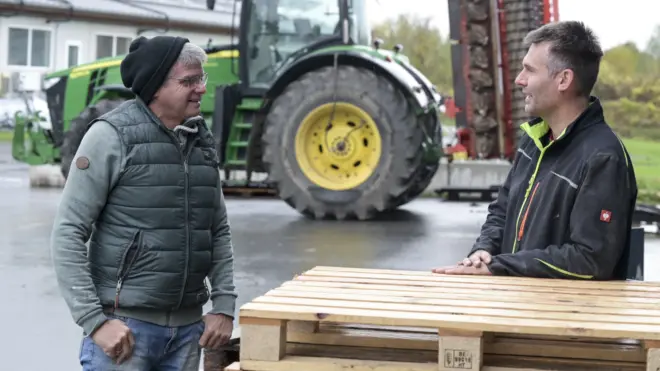
During our conversation, Egbert’s phone rings. “Sorry, I have pigs to sell,” the 55-year-old interrupts and briefly ducks into the next room. This is a good moment to talk to employee Stefan Hilgensloh.
From apprentice to employee
Stefan completed his agricultural apprenticeship on the Wissling family’s farm many years ago. After studying agricultural economics in Soest and gaining experience elsewhere, he returned to the farm where he trained. Today he’s the link between the office and farm operations. He manages the Animal Origin Tracing and Information System (HIT database), processes official requirements, handles building-related legal matters, invoices, orders, and various organisational duties. There is certainly no shortage of variety.
The 40-year-old speaks positively about his job on the farm, which has grown significantly over the past two decades. He respects his Egbert, not only for the farm’s success and growth, but also because Stefan runs his own pig fattening business as a sideline with his father and understands the daily challenges in farming. Like Stefan, five other employees also run farms at home on the side. “It’s clear that we have a particular sense of responsibility towards our employer in difficult moments,” he emphasises.
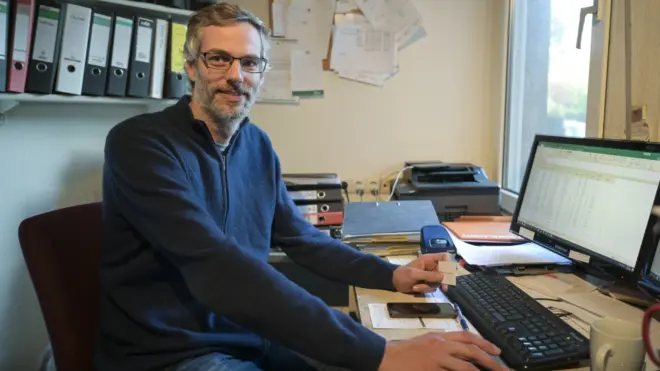
Modern technology and flexible work
While Stefan spends most of his time in front of a screen, Daniel Brockschnieder operates the choppers, combines, and tractors. On a rainy October day, he is cleaning the drum inserts on the combine. The 41-year-old got the job through word of mouth and appreciates the short commute from his home, just three kilometres away. “What I appreciate about this farm is the high degree of time flexibility and family friendliness,” explains Daniel. “If something comes up, I can arrive a few hours late and make up for these missed hours elsewhere.”
Roles involving modern vehicles and machines are often more sought-after than those in the pigsties. “But they’re definitely not more important, because all employees are valuable,” stresses Daniel. Among those in the sow barns is Florian Lammerding, who works 30 hours a week while also running his own fattening farm with arable land.
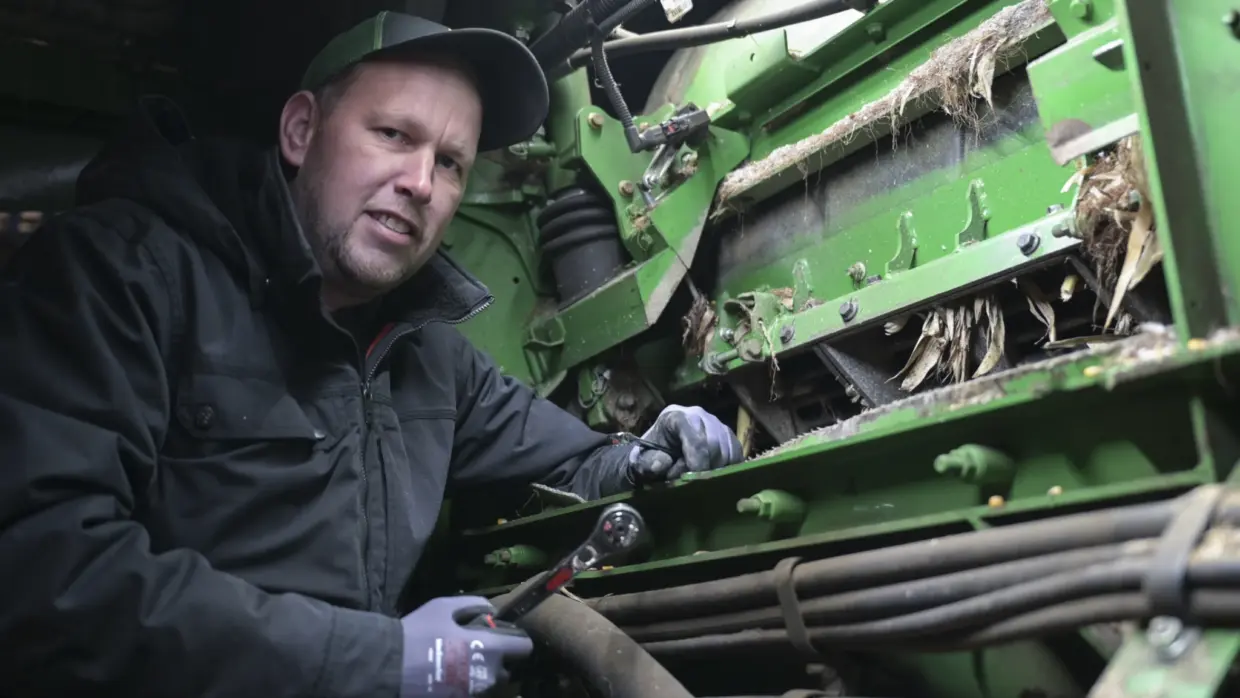
Daniel Brockschnieder works at the Wißling farm primarily with modern agricultural machinery and appreciates the family-friendly flexibility of the operation.
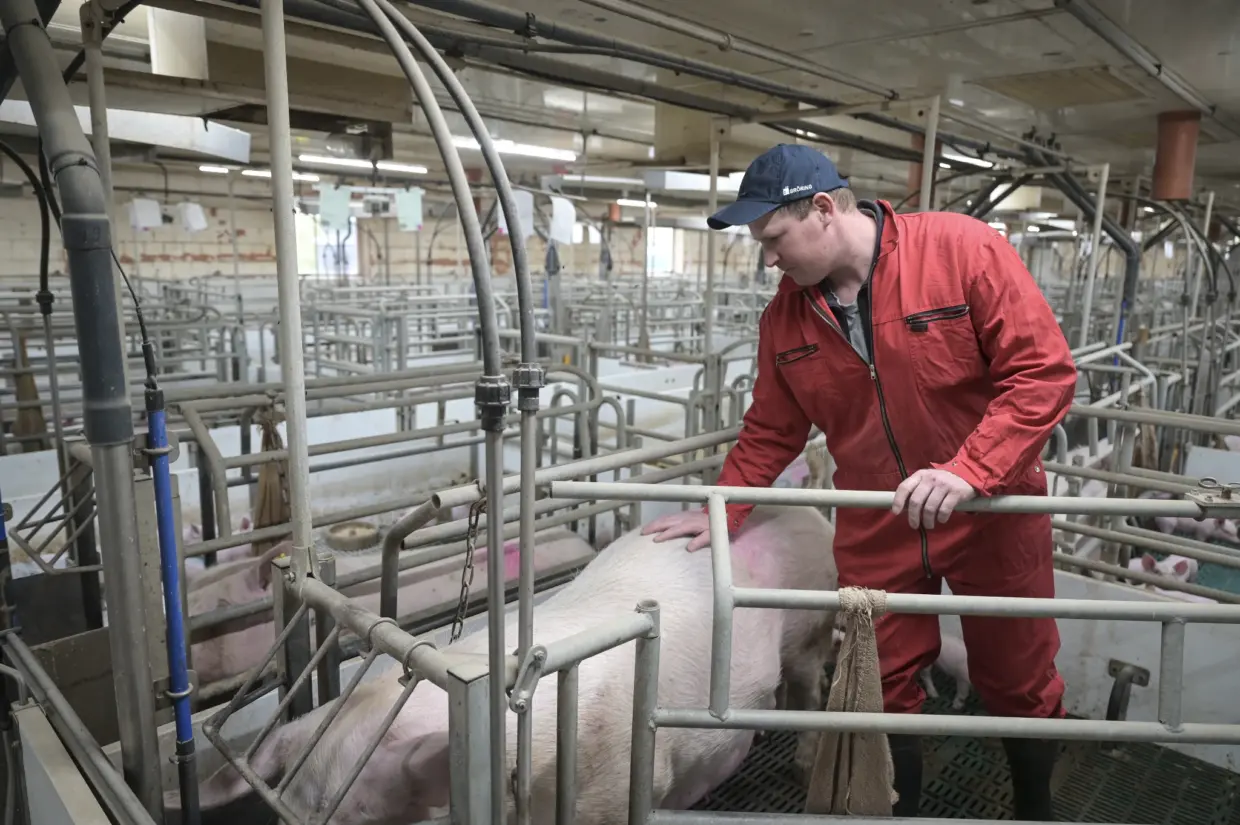
Florian Lammerding works in the sow barn at the Wißling farm and combines this job with running his own pig-fattening operation at home.
Alongside flexible working hours and direct decision-making structures, he particularly values the sense of appreciation for his performance and commitment. “This cannot be measured in money but is priceless for the working atmosphere and personal motivation,” says Florian. He aims to pass this appreciation on to the apprentices; there are currently three on the farm, two of whom are tasked with vaccinating and ear tagging the piglets.
Biogas and wind energy
The pigs have now been sold and Egbert returns. Although the harvest is complete, there is still much to be done. For example, he has to address the future of the farm’s biogas plant. The plant has already been modernised twice, with the gas engines now limited to generating electricity for a maximum of 10 hours a day. The 1,000m3 heat storage tank still manages to provide enough heat for the whole pig housing, several residential units, and for drying grain maize, triticale, and logs.
However, EEG (Renewable Energy Sources Act Erneuerbare-Energien-Gesetz – EEG) support ends in late 2026, and whether the business model will remain profitable afterwards is unclear. The plant might receive a contract from the Federal Network Agency for continued operation under the EEG – or production from the combined heat and power unit may be taken down to150kW. Nothing has been decided yet.
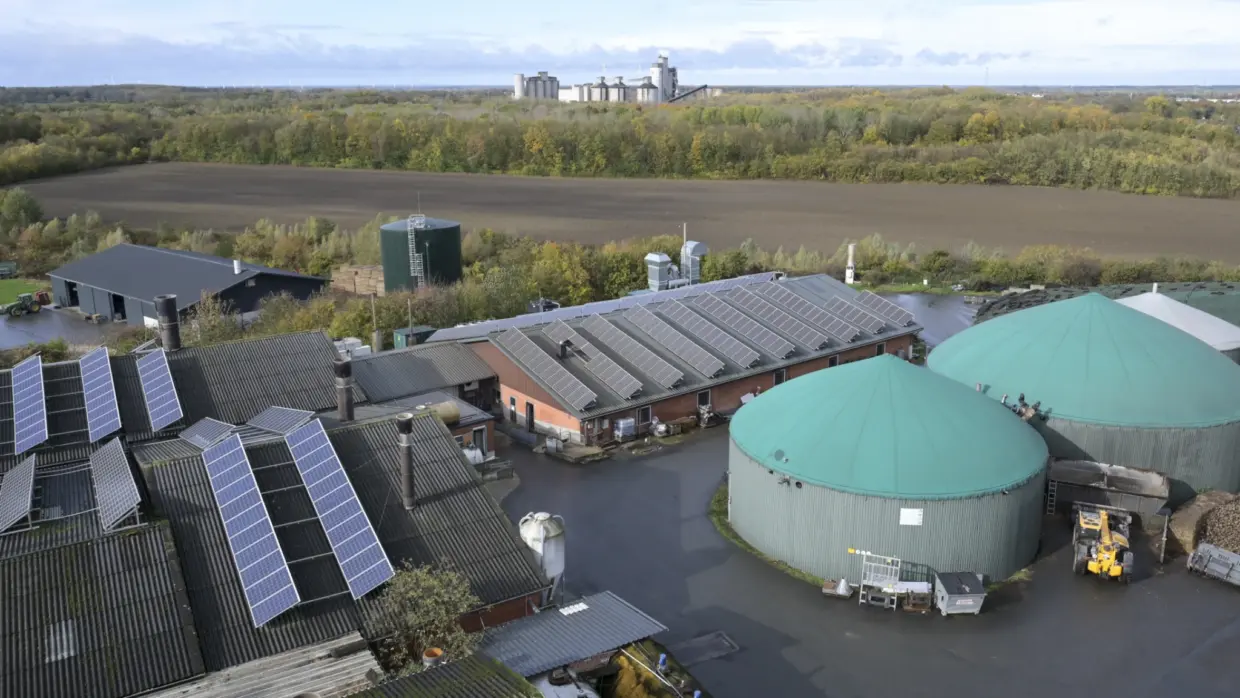
Besides the biogas issue, renovation of the pig housing is planned to meet the increased demands for animal welfare. Communication with the relevant building authorities can be slow, but Egbert prefers to focus on solutions, results, and conclusions, otherwise he wouldn’t make progress with his business. The same approach applies to his involvement in renewable energy projects; Egbert is managing director of an existing wind farm and a planned wind farm with three wind turbines, each with a capacity of 7.2MW. The project is valued in the mid-double-digit million-euro range and is managed by the project developer BBWind from Münster, with involvement from a local citizens’ energy co-operative.
We want to meet the increased requirements for animal welfare.
Egbert Wißling
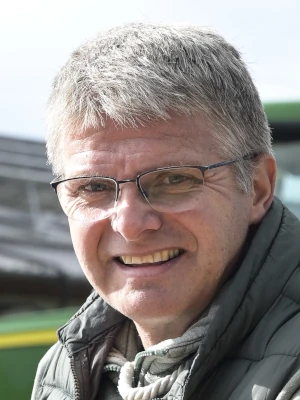
Beyond the farm, Egbert serves as honorary chairman of the supervisory board of Westfleisch Finanz AG and chairman of the board of Raiffeisen Beckum eG.Undoubtedly, the business challenges he faces have grown significantly in recent years. “I’ve steadily grown into it,” he says, after energetically dismounting from his e-bike and sketching out his business in brief sentences between the biogas plant, grain store, and piglet rearing unit. He is also thinking about succession. One day, his son Jonas – will take over the business and Egbert wants to ensure he has enough time to grow into the role.
Teamwork and farm culture
Despite the constant production pressure, Egbert tries to offer each of his farm employees enough freedom to organise themselves so that their skills and inclinations can be positively integrated into the work process. “Unfortunately, I don’t have enough time for each individual to address their ideas and opinions,” he admits. “I think that’s a real shame, but everyday life on the farm often just doesn’t allow for that.” Although communication in the pig units, the technical department, the biogas plant, and the office is very open and direct, there is still potential for optimisation. Especially since every new day is full of surprises.
Magdalena Lindner, who manages the day-to-day business and personnel records in the office, can attest to this. The 44-year-old asserts that without a willingness to improvise, it wouldn’t work.
Her colleague in the office is Stephanie Schumacher, a tax clerk who handles payroll accounting. “After many years in a tax consultancy office, working here is a truly exciting change, and I like it a lot,” says Stephanie, who is pleased with her decision to start a new chapter in her professional life on the farm.
The work here is a truly exciting change after many years in a tax consulting office.
Stephanie Schumacher
Formal, regular staff meetings have not yet been introduced, but informal exchange is important. The team eats lunch together, bringing something from home and in the summer, they occasionally share a beer after work. There are barbecues, Christmas parties, and an annual joint leisure activity, most recently water skiing at a nearby lake. However, none of this should obscure the fact that only those who demonstrate a high level of commitment stay on the farm.
“Sometimes you arrive here in the morning and have a plan and by the evening you’ve done something completely different,” says Piet Fernkorn, who is responsible for technology and maintenance. “But that is exciting and makes working on this farm attractive.”
Piet has a special connection to the farm, having been its first apprentice in 2001. Like Stefan, he studied in Soest, then worked at the local John Deere dealership. Today he oversees the farm’s trainees and is on an examination board.
Pay levels are not publicly discussed, but they are competitive. However, innovation, new ideas and techniques are omnipresent. It is an attitude demonstrated by Egbert himself; practical, meticulously planned, and hands-on. There never seem to be a dull moment at this place of work.