For many years, Jürgen concentrated on sugar beet as part of his conventional arable farming. The crop occupied about a third of the farm’s arable land and had a massive impact on the crop rotation. The beet was often lifted so late that a winter cereal could not be sown. At the same time, the regional Lettenkeuper soils around the farm show significant variations in quality; within a radius of 5km, values on the German scale (from 0; poor to 100; excellent) range from 32 to over 74 points. In the better areas, the root crops performed significantly better, which further limited the options available.
When the terms of the German FAKT support scheme for growing peas and oilseeds changed, it became virtually impossible for the farm to make those crops economically viable so they were dropped from the rotation. “This left our rotation far too narrow,” Jürgen recalls.
Fortunately, the narrow crop rotation had not yet resulted in depleted soils, erosion or yield losses. Nevertheless, Jürgen wanted to take precautions. “Soil is our production base and must remain healthy. However, a three-crop rotation does not promote healthy soils. That’s why we need a wide crop rotation,” he says, explaining his decision to diversify the rotations.
The turning point came with the start of the Future Resources, Agriculture and Nature Conservation project (FRANZ) in 2016. “I wanted to find out what a conventional farm is capable of, and where I stood,” says Jürgen. Rather than relying on pub-talk clichés, he focused on figures, data and facts. The first biodiversity survey on the farm confirmed that the intensively managed system had the same level of diversity as a comparable organic farm. This came as a surprise to Jürgen and spurred him on to drive diversification forward.
Rapeseed instead of sugar beet
Since then, Jürgen has come to see biodiversity as a component of his crop rotation. When choosing crops, however, economic viability remains the primary consideration. New crops are only considered if they are economically viable.
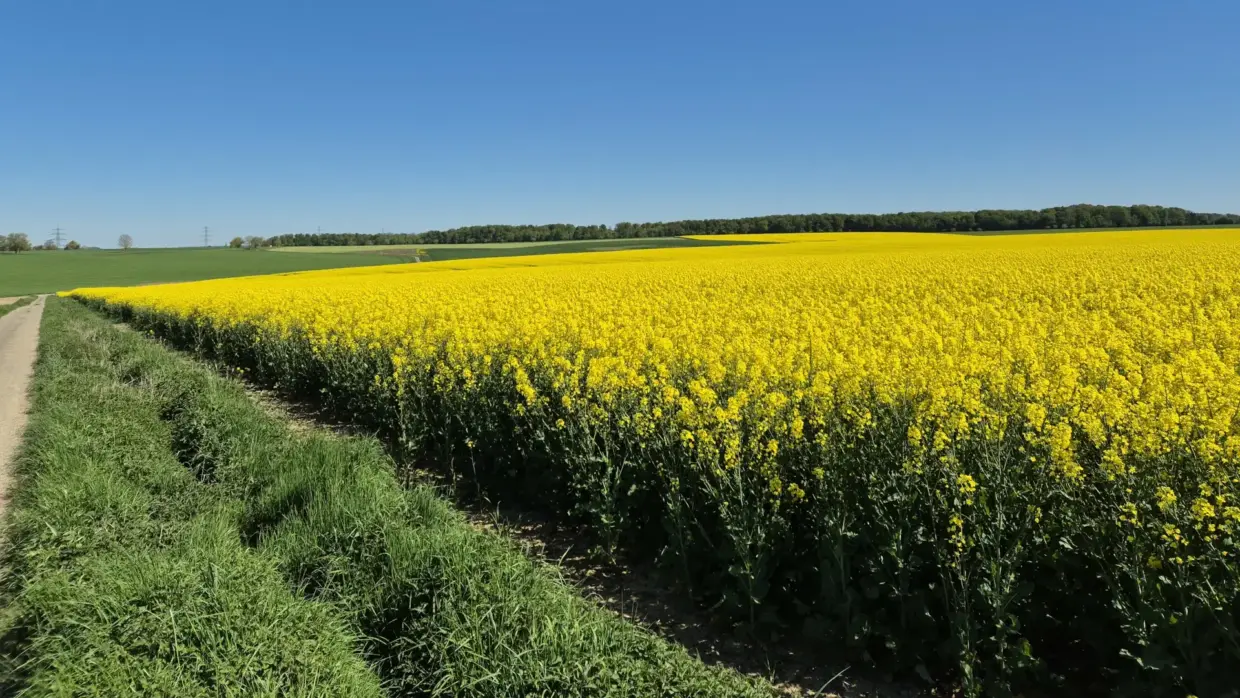
When sugar beet prices fell and a pest problem of leafhoppers emerged three years ago, Jürgen scaled back his sugar beet cultivation. Sugar beet was replaced by rapeseed, which had last been grown on the farm 30 years ago. “Oilseeds have been more economically viable than root crops in recent years,” he explains.
For me, biodiversity is also a part of the crop rotation.
Jürgen Maurer
For Jürgen, however, integrating maize into the farm’s operations on a large scale would involve too many obstacles. The farm’s pigs are fed via automatic mash feeders, which are not designed to handle single‑silaged corn‑cob mix. Grain maize, on the other hand, ripens too late in the year and would need to be actively dried. As a result, Jürgen only grows the crop on a small scale.
He tested and rejected other crops, including soya, onions, oat-vetch mixes and triticale, finding either there was no market, processing was too complex, or the crops proved too risky in terms of cultivation.
Soil also plays a part
In addition to economic viability, soil also plays a part in crop rotation decisions. Good soils deliver higher yields and are used more intensively. “The crop rotation here is a little narrower,” Jürgen explains. “Biodiversity tends to happen on the lower-quality fields.”
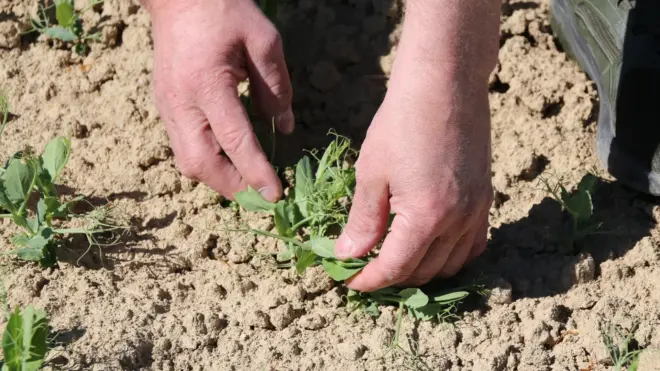
On good soils, Jürgen usually relies on narrower rotations like winter wheat followed by winter barley, a catch crop, sugar beet or maize then another winter wheat. Peas are sometimes brought in, too. The catch crops are intended to cover the soil, root through it and build up humus.
On poorer soils, Jürgen deliberately keeps the crop rotation wider. In these areas, he more frequently incorporates spring crops, peas or biodiversity areas. The crop rotation might therefore look different with winter barley followed by winter wheat, rapeseed or sugar beet, winter wheat and finally spring grain or peas. The crop rotation is supplemented by wildflower strips, flowering clover headlands and more extensive sub-areas. He hardly grows catch crops on poorer soils these days, as the high cost of seed often makes it unprofitable there.
No rigid system
The farm does not follow a rigid crop rotation. Instead, Jürgen adapts his planning to the current conditions.
As well as soil and weather conditions, work organisation also plays a part. With only 1.75 full‑time equivalent staff members, efficiency is essential. Jürgen therefore groups fields with the same crops spatially close together, cutting down the travel time between them.
Working time windows are also important. If a favourable sowing window closes before the crop has been drilled to the planned extent, the schedule has to change. “Then another crop goes in,” Jürgen explains.
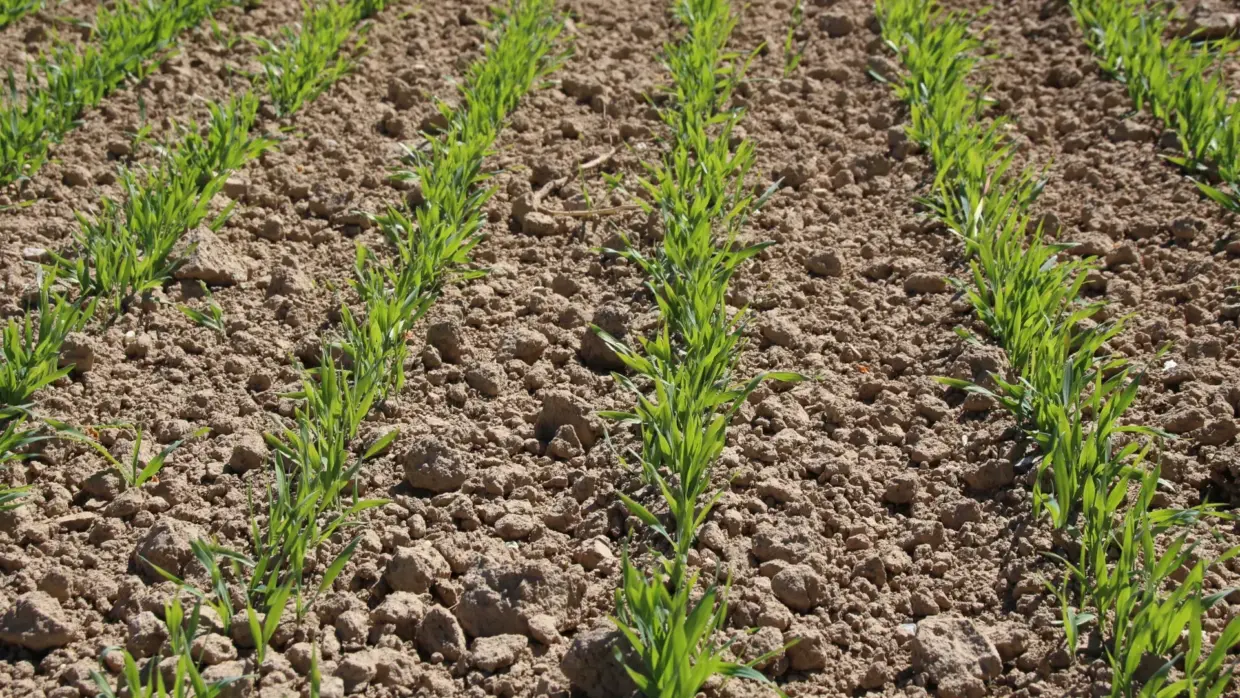
For the farm manager, an expanded crop rotation also means thinking less in terms of fixed patterns. “With three crop types, I can just mindlessly run through my programme. That’s no longer possible with more elements in the crop rotation to consider,” Jürgen reports. However, after 10 years of implementing wider crop rotations and biodiversity measures, he has now adapted to the changed conditions and developed a new routine.
Less intensity, more stability
Jürgen does see drawbacks to the new system. It is less geared towards maximum yield, which makes moderate yield losses more likely. In conjunction with the partial shift towards extensification, weed pressure also increased.
Thirty years ago, the farm was still geared towards maximum yields with a narrow crop rotation. Jürgen now doubts that this will work in the long term: “Put figuratively, you can drive a car at 200km/h – at some point, either the car will flag or your concentration will, so you slow down again. It’s the same in farming; you can take everything to extremes, but then something is bound to fall by the wayside.”
I prioritise the soil over the last hundredweight.
Jürgen Maurer
A more diverse crop rotation is intended to maintain soil fertility in the long term, rather than just delivering marginal yield increases. Soil health takes precedence over the final hundredweight. A variety of crop types also ensures balanced risk management. Total crop failures are becoming less likely. Despite all this, yields are falling across the entire farm as a result of climate change – even the expanded crop rotations have not been able to prevent this so far.
Soil life as the next step
In the future, Jürgen intends to focus even more on soil health and to promote soil life. He aims to achieve this by increasing organic matter, reducing ploughing and ensuring that crop residues are incorporated more effectively.
In his view, one possible approach would be a one-year clover fallow. The clover is intended to fix nitrogen, build up humus and loosen the soil. Insects and small game like partridges and brown hares could also benefit from this. So far, however, implementation has failed due to a lack of support. “I can do without production, but financially it still has to add up at the end of the day,” Jürgen explains.
Resilience reimagined
The most significant change on Jürgen’s farm is therefore perhaps neither the rapeseed nor the additional spring crops, but rather the way he thinks about the farm today – less rigid, but with a broader base and greater adaptability. For him, resilience no longer means optimising the system for maximum yield but rather being able to respond flexibly to new risks like extreme weather events, new pests or volatile markets. “One crop always delivers,” he says. For him, that is precisely where the strength of wide crop rotations lies.
Crops grown on Jürgen Maurer’s farm by cultivated area (2025/2026):
- 26% rapeseed
- 26% winter wheat
- 13% winter barley
- 10% spring barley
- 9% biodiversity / set-aside areas
- 6% sugar beet
- 6% spring wheat
- 3% maize
- 1% peas