Haig Hamilton, a farmer from East Lothian, is somewhat of a trail blazer when it comes to precision ag tech. Based at the family farm, owned in partnership with his parents, Haig has 364 ha of land, growing cereal crops. In addition, he runs his own business, Hamilton of West Fortune, with eight staff and tractors, growing 255ha of potatoes. With a lot of land to cover, it’s clear that good, reliable machines and systems are vital ingredients to his success.
It was in Australia, 2003, that Haig first came across the John Deere steering systems. He was taken aback by how straight and uniform the crops looked and asked a farmer how they’d managed it. They took him into the tractor cab and showed him the set-up. “It was unbelievable,” he remarked.

Haig Hamilton from East Lothian in Scotland …
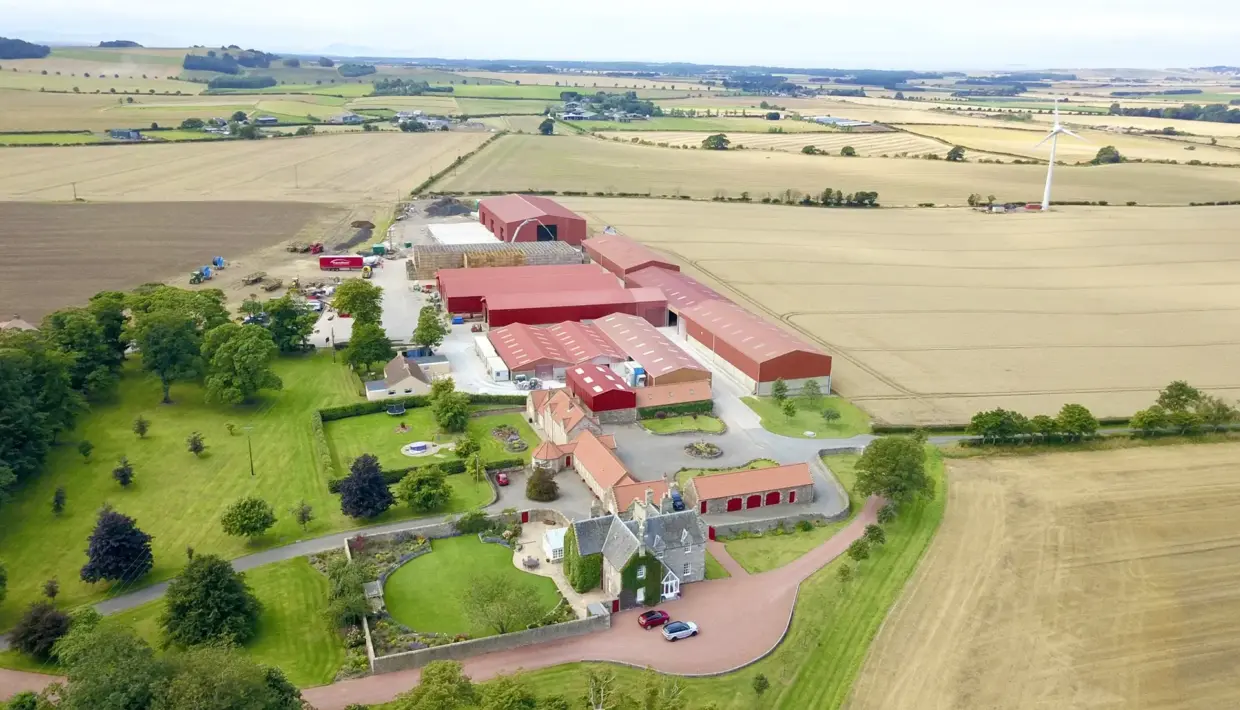
… cultivates a total of over 600 ha, of which 255 ha are under potatoes.
Returning home, Haig knew exactly what he wanted for his farm, and it was the first thing he asked of his local dealership, Thomas Sheriffs. He was delighted to learn that the UK launch was on the horizon. The first time he got to see the system in action in the UK, it was on a disused runway. Needing little persuasion to invest, he and his family were soon trialling a new machine complete with auto steer which they went on to buy that very same season.
It was the accuracy that stood out most to Haig; having plenty of experience in the field, he recognised how tiring it can be. “There were so many distractions with mobile phones and so on, but having the system fitted just made things so much easier.”
It just makes life so much easier, not only for me but also the operator.
Haig Hamilton

But it was the cost saving that really made the difference, and Haig has been impressed by the cm-level precision. “At the time, we were operating with 24m tramlines, but we found we were between 1.2m and 1.5m out on spacings.” Using the new system meant they could utilise the ground to the best of their ability, boosting yields, quality and accuracy. This had a big impact on costs and labour, which Haig estimates was between 5% and 7% across the board.
From a single system to a connected fleet
Haig, who was one of the first farmers in East Lothian to adopt the auto steer system, now runs it across the entire fleet. “With the way tech has gone, we were upgrading all the time, and now we have the system installed on absolutely everything.” Getting everything to talk to each other was certainly the deciding step, he adds. “It just makes life so much easier, not only for me but also the operator.”
The business currently has eight John Deere tractors, and also runs passive implement guidance on the drill, active implement guidance on potato equipment, and John Deere steering and connectivity on an Agri-Fac sprayer. In addition, it has John Deere steering, yield mapping and connectivity on both the Claas combine and Grimme self-propelled potato harvester.

Operating with the system is now second nature to his team, but there were challenges initially. “As with any new system, it can be difficult for people to adjust,” he explains. But it was very much a case of ‘in at the deep end’ for his team. If they wanted to drive the kit, they had to adapt to the new system.
Haig found the younger, more progressive amongst them were keen to adopt the new tech, with the older team members generally more reluctant. However, when Haig explained the cost savings, and they saw the accuracy when crops began to germinate, they were soon convinced.
Why good service makes all the difference
The system allows the operator more time to ensure the machine is working to the best of its capabilities. But Haig not everything is foolproof. “A good operator is not just a driver; they are someone who can carry on even when something goes wrong. After all, there are many moving parts involved, not just steering.” Haig works closely with Thomas Sheriffs and believes having a great relationship with your local dealership makes all the difference. “It’s very important; knowing we have the backup just makes life easier,” he explains.

Haig is quick to recognise there will always be teething problems with any new technology, which is why he appreciates the support and training that his local dealership offers. Refresher courses ahead of their busy seasons helps to get them up-to-date on the latest changes or upgrades.
Too many people don’t look to the future and are falling behind.
Haig Hamilton
“It can be long time between using systems, and a lot can change between one season and the next,” he notes. “We take all staff along to the sessions; they are brilliant. We sit around the table and go over things. They’re good at installing updates and upgrades when needed. And, if we do have a problem, they can log on themselves and talk us through it.”
Less effort, better overview
Accuracy has been key to Haig’s success. But it has also made a big contribution from a sustainability perspective. Using the John Deere Operations Centre app on his phone, Haig can keep an eye on progress around the farm. He can monitor seed rates, live yields and fuel usage, giving him an overview of what is happening on farm at any given time. “It’s absolutely brilliant. You can see you’re not using as much fertiliser, fuel or labour, which is lowering your carbon footprint; it’s the whole package.”

Haig Hamilton monitors progress across the entire farm via the John Deere Operations Centre.
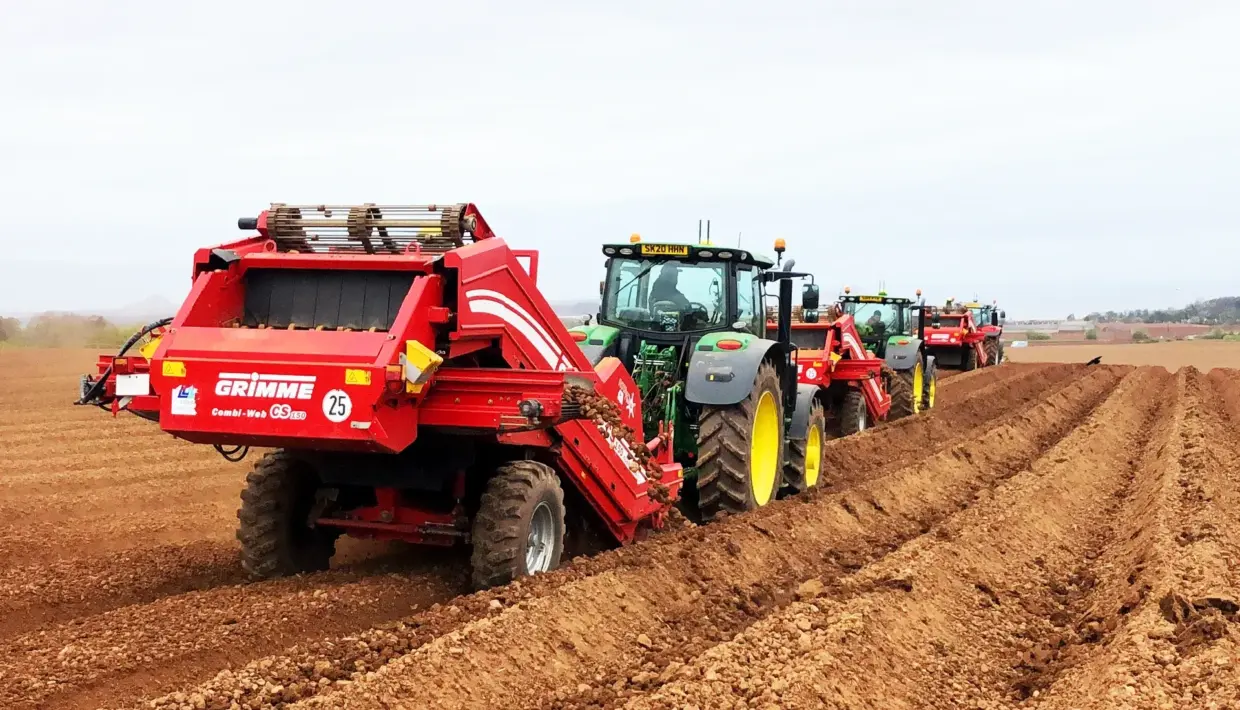
In potato cultivation, the system is now used at every stage of the process.
While the steering system made things easier, ultimately it has been the full suite of precision ag adaptions, installed across the fleet, that Haig has found most useful. In fact, the system is now used in every step of the potato cycle, from ridging up (steering and monitoring fuel efficiency) to bed tilling, destoning, spraying and even harvesting. “Each individual element is good, but as a package, that is much better for me. Being able to use yield and field data to calculate variable application rates is invaluable.”
This year, the team is hoping to run the trailers alongside the potato harvesters to speed up harvest. “I love trying different ideas out,” Haig adds. “The way technology has moved on in the past six or seven years has been quite phenomenal.
“Too many people don’t look to the future and are falling behind. It’s a big outlay to begin with, but when you see the cost savings overall, it’s worth it. For example, if your labour, seed and fertiliser bill was £100,000 and you’re saving 5% a year, over four years that’s £20,000. It’s about having the foresight to look that far in advance.” There will always be scepticism, but Haig believes that by working with your dealer, you can get through those issues.
Technology is changing all the time, so work with it. So long as you have a full understanding of how it all works, it will work for you. It’s about making life easier and more accurate for yourself.
Haig Hamilton
Will the technology replace people? Not in Haig’s opinion. “Autonomous technology is coming, but you will always need drivers to operate the machines. And AI can’t fix parts on the spot.”
As we look to the future, what advice does Haig offer? “You’ve got to move with the times and look to the future,” he suggests. “Technology is changing all the time, so work with it. So long as you have a full understanding of how it all works, it will work for you. It’s about making life easier and more accurate for yourself.”
Betriebsinfos Haig Hamilton
- Farmer Name: Haig Hamilton
- Location: East Lothian, Scotland
- Area: 619ha
- Crops: Cereals and Potatoes
- Machines: 8 tractors, Agri-Fac sprayer, Claas combine harvester, Grimme potato harvester plus addition kit for potato management
- Staff: 8 team members