GPS-based guidance, yield mapping, automatic adjustments on the go: Modern combines can do far more than farmers often utilise. “There are key features, which are integrated into the machine, not being fully utilised in everyday operations,” says Giulio Tosato, Manager of Solutions as a Service Strategy for Europe at John Deere. There are multiple reasons – time pressure, incomplete setup, lack of training, or simply a lack of awareness. The result: Technology that has been paid for fails to deliver the added value it could provide.
One example is the earlier Combine Adviser system. “Only about half of the customers who had the system on board actually used it,” says Jonathan Edwards, Go-to-Market Manager for combines at John Deere. Yet the benefits were clearly measurable. More precise settings led to reduced losses and a more efficient harvesting process. However, Combine Adviser is now a thing of the past and John Deere has learned from the experience. With a structured customer success approach, the company and its dealer network now aims to support customers in making effective use of new technologies – and in doing so, boost their productivity, profitability and sustainability.
Harvest starts in the office
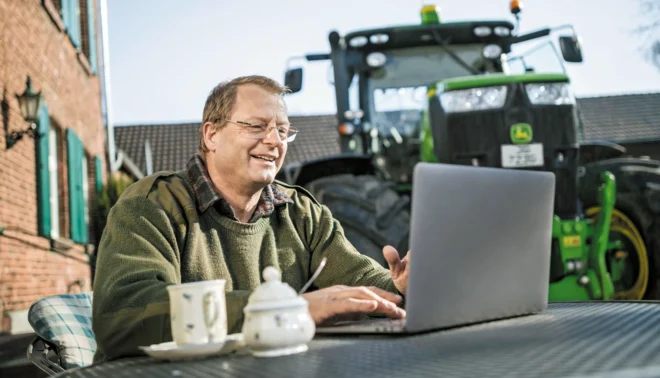
The first step requires laying the digital foundation. Many farmers already use the John Deere Operations Centre, but not always consistently. “Some farms have only entered a single field boundary for their entire operation,” reports Jonathan. “With such a scenario it impossible to generate reliable yield maps, use automated guidance, or fully optimise performance – and ultimately, it means giving away profits.”
Yet the solution is simple: Those who set up accurate field boundaries and a so-called work plan in the Operations Centre ahead of time save valuable minutes during harvest. The combine then automatically loads the correct field data and tasks – no more frantic tapping on the display as the machine rolls into the field. “We want this kind of preparation to become second nature,” says Giulio. With the right setup, better decisions can be made that will lead to more efficient operations in the field straight away.
Another example of underused potential is Machine Sync. This feature allows the combine to control the tractor during unloading on the go, by automatically co-ordinating speed and position. It reduces losses, increases comfort, and ensures smoother operation. “Machine Sync is a mature technology and even available for older combines,” says Jonathan. “Many customers just don’t realise they could be using it.”
The Technology can do great things. But only if you actually use it.
Jonatahn Edwards
This is exactly where the customer success approach begins: John Deere supports customers through its dealer network with hands-on advice and training. Simple licensing models help to make the cost side of digital tools affordable, transparent and manageable over time.
Step by step toward automation
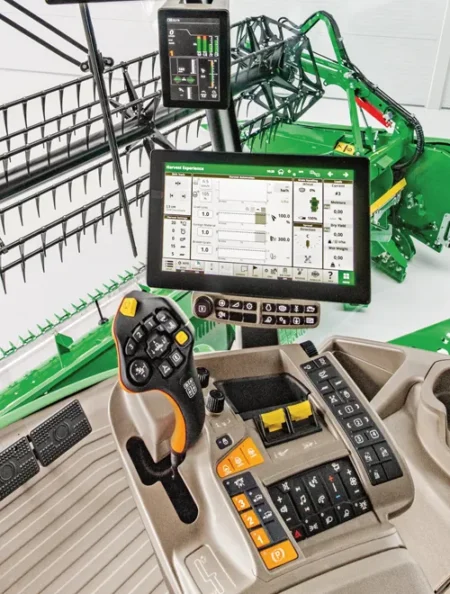
Consistent execution of prep work lays the foundation for advanced technologies on the new S7 combine, launched in 2025. In this model, John Deere has integrated multiple intelligent systems that significantly boost harvesting efficiency.
One such innovation is Predictive Ground Speed Automation (PGSA). Using cameras and satellite maps, the combine analyses biomass in front of the header and adjusts its speed proactively before the crop enters the machine. The system detects down crop, harvested areas, or variations in crop density and responds early. PGSA is complemented by Harvest Settings Automation (HSA). Instead of setting target values as in the past, users now define outcome thresholds – such as maximum grain loss, broken grains and material other than grain (MOG). The combine then automatically optimises its settings to stay within those limits.
The impact of these two systems is measurable: In a large-scale field trial with 29 S7 combines across 3,571ha, John Deere demonstrated a 20% increase in productivity – or, as Jonathan puts it: “That’s like gaining one extra harvest day every five days.” At the same time, fuel efficiency improved by 10%, and automated loss control kept more grain inside the tank.
Technology alone isn’t enough
Even with the best automation features, one thing remains true: It’s not just about the technology – it’s about how it’s used in everyday operations. “Many combines aren’t driven by the owner, but by seasonal workers,” says Guilio. “These operators often have plenty of hands-on experience, but they don’t always receive dedicated training on the digital systems and technologies.” He sees great potential: “If we manage to involve and train these temporary teams prior to the season, our systems can deliver their full potential – no matter who’s behind the wheel.” That’s why the customer success approach focuses on clear setup and handovers, easily accessible training, and ongoing check-ins before, during, and after the season.
From salesperson to partner
The goal is a systematic shift away from one-time sales transactions and toward long-term, partnership-based support throughout the entire lifecycle of a combine. The focus is not on the technology itself, but on its individual value during day-to-day operations.
That’s why John Deere, together with its dealer network, has established new structures to support farmers more effectively, from the initial purchase to daily use and ongoing Improvement of processes. “Customer success is not a marketing concept – it’s about creating measurable value together with our customers: For their harvest, their workflows, and their entire operation,” says Giulio.
Customer success is about creating measurable value together with our customers: For their harvest, their workflows, and their entire operation.«
Giulio Tosato

The digital transformation of agriculture doesn’t happen on its own. But those who get the basics right lay the foundation for true automation. With systems like PGSA and HSA, it’s not just possible to harvest fields faster – losses can be reduced and operating costs lowered as well. Or, as Jonathan puts it: “The technology can do great things. But only if you actually use it.”